

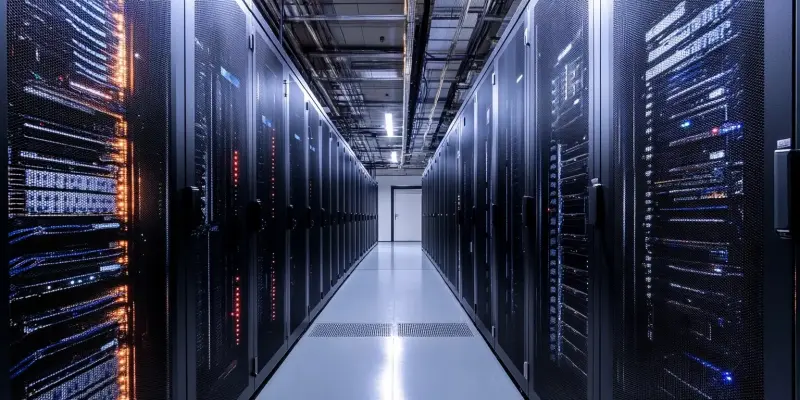
South Korea’s ambition to host the world’s largest AI data center by capacity marks a groundbreaking step towards establishing the nation as a global technology leader. With construction slated to begin in winter 2025 and a projected completion by 2028, this ambitious project is masterminded by Fir Hills, a division of the California-based company Stock Farm Road, Inc. (SFR). Co-founded by LG heir Brian Koo and Dr. Amin Badr-El-Din, an experienced innovator in various sectors, this data center project is valued at an initial $10 billion. However, with continued investment, the project could eventually grow to a staggering $35 billion in value and feature a 3-gigawatt capacity, making it a behemoth in the data center domain.
Strategic Significance and Technological Advancements
Strategically located in the Jeollanam-do Province, the data center is set to incorporate advanced cooling systems, cutting-edge fiber bandwidth, and an unprecedented capability to manage large and sudden energy load variations. These innovations are particularly tailored to meet the demands of next-generation AI applications, marking a significant technological leap. The ramifications of this development are far-reaching, promising to substantially benefit South Korea’s economy and secure the nation’s position as a pivotal player in the rapidly expanding data center services market. With global data center services projected to reach $438.3 billion by 2030, the Jeollanam-do center represents a significant share of this burgeoning industry.
Beyond the sheer scale and capacity of the project, the technological advancements anticipated are game-changing. Enhanced cooling systems are expected to optimize energy consumption, while high-bandwidth fiber-optic networks will facilitate rapid data transmission. This technological infrastructure is designed to handle the massive data processing requirements of AI and machine learning applications, making it a cornerstone for future innovations. The ability to quickly adapt to large energy load variations also ensures that the center remains operational under high-stress conditions, providing a reliable backbone for AI-driven enterprises.
Economic and Employment Impact
Moreover, the center aims to create over 10,000 jobs, affecting various sectors such as energy supply, renewable energy production, equipment manufacturing, and research and development. This extensive job creation not only contributes to local economic growth but also strengthens South Korea’s position in the global tech landscape. The benefits extend beyond borders, as the center is expected to cater to the needs of hundreds of large corporations, including hyperscalers and developers, thus impacting millions around the world. The integration of renewable energy sources also aligns with global sustainability goals, showcasing South Korea’s commitment to environmentally responsible growth.
The project’s potential for job creation is vast, encompassing a wide array of industries. From energy supply and renewable energy production to specialized equipment manufacturing and R&D, the employment opportunities are diverse and plentiful. This influx of jobs will significantly boost the local economy and help retain top talent within the country. Furthermore, by catering to the needs of hyperscalers and global developers, the data center will have a far-reaching impact, influencing technological infrastructure and innovation on a global scale. This development not only elevates South Korea’s tech profile but also demonstrates the country’s ability to lead in sustainable and scalable technology solutions.
Public-Private Partnerships and Global Strategy
This monumental development is integral to SFR’s broader strategy to establish AI infrastructure partnerships across Asia, Europe, and the United States within the next 18 months. Leveraging its expertise in Energy-to-Intelligence (e2i²), SFR aims to transform traditional energy infrastructure into platforms for advanced AI innovation. The company’s robust financial resources and extensive network in Asian and Western markets position it as a frontrunner in the next generation of global intelligent infrastructure. This initiative also exemplifies how strategic public-private partnerships can drive significant innovation and economic growth, contributing to South Korea’s vision of igniting a digital industrial revolution.
SFR’s strategic vision is not confined to South Korea; it includes a global outreach plan that aims to proliferate AI infrastructure worldwide. By leveraging the e2i² concept, which involves converting energy systems into intelligent data platforms, SFR is paving the way for seamless integration of AI into traditional infrastructures. The company’s strong financial backing and wide-reaching network in both Asian and Western markets provide a solid foundation for these ambitious plans. Such initiatives are crucial in positioning South Korea as a hub of innovation, demonstrating how public-private partnerships can catalyze technological advancements and economic development on a grand scale.
Future Considerations and Economic Progress
South Korea aims to host the largest AI data center in the world by capacity, a groundbreaking move positioning the nation as a global tech leader. Construction is set to commence in winter 2025, with completion anticipated by 2028. This ambitious project is spearheaded by Fir Hills, a division of the California-based company Stock Farm Road, Inc. (SFR). The project is led by LG heir Brian Koo and Dr. Amin Badr-El-Din, an experienced innovator across various sectors. Initially valued at $10 billion, this data center could potentially surge to a remarkable $35 billion with sustained investment. Boasting a 3-gigawatt capacity, it will stand as a colossal entity in the data center realm. This initiative underscores South Korea’s commitment to advancing technological infrastructure and innovation, further solidifying its role in the global tech ecosystem. The massive scale and foreseen impact place this project among the most significant developments in AI and data technology worldwide.