

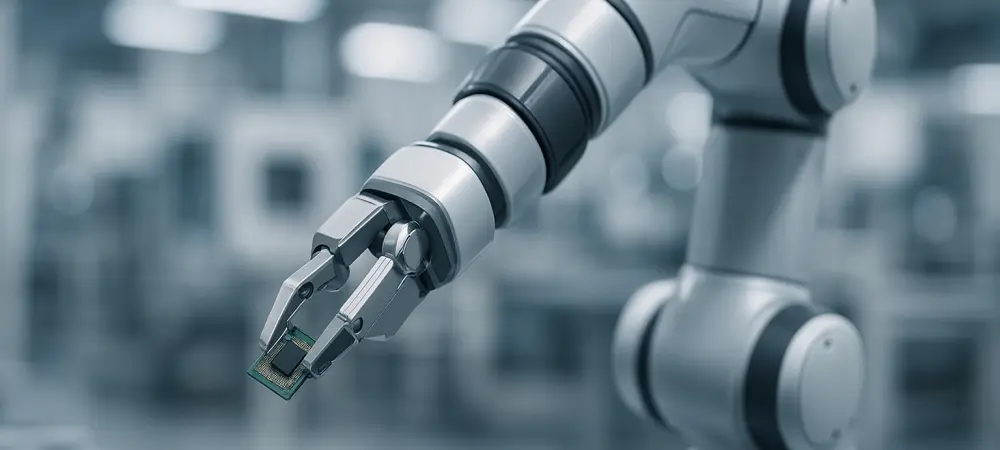
The partnership between Skild AI and Foxconn marks a major milestone in using adaptive robot intelligence for precision electronics manufacturing. As the robotics landscape transitions from rigid automation to versatile physical AI, the collaboration between these industry leaders highlights a pivotal moment in technological evolution. Skild AI, a Pittsburgh-based startup, has successfully launched the S1 foundation model, a system that fundamentally changes how machines perceive and interact with their surroundings. Instead of relying on static scripts, the S1 model allows robots to learn intricate, multi-step tasks by observing a single video demonstration. This capability effectively bridges the gap between digital intelligence and physical execution, enabling autonomous systems to move beyond the highly structured confines of research labs. By integrating advanced computer vision with motor control, the S1 model ensures that robots can adapt to the unpredictable variables of the real world with unprecedented agility and precision.
Bridging Simulation and the Factory Floor
Implementation: Deployment in Manufacturing Environments
The practical application of this technology is currently visible at an Nvidia facility in Houston, where dual-arm robots are actively assisting in the assembly of high-performance Blackwell GPU systems. This environment provides a rigorous testing ground for the Skild Brain, demonstrating its ability to meet the exacting standards of modern electronics production. Unlike traditional industrial robots that stop when an object is out of place, these AI-powered units can identify shifts in their workspace and adjust their movements dynamically. This resilience is essential for high-stakes manufacturing where downtime or errors result in significant financial losses. Furthermore, the speed at which these machines acquire new skills is redefining industry benchmarks. In controlled tests, the system demonstrated the ability to master a plant-potting task autonomously just eleven minutes after viewing a human performing the action. This rapid learning curve represents a shift from weeks of programming to mere minutes of visual observation.
Data Strategy: Overcoming Physical Training Limitations
One of the most persistent challenges in robotics is the data dilemma, where the slow pace of physical interaction limits the growth of AI models. Collecting enough real-world data to prepare a robot for every possible lighting condition or tactile sensation is prohibitively expensive and time-consuming. To solve this, Skild AI leverages the Nvidia Omniverse and Isaac Sim platforms to create high-fidelity digital twins of physical environments. Within these virtual spaces, robots undergo millions of training iterations in a fraction of the time it would take in a physical lab. This synthetic data generation allows the AI to experience a vast array of edge cases, such as varying friction levels or different object orientations, before it ever touches a real machine. The result is a robust intelligence layer that arrives on the factory floor pre-conditioned for the messiness of reality. This reliance on simulation ensures that the learning process scales exponentially, detached from the physical constraints of the real world.
The Future of Universal Robot Intelligence
Evolutionary Trends: The Emergence of Omni-Bodied AI Systems
The industry is currently moving toward an inflection point where robotic intelligence is no longer tethered to a specific form factor. The concept of the Skild Brain represents an omni-bodied intelligence system designed to function across diverse hardware platforms, including robotic arms, quadrupeds, and humanoids. This modular architecture allows the same underlying foundation model to provide the cognitive capabilities for widely different mechanical tasks. Instead of developing a specialized AI for every new robot model, engineers can now deploy a universal intelligence layer that requires only minor fine-tuning for specific hardware constraints. This trend toward shared foundation models mirrors the evolution of large language models in the digital space, where a single core system powers a multitude of applications. By standardizing the brain of the robot, the industry can drastically reduce the cost of entry for automation in new sectors, from logistics to healthcare. This universality is the key to achieving widespread adoption of general-purpose robots.
Economic Trajectory: Market Momentum and Future Scaling
The integration of the S1 model and Nvidia’s simulation tools demonstrated that the primary barriers to robotic scaling were effectively addressed through high-fidelity synthetic data. Industry leaders recognized that the path forward required a focus on modular intelligence rather than bespoke hardware configurations. To capitalize on these advancements, organizations were encouraged to prioritize the development of digital twin infrastructures that could mirror their physical operations with high precision. It became clear that the successful deployment of physical AI depended on a robust pipeline of continuous learning and evaluation. Future considerations for the sector involved the standardization of safety protocols and the creation of shared datasets to further refine the physical common sense of these foundation models. By fostering a collaborative ecosystem between AI developers and hardware manufacturers, the industry established a foundation for a future where autonomous machines became a standard component of global infrastructure. This transition paved the way for a more resilient and adaptable industrial landscape.