

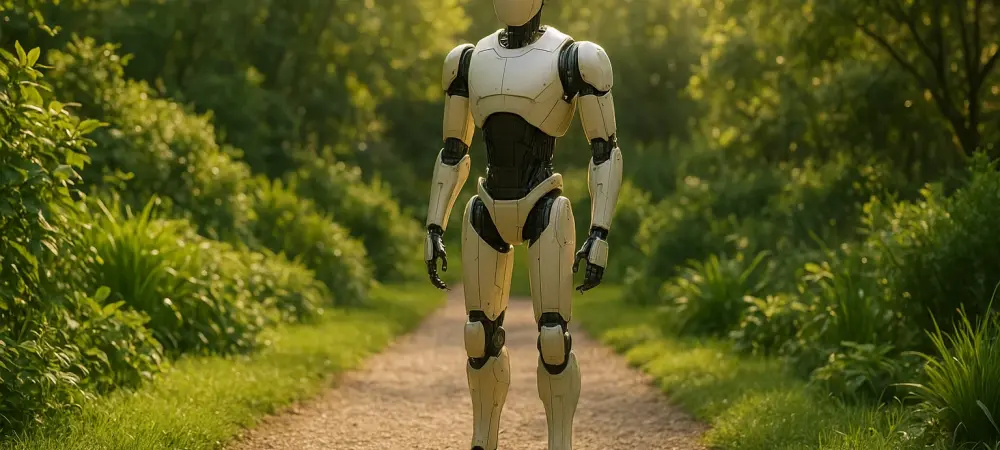
The absence of a unified data collection method has left the humanoid robotics industry struggling to achieve the same level of autonomy seen in digital AI systems. While generative models have reached unprecedented milestones in linguistic fluency and creative coding, the leap from a screen-bound chatbot to a bipedal machine navigating a chaotic warehouse remains a daunting hurdle. This stagnation stems from a fundamental realization: intelligence is not merely a matter of processing text but of interacting with a physical world defined by gravity and friction. In 2026, developers are finding that simply feeding more internet scraped data into a robot does not teach it how to balance on an uneven surface or grasp a delicate object. The industry now stands at a crossroads where the abundance of digital information highlights a severe poverty of physical experience data. Bridging this gap requires a departure from traditional software development toward a more embodied approach to machine learning.
Bridging the Cognitive Divide in Machine Learning
The Sensory Imperative: Why Pixels Outperform Text
Experts emphasize that the current generation of Large Language Models lacks the inherent environmental comprehension that a human toddler acquires naturally through play. Sce Pike of Telus Digital has noted that even the most advanced neural networks struggle to replicate the ocular and sensory inputs that define human learning. For a robot to understand the world, it must perceive it through high-fidelity visual streams rather than static datasets. This necessity has spurred a massive demand for video-based training, where machines watch millions of hours of human movement to decode the nuances of physical cause-and-effect. However, this transition is fraught with technical difficulties, as video data is exponentially more complex to parse than text. Without a way to translate visual frames into a coherent physics engine in the robot’s mind, these machines remain trapped in a state of simulated confusion, unable to apply digital logic to the messy realities of the world.
The World Model: Synthesizing Physics and Perception
Developing a robust world model is the primary focus for researchers working from 2026 to 2028, as they attempt to teach robots the basic laws of motion. A robot cannot simply be programmed with rules; it must develop an intuition for how objects behave when pushed, dropped, or stacked. This intuitive understanding is what allows a person to catch a falling glass without calculating its trajectory in real-time. Replicating this behavior requires massive repositories of interaction data that simply do not exist in a standardized format. While a digital model can hallucinate a fact without immediate physical consequence, a humanoid robot that miscalculates the weight of a heavy door risks structural damage or operational failure. The lack of varied physical training sets means that robots often freeze when encountering novel scenarios that were not explicitly covered in their training labs. Consequently, the industry is racing to create synthetic environments to fill these gaps.
Infrastructure and Standardization Challenges
Financial Barriers: The High Cost of Data Liquidity
The financial burden of scaling physical intelligence is another significant deterrent for emerging robotics firms. Storing and processing petabytes of high-definition video data requires an infrastructure that dwarfs the requirements of text-based AI. The compute power necessary to train a model on multi-modal sensory inputs—incorporating touch, depth, and sound—commands a premium that only the wealthiest tech conglomerates can afford. This economic reality has created a bottleneck where innovation is slowed by the sheer cost of keeping the lights on in massive data centers. Furthermore, the specialized hardware required to capture this data in the field remains expensive and difficult to maintain. As companies attempt to deploy fleets of test units to gather real-world telemetry, they are met with the harsh reality of hardware degradation and the logistical nightmare of data exfiltration. These costs ensure that the path to a general-purpose humanoid remains a very expensive endeavor.
Strategic Evolution: Moving Toward Standardized Frameworks
Stakeholders recognized that the path forward necessitated a radical shift toward collaborative data consortia to mitigate these developmental risks. They moved away from proprietary silos and began investing in open-source sensor frameworks that allowed for greater interoperability across different humanoid platforms. This change facilitated the creation of a shared physical commons where diverse datasets were used to train more resilient and safer world models. Engineers prioritized the development of edge-computing solutions that processed sensory data locally, reducing the reliance on expensive cloud storage and accelerating real-time response rates. To ensure public safety, regulatory bodies established rigorous benchmarks for physical autonomy, mandating that robots pass complex situational tests before deployment in human-centric spaces. These collective actions transformed the industry from a collection of isolated experiments into a cohesive ecosystem for future robots.