

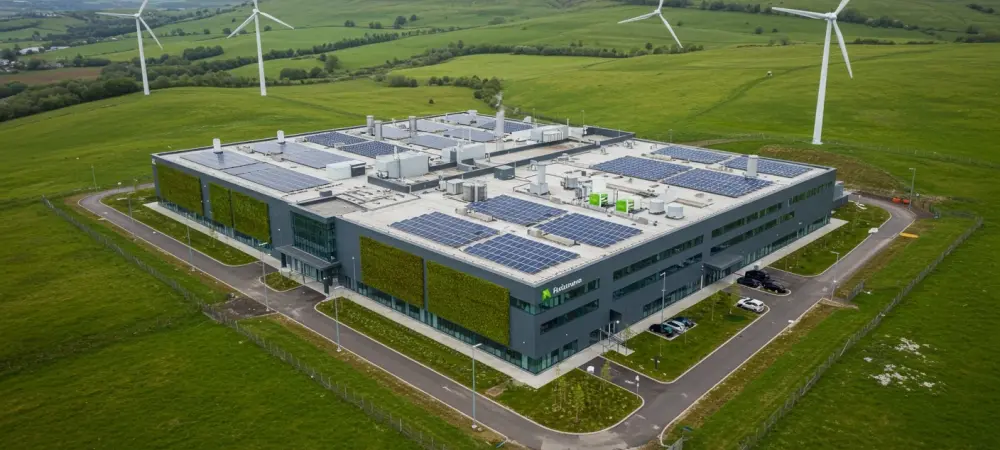
What if a forgotten industrial relic could become the heartbeat of a digital revolution? On Scotland’s Cowal Peninsula, a once-thriving oil and gas rig production site in Dunoon is undergoing a transformation that could reshape the future of data centers and prove that technology and sustainability can thrive together in harmony. Known as the Killellan AI Growth Zone, this ambitious project isn’t just about building server farms—it’s about setting a new standard. With global data demands soaring, the stakes couldn’t be higher for this bold experiment to succeed.
The significance of this initiative lies in its timing and scope. As data centers worldwide grapple with criticism over their enormous energy consumption—often accounting for nearly 2% of global electricity use, according to the International Energy Agency—Killellan offers a potential blueprint for change. Backed by the UK government’s AI Growth Zone program, which incentivizes innovative digital infrastructure, this project also promises to breathe new life into a region aching for economic revival. If successful, it could set a precedent for repurposing industrial wastelands into sustainable tech hubs across the globe.
A Bold Vision Emerging from Industrial Ashes
In the shadow of Dunoon’s rugged landscape, the Killellan project is rising from the remnants of a site that once employed 3,000 workers in heavy industry. Spearheaded by Argyll Data Development Ltd, this redevelopment isn’t merely a facelift but a complete reimagining of what a data center campus can be. The vision melds cutting-edge technology with a deep commitment to environmental responsibility, challenging the notion that high-tech infrastructure must come at the planet’s expense.
This transformation taps into a broader trend of revitalizing post-industrial areas for modern needs. Where once steel and oil dominated, servers and renewable energy systems are now taking root. The project’s location in a region hungry for renewal adds a layer of social impact, positioning Killellan as more than a tech venture—it’s a lifeline for a community seeking a new identity in the digital era.
The audacity of this plan lies in its refusal to compromise. By aiming to integrate sustainability at every level, from energy sourcing to operational design, the developers are betting that Killellan can become a global model. Success here could inspire other nations to rethink how they build the backbone of the internet age, turning forgotten sites into engines of innovation.
Why Killellan Stands Out in a Data-Hungry Era
Data is the lifeblood of today’s world, with global storage needs projected to grow by 61% annually through the end of the decade, per industry reports from Statista. Yet, the environmental cost of this boom is staggering, with many data centers relying on fossil fuels to meet their insatiable energy demands. Killellan enters this landscape as a potential game-changer, aligning with governmental pushes for greener tech solutions while addressing the urgent need for scalable infrastructure.
Beyond its environmental ambitions, the project carries profound economic weight for Argyll and Bute. A region that has seen industrial decline over decades now stands on the cusp of a renaissance, with Killellan poised to create jobs and stimulate growth. This dual focus on sustainability and community uplift sets the initiative apart from typical data center developments, which often prioritize profit over local impact.
Moreover, Killellan’s alignment with the UK’s AI Growth Zone incentives underscores its strategic importance. Competing bids from areas like North Ayrshire and Glasgow highlight Scotland’s emerging role in digital infrastructure, but Killellan’s unique blend of scale and eco-conscious design gives it an edge. If it delivers on its promises, the project could influence policy and investment decisions far beyond Scottish borders.
Inside the Killellan Master Plan
The blueprint for Killellan is as ambitious as it is intricate, starting with a capacity of 100MW to 600MW in its initial phase, targeted for completion by 2027. Long-term plans aim to scale up to a staggering 2GW, placing it among the largest data center campuses in the UK. This phased growth strategy ensures adaptability while addressing the escalating demands of AI processing and cloud storage.
At the heart of the design is a commitment to renewable energy, utilizing on-site solar, wind, hydro, and hydrogen power. Energy storage through vanadium-based flow batteries further bolsters this green approach, tackling the industry’s notorious power consumption challenges head-on. While specifics on implementation are still under wraps, this mix of sources signals a serious intent to minimize carbon footprints.
A pioneering feature is the microgrid system, with the first data center dedicated to managing energy distribution across up to 32 Edge data centers nationwide. This innovative setup not only enhances efficiency but also showcases a forward-thinking model for localized power management. Add to this the projected economic boost for the region through job creation, and Killellan emerges as a multifaceted endeavor with ripple effects across technology and society.
Voices Championing the Killellan Dream
Credibility for the project comes from partnerships with industry leaders like Schneider Electric, Aveva, and Lenovo, whose expertise in energy management and technology lends weight to the vision. Their involvement signals confidence in Killellan’s potential to deliver on both technical and sustainable fronts. Such endorsements are crucial in an industry often skeptical of untested models.
Local support adds another layer of momentum, with Argyll and Bute MSP Jenni Minto voicing strong backing for the AI Growth Zone bid. “This could redefine Dunoon’s future, blending innovation with a nod to its industrial heritage,” she remarked. Her enthusiasm reflects a broader community hope that Killellan will restore economic vitality to a region long in need of a boost.
Scotland’s growing interest in digital infrastructure amplifies the project’s relevance. With other regions like Dumfries and Galloway submitting competing proposals, the national landscape is ripe for transformation. Killellan’s distinct focus on sustainability and regional impact, however, positions it as a frontrunner in this competitive field, drawing attention from policymakers and investors alike.
Turning Ambition into Reality
Securing funding remains a pivotal challenge, with the project’s estimated cost pegged at £15 billion ($20.3 billion). Developers at Argyll Data Development Ltd are exploring a mix of government incentives, private investments, and strategic partnerships to bridge this financial gap. Identifying viable sources will be key to maintaining momentum and meeting critical timelines.
Technical planning also demands rigorous attention, particularly in fleshing out the renewable energy systems. While the commitment to solar, wind, hydro, hydrogen, and battery storage is clear, detailed execution strategies must be finalized to ensure scalability and reliability. This step will determine whether Killellan can truly lead as a sustainable tech hub.
Community engagement stands as another priority, with developers urged to maintain transparent dialogue with residents. Ensuring that local benefits—through jobs and infrastructure—are tangible will solidify public support. Additionally, documenting the journey and sharing insights could position Killellan as a replicable model, inspiring other regions to transform industrial relics into modern marvels.
Looking back, the Killellan AI Growth Zone project stood as a beacon of possibility, merging Scotland’s industrial past with a tech-driven future. The path forward demanded a focus on actionable steps: securing robust funding to sustain development, refining technical plans to guarantee sustainability, and fostering community trust through meaningful engagement. If these challenges were met, Killellan had the potential to not only redefine data centers but also ignite a global movement toward greener, more inclusive technology infrastructure.