

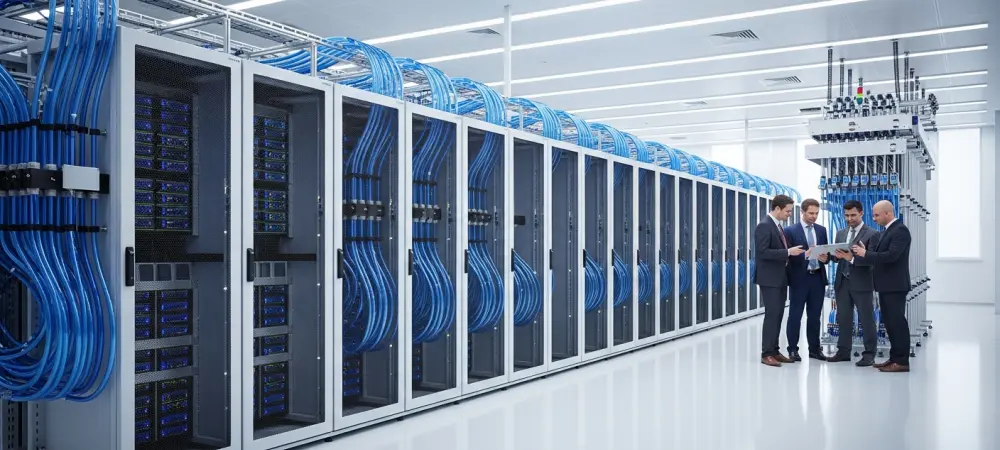
The unprecedented surge in generative intelligence training has pushed global data centers to a critical juncture where the thirst for cooling water now rivals the consumption of mid-sized cities. As hyperscalers struggle to maintain sustainability pledges, NVIDIA has emerged with a radical infrastructure shift aimed at decoupling computational power from environmental degradation. The introduction of the DSX AI factory reference blueprint represents a fundamental pivot toward 100% liquid-cooled systems, leveraging the high-performance Vera Rubin architecture to redefine the modern server farm. By prioritizing direct-to-chip cooling, this design targets the complete removal of evaporative cooling towers, which have traditionally vented millions of gallons into the atmosphere annually. This architectural transformation is not merely a performance upgrade but a strategic move to ensure that the expansion of AI does not collide with the scarcity of global freshwater resources, setting a new benchmark for industrial resource management.
Mechanical Innovations and Water Reduction
Reaching the High-Temperature Threshold: The Role of 45°C Inlet Fluids
Central to this engineering revolution is a high-temperature liquid system designed to function efficiently with an inlet temperature of 45 degrees Celsius. Utilizing a specialized coolant mixture of water and propylene glycol, the system employs custom-engineered cold plates placed directly on the silicon processors to absorb heat at the source. Because modern chips operate at internal temperatures far exceeding this threshold, the 45-degree fluid remains effective at capturing thermal loads without energy-intensive mechanical refrigeration.
Once the fluid passes through the server racks, it typically exits at 55 degrees Celsius, having successfully transferred the waste heat from the compute components. This warm input strategy allows for a much more resilient cooling loop that can operate effectively in various climates while drastically reducing the energy overhead. By moving away from sub-ambient cooling requirements, the industry is able to bypass the most power-hungry components of the cooling chain, such as massive compressors and complex refrigeration cycles.
System Evolution: Transitioning to Closed-Loop Dry Cooling
By eliminating the need for traditional evaporative cooling methods, the DSX blueprint allows operators to replace massive, water-heavy towers with specialized dry coolers that function like automotive radiators. These units shed thermal energy directly into the ambient outdoor air through a closed-loop process, ensuring that the primary coolant remains contained within the system rather than being lost to the atmosphere. In most favorable climates, this transition results in near-zero facility water consumption, neutralizing the most visible environmental impact of computing.
While mechanical chillers remain part of the infrastructure as a redundant safety measure for extreme heatwaves, their role is relegated to a backup capacity. This shift directly addresses the industrial water footprint, transforming data centers from massive consumers of local utilities into streamlined facilities that rely on airflow for balance. Furthermore, the 55-degree return fluid provides a predictable heat source that can be redirected into municipal heating grids to provide warmth for residential or commercial buildings.
Physical Infrastructure and Geographical Reality
Environmental Bottlenecks: Addressing Regional Temperature Caps
Despite the technical elegance of closed-loop liquid cooling, geographical realities present a significant bottleneck in regions characterized by persistent high temperatures or extreme humidity. In environments like the American Southwest or tropical corridors, dry coolers may struggle to dissipate heat effectively when the outdoor temperature exceeds the system’s intake threshold. During these periods of thermal stress, data centers may still rely on legacy refrigeration systems, highlighting a lingering dependency on high-energy infrastructure.
Furthermore, environmental analysts point out that while on-site water usage is significantly reduced, the indirect water footprint remains tied to the local power grid. Because the massive electrical demand of AI clusters still requires water for cooling at the power generation plants, the total environmental cost remains linked to the broader transition toward renewable energy. This reality forces a more comprehensive view of sustainability that accounts for both the facility operations and the underlying utility source.
Strategic Compliance: Future-Proofing Through Resource Management
The industry successfully adopted these liquid-cooling standards as a primary defense against the escalating environmental regulations that threatened to stall global expansion. Hyperscalers transitioned their legacy facilities to the DSX reference model, which allowed them to meet aggressive sustainability targets while continuing to scale their computational capacity. This transition proved that the perceived conflict between high-performance computing and water conservation was a solvable engineering challenge.
Decision-makers recognized that the long-term viability of the industry depended on these technological pivots, leading to a surge in investment for dry-cooling infrastructure. As regional authorities implemented stricter water usage mandates, the early adoption of closed-loop systems provided a significant competitive advantage for first-movers. The successful integration of these technologies served as a testament to the power of targeted engineering in solving the most complex global resource challenges.