

Introduction
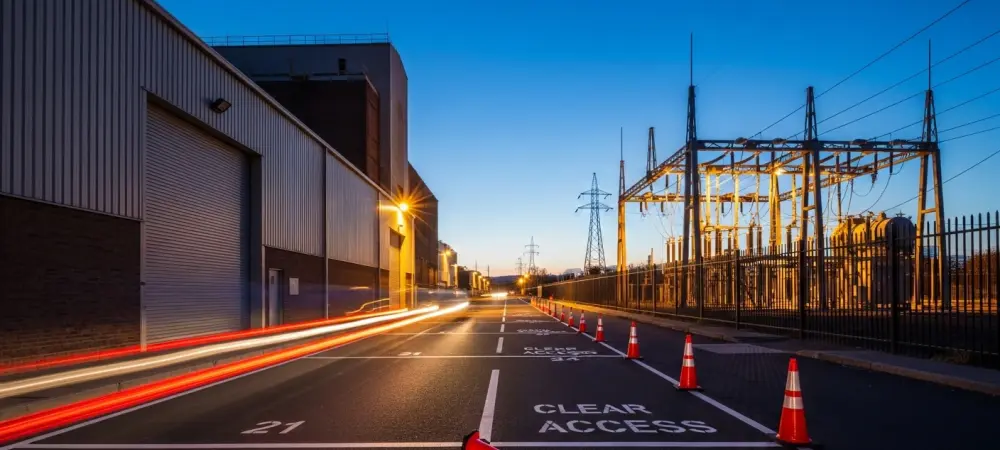
Power rarely sits still, and Lowell’s retired 85MW plant now anchors a quiet race to reshape industrial land. The recent string of purchases by entities linked to Markley Group’s CEO, Jeffrey D. Markley, put fresh focus on how legacy sites can be reimagined when power, zoning, and policy cross paths. The puzzle pieces include a shuttered generator with grid access, nearby industrial parcels, and a city carefully pacing growth.
This article explores what the acquisitions and lot splits could mean, why a one-year data center moratorium matters, and how a stepwise entitlement strategy preserves optionality. The aim is to answer the most pressing questions, drawing on local approvals, planning signals, and Markley’s track record in Lowell.
Readers can expect insight into strategic land assembly, the role of power adjacency, and the boundaries set by policy. The discussion moves from context to implications, offering clear takeaways for anyone tracking industrial redevelopment and data center positioning.
Key Questions or Key Topics Section
What Exactly Did Markley-Linked Entities Acquire and Why Does It Matter?
Multiple properties in Lowell changed hands under Tanner Street Investco, LLC and Meadowbolt LLC, both tied to Markley’s leadership. The anchor is 2 Tanner Street, a natural gas peaker plant retired in 2024, complemented by industrial parcels at 90 Bolt Street and 45 Bolt Street. Early filings sought to subdivide lots, with demolitions contemplated separately. The significance lies in both geography and infrastructure. The portfolio spans General Industrial and Light Industrial zones, inviting a range of industrial uses. The retired 85MW asset offers a rare form of proximity to the grid, a defining constraint in large-scale compute and other power-intensive operations. Reported pricing of roughly $5.6 million for the primary sites signals a value play that prioritizes strategic adjacency over immediate monetization.
How Do the Subdivisions Shape Future Options?
Preliminary subdivision approvals—granted unanimously by the planning board—do not lock in a specific use. They reorganize parcels, improving access, layout, and phasing potential while sidestepping commitment to an irreversible program. Demolition would still require separate permits, preserving time to plan and stage. This move fits a common industrial redevelopment arc: clear title, reconfigure land, and improve optionality ahead of capital-intensive decisions. By segmenting large tracts, the owner can pursue parallel paths—industrial tenants in one area, infrastructure upgrades in another—while aligning with market signals and permitting windows. In effect, the map gets redrawn before the blueprint gets inked.
Is a Data Center a Foregone Conclusion Given the Power Plant Next Door?
Not necessarily. While data centers covet grid adjacency and robust interconnection capacity, Lowell’s active moratorium on new data centers and expansions sets a near-term boundary. A consultant for the applications indicated that subsequent uses would likely remain industrial, which aligns with local policy and zoning flexibility. The power story still matters. Even if near-term uses are general industrial, sites next to substantial electrical infrastructure often gain an enduring premium. Many industry players first secure power-proximate land, then wait for a policy window or capacity release to advance compute-heavy use cases. That logic could apply here, but it will be gated by Lowell’s calendar and future policy decisions.
How Does This Fit With Markley’s History in Lowell?
There is precedent. Markley Group previously transformed the former Prince Macaroni plant into a significant data center presence and is pursuing parcel reconfigurations at 48 and 56 Newhall Street. The throughline is method: assemble legacy assets, improve the parcels, and stage for scalable redevelopment when market and policy conditions align.
This pattern points to patience over spectacle. Rather than heralding a definitive project, the current steps set up multiple outcomes. That approach lowers execution risk while keeping the door open for higher-value plays if and when the city’s stance evolves or grid conditions shift in a favorable direction.
What Are the Practical Implications for Lowell’s Industrial Landscape?
Two tensions define the moment: momentum in industrial repositioning and caution around data center impacts. By endorsing early land actions yet upholding a moratorium, the city balanced redevelopment readiness with community concerns over energy, water, and tax structure. The approvals indicate cooperation on site logic, even as end uses remain bounded.
For neighboring businesses and residents, the near-term read is pragmatic. Expect site clean-up, potential demolitions, and improved circulation before any large vertical build. Over time, if policy softens or infrastructure expands, the same sites could transition into more power-centric roles. The groundwork laid now makes that future less costly and more orderly.
Summary or Recap
Markley-linked entities assembled a trio of Lowell properties, led by the retired 85MW plant at 2 Tanner Street, and secured preliminary subdivisions to reconfigure lots. The city backed the land moves unanimously while keeping a moratorium on data centers, signaling openness to redevelopment mechanics but restraint on compute growth. Zoning across General Industrial and Light Industrial areas keeps options broad, from traditional industrial uses to infrastructure-rich operations when conditions allow.
The strategy mirrored prior Markley initiatives in Lowell: acquire legacy assets, reset parcels, and hold optionality. Power adjacency emerged as a central theme, offering long-term leverage even without an immediate data center filing. For deeper context, readers may consult City of Lowell Planning Board agendas, Massachusetts energy siting resources, and public filings associated with Tanner Street Investco, LLC and Meadowbolt LLC.
Conclusion or Final Thoughts
The expansion story hinged on optionality: land reconfiguration proceeded, while definitive use waited on policy and market signals. The planning board’s approvals framed a path to modernize sites without predetermining an outcome, and the moratorium set guardrails that shaped pacing rather than intent. Looking ahead, the most effective steps would have involved advancing demolition permits, refining interconnection studies, and modeling multiple build programs—light industrial in the near term, power-centric alternatives when policy windows opened. Stakeholders who tracked grid capacity, local sentiment, and parcel readiness were best positioned to act the moment conditions turned favorable.