

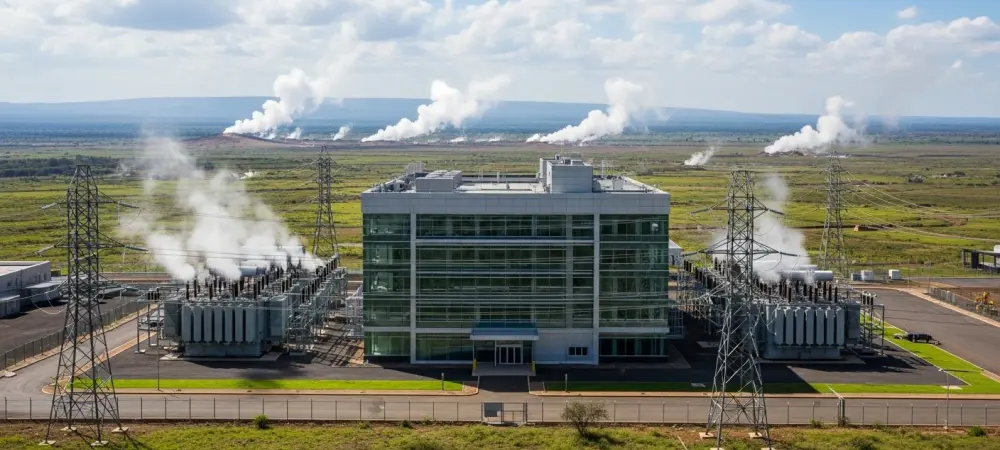
The collision between Kenya’s bold digital ambitions and its physical infrastructure constraints has reached a critical flashpoint as the nation attempts to host a massive $1 billion data center. This Microsoft-G42 partnership aims to establish a high-capacity cloud region in East Africa, yet the scale of the 1-gigawatt (GW) proposal presents a formidable challenge to a country operating on a 3GW national grid.
Navigating the Intersection of African Digital Growth and Energy Realities
The investment represents more than just a facility; it is a primary anchor for the region’s digital ecosystem. By situating the center near the Olkaria geothermal fields, the project seeks to utilize renewable energy to power the next generation of cloud services. This strategic move highlights Kenya’s potential as a premier green tech destination.
Stakeholders, ranging from the Kenyan National Treasury to global tech giants, recognize the high stakes involved in this hyperscale race. While the site offers geothermal advantages, the sheer volume of power required creates a tension between technological advancement and utility availability.
The Evolution of Green Tech Hubs and Regional Market Projections
Emerging Trends in Geothermal Computing and Sustainable Cloud Services
High-performance computing increasingly demands sustainable power sources to offset environmental impacts. Kenya’s geothermal assets offer a unique advantage, allowing for AI-ready infrastructure that minimizes carbon footprints. Moreover, the integration of advanced cooling methods is essential to manage the heat generated by such a massive scale of operations. The involvement of the UAE’s G42 sovereign wealth fund underscores the geopolitical importance of African technological sovereignty. These partnerships are not only about computing power but also about establishing a sustainable blueprint for future hubs in emerging markets.
Growth Forecasts and the High-Stakes Race for African Data Sovereignty
The East African data center market shows a strong projected CAGR through 2030. While mid-scale projects like Airtel and EcoCloud continue to move forward, the hyperscale race remains complex. Ensuring data sovereignty for African nations depends on these domestic facilities, which keep local data within regional borders.
Economic projections suggest that reaching cloud region status could spark significant digital services revenue. However, the feasibility of the 10GW national energy expansion plan remains the primary variable in determining whether Kenya can truly outpace its regional competitors.
Addressing the One-Gigawatt Hurdle and Grid Capacity Constraints
Allocating one-third of the national energy supply to a single consumer is a logistical hurdle for the Kenyan government. To provide 1GW to a single facility, the grid would face immense pressure, potentially compromising residential access. This creates a social dilemma regarding the prioritization of industrial tech over basic consumer needs. Bridging the $38 billion energy funding gap requires robust public-private partnerships. Technical bottlenecks in distribution and the high cost of utility-scale expansion mean that the path to a 1GW consumer is paved with financial and engineering complexities.
The Regulatory Framework and the Path to Institutional Clearance
The National Treasury and the Energy and Petroleum Regulatory Authority must navigate complex approval processes. Foreign direct investment of this magnitude requires strict adherence to environmental impact assessments. Balancing global tech standards with local regulatory hurdles remains a significant barrier to immediate deployment.
Data protection laws and local hosting requirements further influence the urgency of the Microsoft cloud region. Institutional clearance is not merely a formality but a comprehensive evaluation of how such a project aligns with national infrastructure priorities and long-term economic stability.
Looking Ahead: The Future of High-Capacity Computing in East Africa
The roadmap toward a 10GW capacity will determine how fast Kenya can adopt AI and high-capacity computing. If the infrastructure expansion lags, modular data centers or off-grid renewable solutions might become the necessary alternative. Kenya’s status as a tech leader hinges on its ability to synchronize power generation with technological demand.
Anticipating the next wave of investments requires a focus on energy reliability. As the grid matures, the region may see a shift from centralized hyperscale projects toward a more distributed network of efficient, green-powered facilities.
Bridging the Gap: Digital Ambition and Utility Infrastructure
Past actions indicated that a power-first approach was non-negotiable for sustainable digital transformation. The Microsoft-G42 venture served as a catalyst for systemic energy reform, forcing institutional changes to address the fundamental gap between digital dreams and electrical realities. Strategic shifts toward incremental scaling proved more effective than attempting monolithic projects in an unprepared environment. This experience recommended that future investors prioritize infrastructure synchronization. Ultimately, the partnership redefined the necessity of utility-scale investment as the bedrock of African technological sovereignty.