

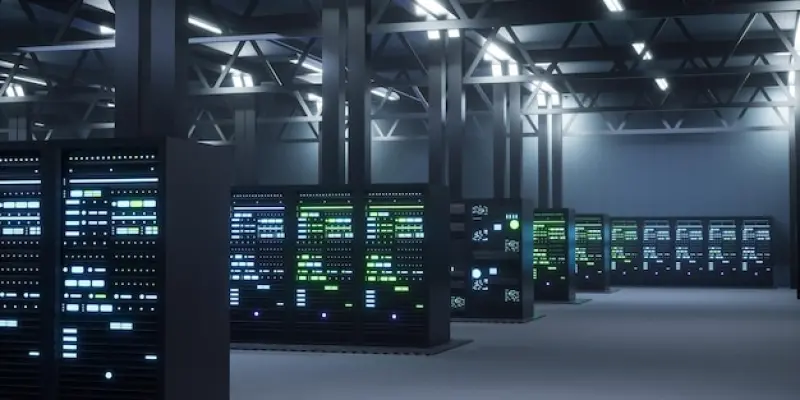
The sustainable operations of data centers have become a pressing issue as these facilities consume significant amounts of energy and water. One innovative approach being adopted involves the use of reverse osmosis (RO) water purification systems to address water consumption in cooling systems. At the Hemel Hempstead 3 data center in the UK, NTT Global Data Centers (NTT GDC) implemented an RO system resulting in substantial reductions in water usage and operational costs. This article examines the successful application of RO technology at Hemel Hempstead and explores the potential for its wider adoption across other data centers.
Technology Adoption and Results at Hemel Hempstead
NTT GDC has been at the forefront of integrating reverse osmosis technology to tackle water consumption challenges at its Hemel Hempstead 3 data center. By 2022, the facility consumed over 80,000 cubic meters of water due to high alkalinity and dissolved solids in the raw water used for indirect evaporative cooling units (IDECs). This led to excessive drainage and costly salt deposits on heat exchangers, prompting the need for an effective solution. In response, reverse osmosis met this challenge by efficiently removing over 95% of dissolved salts. Additionally, blending 15% of raw water back into the system helped maintain necessary hardness levels. The impact of this approach was significant, reducing the Water Usage Effectiveness (WUE) from 1.8 liters per kWh to just 1.2 liters per kWh within a single year. This strategy saved 35,000 cubic meters of water annually and yielded financial savings of $100,000 per year. This move also eliminated the need for 30 tons of salt previously used for water softening, further saving another $20,000 annually in chemical costs. Steve Campbell-Ferguson, the global lead for design at NTT GDC, highlighted that even though evaporative cooling processes discard a significant portion of water to prevent salt accumulation—30-40% in this case—the RO system reduced the need for such high levels of drainage and maintenance. The south of England, where the Hemel Hempstead data center is located, faces unique challenges related to hard water with elevated levels of calcium, magnesium, and bicarbonates. To address these, the RO system involved pushing water through semi-permeable membranes, resulting in 90% pure water with a markedly reduced salt content. The facility’s two RO units were able to meet the peak cooling demands during the summer while operating at around 50% capacity during the winter. This innovative implementation at Hemel Hempstead demonstrates the efficiency and effectiveness of RO technology in large-scale data center environments.
Broader Implications and Future Plans
The successful installation and operation of the reverse osmosis water purification system at Hemel Hempstead 3 opened the door for NTT GDC to explore similar applications at its other facilities. Presently, the company is evaluating the potential deployment of RO systems at its other 20 data centers that have existing water systems. Site-specific water quality, influenced by local geology and available water sources, plays a critical role in this evaluation process. NTT GDC’s broader sustainability goals include identifying and leveraging such advanced technologies to improve overall operational efficiency across its facilities.
Aside from water usage, NTT GDC’s latest sustainability report highlights several key achievements in reducing emissions and energy consumption. Although there was an increase in total energy consumption from 3,260 GWh to 3,500 GWh within a recent period, the company reported a decrease in total Scope 1, 2, and 3 emissions. These reductions were attributed to greater reliance on renewable energy, accounting for 40% of the energy portfolio. Improvements were also seen in the average 12-month rolling Power Usage Effectiveness (PUE) from 1.4 to 1.38 and in Water Usage Effectiveness (WUE), which fell from 1.01 liters per kWh to 0.65 liters per kWh.
Within the EMEA region, strategic adjustments to supply air temperature and water supply setpoints in data halls led to substantial energy reductions. These optimization measures resulted in a 37% average reduction in occupied data hall energy consumption and an 8% reduction in fan speed, projecting annual energy savings of 840 MWh. These achievements underscore the effectiveness of targeted sustainability initiatives in improving the environmental footprint and operational efficiency of data centers.
Path Forward
The growing concern over the sustainability of data center operations is largely due to their significant consumption of energy and water. As a response to these concerns, innovative solutions are being adopted to minimize environmental impacts. One such approach is the use of reverse osmosis (RO) water purification systems, which are designed to reduce water usage in cooling systems. Notably, at the Hemel Hempstead 3 data center in the UK, NTT Global Data Centers (NTT GDC) has successfully implemented an RO system. This innovation has led to considerable decreases in water usage and operational expenses. The effectiveness of RO technology at Hemel Hempstead highlights its potential for broader application across other data centers. This article delves into the achievement of the RO system at Hemel Hempstead 3 and discusses the possibility of expanding its use to improve sustainability practices in data centers globally, thus enhancing their overall environmental friendliness while maintaining operational efficiency.