

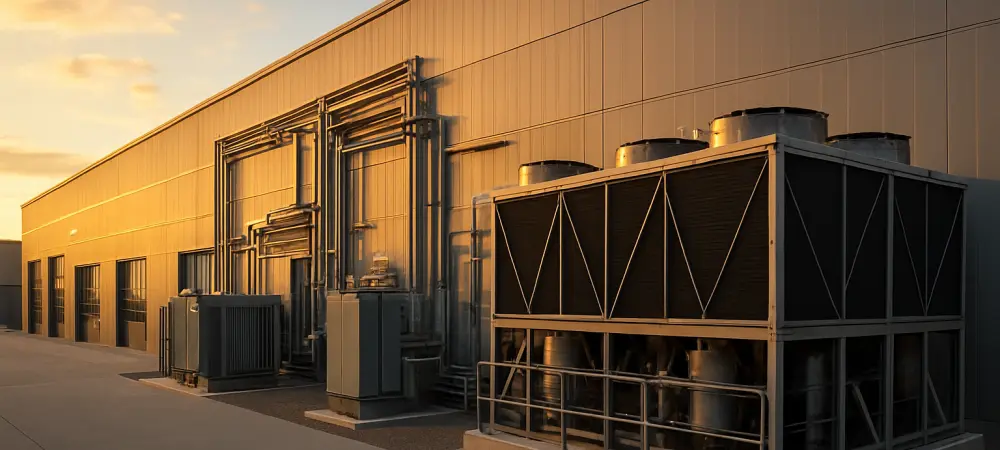
The cavernous silence of a traditional logistics warehouse is being replaced by the steady hum of high-performance servers as the Australian industrial landscape undergoes a profound technological metamorphosis. No longer simple shells for pallets and forklifts, these structures are maturing into the central nervous system of a data-driven economy. Centuria Industrial REIT is at the forefront of this shift, wagering that legacy logistics sites can serve as the bedrock for sovereign cloud infrastructure.
This transition was not merely a choice but a response to the explosive growth of artificial intelligence. As enterprises scramble for computing power, the demand for specialized facilities has reached a fever pitch, outstripping the capacity of existing networks. Latest financial results show an ambitious pivot toward digital infrastructure to capture this high-margin growth.
The High-Stakes Evolution of the Modern Warehouse
The modern warehouse has transitioned from a passive storage unit to an active participant in the digital supply chain. Real estate investment trusts are realizing that the physical proximity of these sites to urban centers makes them ideal candidates for low-latency data processing. Centuria has moved toward a model where industrial and digital utilities coexist, recognizing that physical delivery is increasingly dependent on a digital foundation. By retrofitting existing portfolios, the firm is bypassing the lengthy timelines associated with greenfield developments. This strategy allows for the rapid deployment of sovereign cloud services, which are becoming a critical requirement for government and enterprise security. The transformation represents a significant departure from traditional asset management, favoring high-density computing over simple pallet storage.
The AI Surge and the Critical Shortage of Digital Real Estate
The hunger for artificial intelligence has fundamentally altered the Australian real estate market, creating a void where high-capacity data facilities should be. This imbalance has pushed developers to rethink the definition of a “pure-play” industrial portfolio. The scarcity of sites with existing heavy-power connections has turned every underutilized industrial plot into a potential goldmine for digital infrastructure.
Furthermore, the urgency of this transition is underscored by the massive data processing requirements of modern enterprises. As sovereign data residency becomes a priority, the need for local hubs has intensified. Developers are now racing to secure shovel-ready sites that can support the immense cooling and power demands of AI-ready hardware.
From Industrial Hubs to Digital Engines: Centuria’s 250MW Expansion
The roadmap to achieve a 250MW capacity goal involves a multi-pronged approach leveraging facility expansions and brownfield redevelopments. A key project includes the 40MW expansion of a Melbourne facility, with completion targeted for 2029. Additionally, the Wellcamp Data Centre in Toowoomba offers a 5.7-hectare footprint, providing substantial room for scaling operations. By identifying underutilized properties in Yarraville, Thomastown, and Hazelmere, the firm is converting traditional logistics sites into high-margin digital assets. This proactive scaling ensures that the portfolio remains relevant as the economy shifts toward automation and real-time data analysis. The move effectively diversifies the asset base away from traditional tenant risks.
Strategic Partnerships and the “Pathway to Power” Constraint
Energy infrastructure remains the primary bottleneck for data center development, forcing firms to navigate complex applications with utility providers like VicGrid and AusNet. To gain a competitive edge, Centuria secured a strategic stake in ResetData, a provider specializing in immersion-cooled equipment. This technology handles high-density workloads more efficiently than traditional air-cooled methods. Securing a “pathway to power” is no longer just a technical requirement but a strategic advantage in a crowded market. Analysts note that the integration of advanced cooling technology and proactive power procurement is essential for maintaining the high-density environments required for modern AI applications. This partnership allows for greater data output within a smaller physical footprint.
A Framework for Reimagining Legacy Assets as Sovereign Data Hubs
The successful transition of industrial sites into data hubs required a rigorous strategy that prioritized energy access. Developers focused on auditing existing brownfield sites for proximity to high-voltage power grids and applied for capacity early to mitigate long lead times. This proactive management ensured that the power grid did not become an insurmountable barrier to technological progress. The integration of immersion cooling and high-density hardware allowed for a smaller physical footprint while maximizing data output per square meter. This approach ensured the facilities remained viable for future AI demands and provided a clear pathway for other industrial leaders to follow. The shift ultimately positioned legacy assets as critical infrastructure in a rapidly evolving digital landscape.