

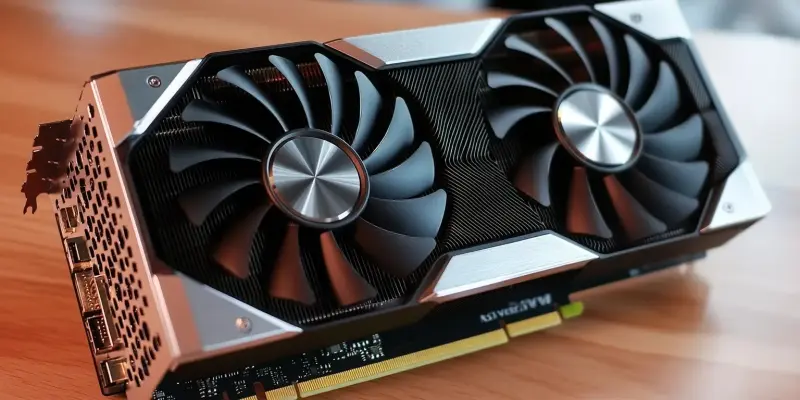
Graphics card enthusiasts and gamers alike have faced challenges in recent years with securing high-performing GPUs at reasonable prices. The Nvidia GeForce RTX 5070 Ti, a top pick for gamers due to its impressive 4K gaming capabilities and advanced AI functionalities, stands out in this crowded market. Available for purchase on Amazon, the RTX 5070 Ti is accessible to Prime members, albeit at a premium price of $979.99. The question remains: Do Amazon Prime members genuinely get the best deal, or is the elevated pricing an obstacle too high to justify the perks?
Third-Party Vendor Dynamics
When exploring the options on Amazon, several third-party vendors offer branded versions of the RTX 5070 Ti. Models like the Gigabyte GeForce RTX 5070 Ti Gaming OC are priced at $979.99, while alternatives such as the Gigabyte RTX 5070 Ti Master GPU, MSI Gaming RTX 5070 Ti Vanguard SOC GPU, and Asus TUF Gaming RTX 5070 Ti OC Edition GPU each command a price of $999.99. These prices are significantly higher than the reference card’s MSRP of $750. These markups are driven by high demand and the additional enhancements provided by vendors, including superior cooling systems and factory overclocking.
The common trend is that finding an RTX 5070 Ti for under $1,000 is an uphill battle. This inflated pricing can be attributed to several factors, including the GPU’s popularity and the performance enhancements that third-party manufacturers offer. While Amazon Prime members have access to the card, the elevated costs from these vendors remain a key consideration for any potential buyer.
Performance and Value Proposition
Despite the high prices, the RTX 5070 Ti maintains its reputation for offering the best value within Nvidia’s Blackwell series. The card demonstrates impressive performance characteristics, rivaling even the more expensive RTX 5080 regarding cost-efficiency. With the ability to handle high frame rates at 4K resolution and the inclusion of ray tracing capabilities, the RTX 5070 Ti meets and exceeds the expectations of most gaming enthusiasts and professional users.
Furthermore, the card’s 16GB GDDR7 VRAM makes it suitable for AI applications, expanding its utility beyond gaming into fields requiring high computational power. This multifaceted functionality ensures the RTX 5070 Ti’s continued relevance and appeal in an evolving technological landscape. However, the primary challenge remains: balancing the card’s stellar performance with its steep acquisition cost.
Concluding Thoughts
In recent years, graphics card enthusiasts and gamers have struggled with obtaining high-performance GPUs at affordable prices. Among the standout options in this competitive market is the Nvidia GeForce RTX 5070 Ti. Renowned for its exceptional 4K gaming capabilities and cutting-edge AI features, the RTX 5070 Ti has become a favorite for gamers who demand top-tier performance. This powerful GPU is available on Amazon, and Prime members can purchase it for $979.99. While access to this high-end graphics card is convenient for Amazon Prime users, the price tag raises questions. Do Prime members truly benefit from the best deals, or does the steep cost negate the benefits and perks offered by Amazon? For many consumers, the decision hinges on balancing the premium price against the promised performance and exclusive access. As gamers continue to navigate the GPU market, weighing the value of Prime membership against potential savings elsewhere becomes a critical consideration.