

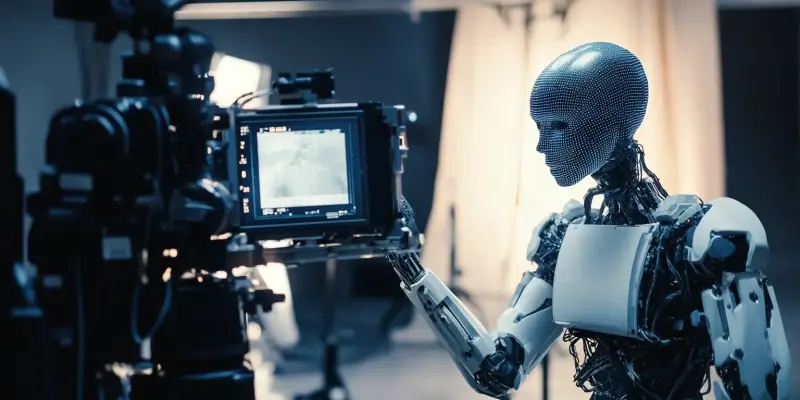
In the realm of Hollywood filmmaking, the emergence of Artificial Intelligence (AI) has sparked both excitement and apprehension. As AI continues to evolve, its influence on storytelling and production processes has become more pronounced, offering both immense benefits and significant challenges. While some view AI as a tool that can revolutionize the industry, others fear it may threaten the very essence of human creativity that defines Hollywood. This article delves into the fascinating interplay between AI and human creativity in filmmaking, exploring the potential outcomes of this technological advancement.
AI’s Role in Enhancing Filmmaking
Streamlining Production and Reducing Costs
The integration of AI into the filmmaking process has presented numerous opportunities for streamlining production and reducing costs. AI can automate various tasks, such as scriptwriting, visual effects, and even casting decisions, thus significantly cutting down on time and expenses. For instance, the 2022 film “The Frost” showcased how AI tools like OpenAI’s DALL-E and DeepMind’s AlphaCode were employed to create compelling scripts and visuals, ultimately delivering a high-quality film at a fraction of the traditional cost.
This cost-efficiency is particularly beneficial for independent filmmakers who often work with limited budgets. By leveraging AI tools, these filmmakers can produce high-quality content that rivals big-budget productions, making the filmmaking industry more accessible and democratized. Additionally, AI’s ability to analyze vast amounts of data allows it to tailor content to audience preferences, thereby increasing the likelihood of a film’s success. Streaming platforms like Netflix already use AI algorithms to provide personalized content recommendations, which can be extended to the entire filmmaking process.
Personalized Content and Audience Engagement
The trend towards personalized content in filmmaking has been significantly propelled by AI technology. With its ability to analyze user data and preferences, AI can craft storylines and visuals that resonate deeply with specific demographics. This personalized approach not only enhances audience engagement but also increases the chances of a film’s commercial success. By understanding what viewers prefer, filmmakers can create more targeted and appealing content, leading to a more satisfying viewing experience.
However, this shift towards personalization raises questions about the authenticity and originality of AI-generated content. While AI can identify popular themes and trends, it may lack the nuanced understanding and emotional depth that human creators bring to the table. The challenge lies in balancing AI’s data-driven insights with the creative instincts of human writers and directors to produce content that is both commercially viable and artistically meaningful.
Challenges and Limitations of AI in Filmmaking
Threat to Human Creativity
One of the most significant challenges posed by AI in filmmaking is the potential threat to human creativity. Although AI can efficiently handle various aspects of production, it struggles to capture the emotional nuances and originality inherent in human creativity. Writing, directing, and acting are deeply personal crafts that often rely on the unique perspectives and experiences of individuals, which AI may not fully replicate. The fear of AI replacing human artists has led to concerns about job displacement and the erosion of the artistic integrity that defines Hollywood.
Moreover, the creative process in filmmaking often involves collaboration and spontaneity, elements that are difficult for AI to emulate. The unpredictability and organic development of ideas during brainstorming sessions are where human creators excel. AI, despite its advanced algorithms, operates within predefined parameters and lacks the capacity for genuine innovation and serendipity that occur when humans collaborate. Therefore, while AI can enhance certain aspects of production, it cannot entirely replace the irreplaceable human touch essential for creativity and emotional depth.
Unresolved Copyright Issues
Another significant hurdle in the widespread adoption of AI in filmmaking is the issue of copyright. As AI-generated content becomes more prevalent, questions arise regarding the ownership and intellectual property rights of these creations. If an AI writes a script or designs a visual, who holds the copyright? Is it the developer of the AI, the user, or the AI itself? These legal ambiguities pose challenges for filmmakers and content creators, necessitating clear guidelines and regulations to protect intellectual property rights.
Additionally, the use of AI to replicate artistic styles or voices raises ethical concerns about originality and authenticity. For example, AI-generated music or voiceovers that imitate specific artists could lead to disputes over ownership and compensation. The lack of a regulatory framework could stifle creativity and innovation as creators may be hesitant to adopt AI technologies for fear of legal repercussions. Addressing these copyright issues is crucial for fostering a collaborative environment where AI can coexist with human creativity without infringing on intellectual property rights.
Future Prospects of AI in Hollywood
Collaborative Approach to Filmmaking
The future of AI in Hollywood appears to be heading towards a collaborative approach, where AI tools augment rather than replace human creativity. Rather than viewing AI as a threat, filmmakers can leverage its capabilities to enhance their creative processes. AI can handle repetitive and data-intensive tasks, allowing writers and directors to focus on the more artistic and innovative aspects of filmmaking. This synergy between AI and human creators can lead to a new era of storytelling that combines the precision of technology with the emotional depth of human creativity.
For instance, AI can assist in developing intricate plotlines by analyzing vast amounts of data and identifying potential story arcs. Simultaneously, human writers can infuse these stories with emotional depth and authenticity that AI lacks. This collaborative approach ensures that the final product is both technically proficient and emotionally resonant, offering audiences a more immersive and satisfying experience. Embracing this partnership can unlock new creative possibilities and push the boundaries of what is achievable in filmmaking.
Ensuring Emotional Depth and Authenticity
In the world of Hollywood filmmaking, the rise of Artificial Intelligence (AI) has generated both enthusiasm and concern. As AI technology continues to advance, its impact on storytelling and production processes becomes increasingly significant, presenting both considerable benefits and noteworthy challenges. Proponents of AI argue that it has the potential to revolutionize the industry, making production more efficient and possibly enhancing creative processes in innovative ways. However, critics worry that AI may undermine the core of human creativity that gives Hollywood its unique charm. This article investigates the intriguing relationship between AI and human creativity in the realm of filmmaking, shedding light on the possible future of this technological influence. By examining how AI can assist with tasks such as scriptwriting, editing, and special effects, we gain insight into its benefits. Simultaneously, it is crucial to consider the fears of diminished human touch in storytelling and the potential loss of jobs for creative professionals. Ultimately, this exploration seeks to understand the balance between technological advancement and the preservation of artistic integrity in Hollywood.