

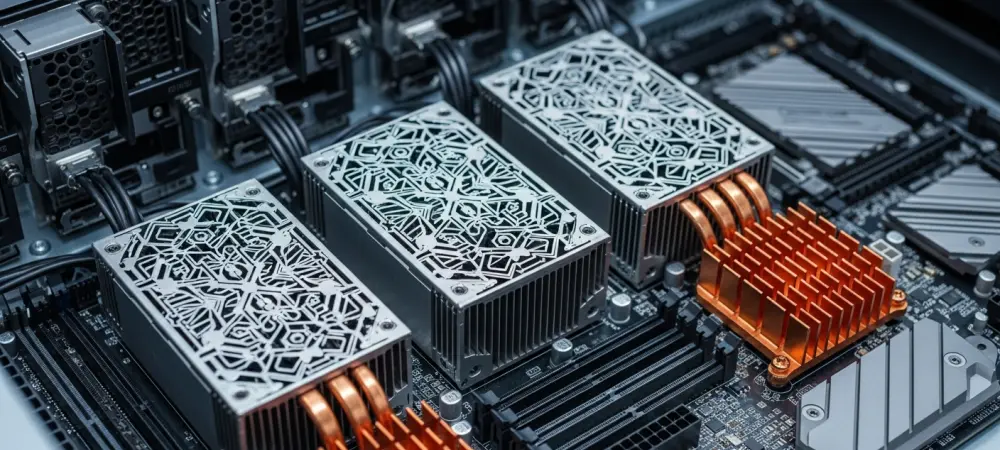
Every electron traveling from a high-voltage transmission line to a state-of-the-art GPU rack undergoes a series of invisible transformations that silently bleed energy into the atmosphere as pure, useless heat. In the high-stakes environment of 2026, where artificial intelligence has moved from a technical novelty to the backbone of global industry, this “conversion tax” is no longer just a minor technicality. It has become a primary bottleneck to scaling the massive compute clusters required for the next generation of neural networks. As rack densities skyrocket from a modest 10 kilowatts to nearly 1 megawatt, the traditional method of bouncing power between alternating and direct current has become an expensive and unsustainable liability that threatens the financial viability of new facility builds.
This energy drain represents more than just a line item on a utility bill; it is a fundamental engineering hurdle. In today’s economy, the ability to train a model faster and more efficiently is the ultimate competitive advantage. As operators look for ways to cram more processing power into the same physical footprint, the inefficiencies of the power delivery chain are being exposed as the weak link in the AI revolution.
The Silent Energy Tax: Draining Modern AI Infrastructure
Modern infrastructure faces an invisible enemy in the form of thermodynamic inefficiency that grows exponentially as workloads increase. Every time electricity moves from the local utility grid into a high-performance GPU, a portion of that energy vanishes due to the internal resistance and conversion processes of the equipment. This loss is primarily caused by the repeated, unnecessary switching between alternating current (AC) and direct current (DC). In the past, when data centers managed simple web traffic or standard database queries, these losses were manageable overhead. However, the current generation of generative AI requires massive clusters that pull power at unprecedented levels, making even a small percentage of loss a multi-million-dollar operational problem.
Beyond the direct cost of the lost electricity, this energy tax creates a secondary burden: excessive heat. Power lost during conversion does not just disappear; it transforms into thermal energy that must be removed by expensive cooling systems. For facility managers, this means that every watt saved in the conversion process is actually worth significantly more when the reduced cooling load is taken into account.
Why Traditional Grid Architectures Are Falling Behind the AI Surge
The fundamental problem with the current electrical ecosystem is that it was built for a different era. Most of the power grid infrastructure in the United States is roughly 30 years old, designed and deployed long before the existence of the modern cloud, let alone the power-hungry demands of generative AI. This mismatch between aging hardware and modern compute requirements has created a critical need for a total rethink of how facilities receive, transform, and distribute power.
The surge in demand is already visible in the data. With AI-focused electricity requirements jumping significantly since 2025 and projected to triple by 2030, the gap between available capacity and actual need is widening. Traditional grid designs prioritize the movement of AC power over long distances, but AI hardware lives and breathes DC power. The friction at the interface where these two systems meet is becoming a barrier to progress. Without a fundamental change in how the grid interacts with the data center, the industry faces a future of diminishing returns and increasing regulatory pressure to reduce its total energy footprint.
Eliminating Inefficiencies: The Multi-Stage Power Path
The standard power path in a contemporary data center is unnecessarily complex and rife for failure. In a typical legacy setup, power is converted from AC to DC for battery backups, then back to AC for the racks, and finally to DC for the individual server components. At the scale of a modern AI cluster, every one of these conversion steps represents a massive environmental and financial cost that operators can no longer ignore. Moving toward a streamlined system where power is converted to DC once at the facility level and then distributed directly to the racks is the most effective lever operators have to recover lost wattage. By removing the redundant stages of conversion, data centers can simplify their internal electrical architecture and reduce the number of potential points of failure. This shift not only improves efficiency but also reduces the physical space required for electrical switchgear, allowing for more room for compute hardware. Transitioning to a DC-centric distribution model allows the facility to act as a single, cohesive electrical unit rather than a collection of disparate, inefficient components.
High-Voltage DC Distribution: The New Industry Standard
To combat the limitations of low-voltage distribution, industry leaders like Nvidia and Schneider Electric are increasingly positioning 800 VDC power distribution as the optimal solution for high-density environments. This architecture minimizes energy loss by significantly reducing the current required to deliver the same amount of power, which in turn reduces the heat generated by the cabling itself. By moving to a higher voltage, data centers can use thinner copper wires and more compact connectors, leading to more streamlined rack designs. This is particularly critical for AI clusters where physical space is at a premium and airflow must be maximized to maintain peak performance.
While some operators are looking at full facility redesigns to accommodate this change, others are adopting rack-level 800 VDC systems as a practical interim step. This modular approach allows them to support intensive AI clusters without overhauling their entire existing AC-based infrastructure. It provides a bridge between the legacy past and the high-efficiency future, giving companies the flexibility to scale their power capabilities in tandem with their compute needs. As the hardware becomes more standardized, the barriers to adopting high-voltage DC continue to fall, paving the way for it to become the default choice for any facility housing top-tier AI workloads.
The Role of Silicon Carbide in Modernizing Power Hardware
A key technological enabler in this transition is the shift from traditional silicon-based semiconductors to Silicon Carbide (SiC). By integrating SiC-based hardware into the power delivery chain, data center operators can achieve higher switching frequencies and lower conduction losses. This directly addresses the thermal management and safety challenges that have historically slowed the adoption of high-voltage DC systems in the enterprise space. The physical properties of Silicon Carbide allow for power supplies that are not only more efficient but also significantly more power-dense. This means that the components responsible for converting and regulating power take up less space within the server chassis, leaving more room for GPUs and memory. Furthermore, the increased heat tolerance of SiC devices means they require less active cooling, further contributing to the overall energy savings of the facility. As the manufacturing cost of SiC continues to decline, its adoption is becoming a standard requirement for any high-performance power system designed for the 2026 landscape.
Expert Perspectives: Global Energy Projections and Standards
According to current data, the International Energy Agency projects that global data center electricity consumption will reach 945 TWh by 2030, accounting for nearly 3% of the world’s total usage. This massive consumption has drawn the attention of regulators and environmental groups, placing a spotlight on the inherent waste in power conversion. While corporate power purchase agreements for renewable energy help address sustainability goals on paper, they do not solve the underlying physics of conversion loss. The industry is beginning to realize that green energy is only half the battle; the other half is ensuring that energy actually reaches the processors.
To address this, the Open Compute Project is actively pushing for industry-wide standardization of DC power delivery. These efforts are designed to ensure that operators of all sizes can implement these efficiencies consistently and reliably without being locked into a single vendor’s proprietary ecosystem. Standardization is the critical final step in the transition, as it allows for a broader market of interoperable components, which lowers costs and simplifies the supply chain. By aligning on a common set of electrical standards, the industry can move toward a more sustainable and scalable future for AI infrastructure.
Strategic Steps: Upgrading Legacy Power Architecture
The most forward-thinking organizations discovered that the transition toward a more efficient power model did not require a complete facility shutdown, but rather a deliberate and phased framework. Successful operators began by auditing their current conversion path to identify the specific stages where the most power was lost to heat. They recognized that the data center was a living ecosystem, and that improvements in power delivery had immediate positive effects on cooling requirements and equipment longevity. These early adopters found that by focusing on the most inefficient nodes first, they could realize a return on investment within a single fiscal cycle. Facility managers learned that piloting high-voltage DC systems in specific high-density AI clusters allowed for performance validation before a broader rollout. They found that engaging with emerging standards and evaluating Silicon Carbide hardware during routine infrastructure refreshes ensured that their facilities remained competitive as AI workloads continued to scale. This historical shift established a new benchmark for data center performance, proving that the physical constraints of the grid could be mitigated through superior internal architecture. By the time the largest clusters reached the megawatt-per-rack threshold, these architectural choices had already become the primary differentiator between profitable facilities and those burdened by obsolete energy infrastructure.