

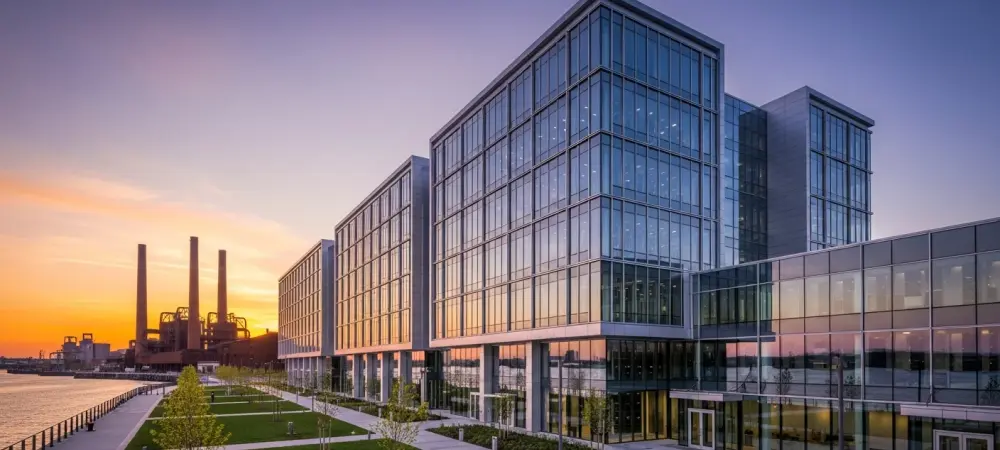
The towering smokestacks that once loomed over River Road have finally gone silent, leaving a void where coal was once baked at blistering temperatures to fuel the American steel industry. For over a century, the Tonawanda Coke Corp. defined the local skyline and economy, but today, that industrial roar is being replaced by the steady, low-frequency hum of high-density server racks. The proposed Riverview Innovation and Technology Campus represents a $2 billion pivot, betting that the future of Western New York lies within the digital corridors of a 300MW data center rather than the heavy manufacturing of the past.
From Industrial Decay to Digital Powerhouse
This transition marks a profound shift for the region, as the 140-acre site moves from producing physical materials to processing global data. Where soot and fire once dominated the landscape, developers are now laying the groundwork for a 500,000-square-foot facility designed to support the modern internet. This transformation signifies more than just a change in business; it is a total reimagining of what industrial land can achieve in a post-carbon economy.
The sheer scale of the project suggests a new era for Tonawanda, potentially positioning the town as a critical hub in the Northeast’s digital infrastructure. By repurposing a site that was once synonymous with environmental degradation, the project aims to demonstrate that even the most distressed properties can find a second life. This high-tech gamble seeks to prove that bytes and bits can provide the same economic stability that coal and steel once offered.
The Weight of a Century-Long Industrial Footprint
The history of the Tonawanda Coke Corp. is etched into the very soil of the riverfront, leaving behind a complex legacy that began in 1917. While the facility provided decades of employment, its 2018 closure followed years of legal battles over air quality and environmental violations. This background makes the current redevelopment a vital test case for New York’s “Just Transition” policy, which focuses on shifting toward cleaner industries without leaving local communities behind.
Cleaning up such a deeply contaminated brownfield is a monumental task that requires more than just capital; it requires a vision for restorative growth. The scars left by a century of heavy industry are not easily erased, and the community remains watchful. As the site transitions from a source of pollution to a center for innovation, the success of this project will likely set the tone for future industrial cleanups across the state.
Transforming 140 Acres of Contaminated History
Steering this massive undertaking are developers Jon Williams and John Yensan of Ontario Specialty Contracting, who are managing a delicate balance between construction and remediation. The blueprint for the Riverview Campus is ambitious, spreading across both sides of River Road and reclaiming valuable waterfront property for technological use. Unlike traditional construction projects, this one involves a simultaneous effort to purge toxins from the ground while installing the sophisticated power and cooling systems required for a 300MW facility.
To ensure the project’s technical success, the developers have partnered with undisclosed specialists who bring deep expertise in hyperscale data center operations. The logistics of revitalizing a site with such an extensive industrial pedigree are daunting, yet the timeline targets a completion date by 2027. This rapid pace is intended to capitalize on the soaring demand for cloud computing and artificial intelligence processing power.
Conflicting Visions for the Riverview Waterfront
The move to replace coke ovens with server farms has sparked a vigorous debate regarding the best use of the limited Tonawanda waterfront. While the town planning board focuses on the massive investment and potential tax revenue, advocacy groups like the Clean Air Coalition of WNY argue for an alternative path. These critics suggest that the land should be dedicated to unionized renewable energy production and storage, rather than a data center that may offer fewer long-term jobs for local laborers.
This tension highlights a growing friction in urban planning: the choice between high-tech capital investment and community-led green energy initiatives. Some residents worry that a data center, while clean, does not provide the same level of community revitalization as a public-facing green energy park would. The debate is not just about economics, but about the identity of a town trying to move away from its “toxic” reputation toward a more sustainable future.
Navigating the Challenges of Brownfield Redevelopment
Successfully revitalizing a historically contaminated site requires navigating a labyrinth of environmental regulations and public expectations. Developers must adhere to stringent New York state cleanup programs to ensure the land is safe for its new digital occupants. Integrating a 300MW load into the existing power grid is another hurdle, requiring close coordination with utility providers to ensure regional energy stability is maintained while the servers go online.
The transition from a coal-based past to a tech-driven future served as a blueprint for other post-industrial cities facing similar environmental burdens. Stakeholders recognized that long-term success depended on transparent communication and the rigorous monitoring of site safety. Moving forward, the focus shifted toward ensuring that the digital infrastructure contributed meaningfully to the local power grid’s resilience. Urban planners began prioritizing versatile zoning that allowed for future expansions in renewable energy storage alongside data processing. This evolution ensured that Tonawanda remained a leader in the global digital economy while finally closing the chapter on its industrial pollution.