

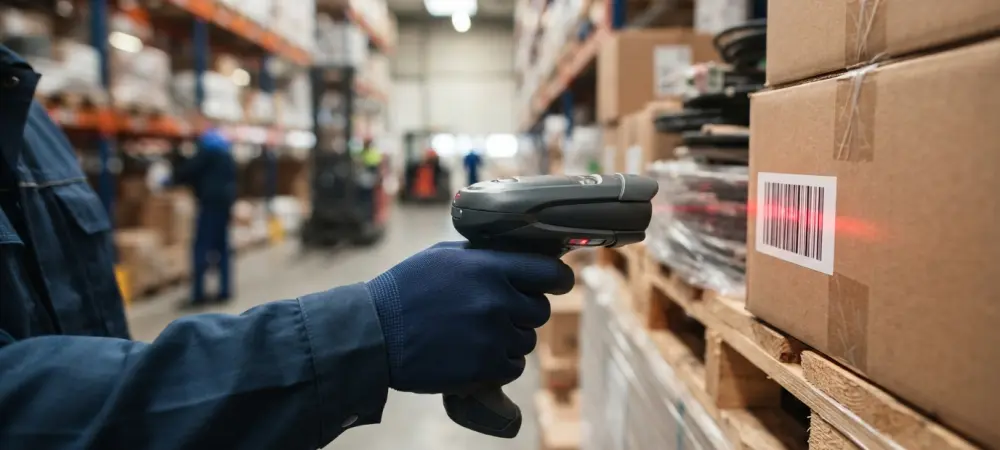
Navigating the complexities of modern logistics often feels like a balancing act between the speed of physical movement and the rigid demands of digital record-keeping. The disconnect between the speed of a loading dock and the administrative requirements of an ERP system often creates a bottleneck that prevents small-to-medium enterprises from scaling efficiently. Many operations managers hesitate to implement barcode scanning because they assume it necessitates a shift to complex warehouse management systems that involve extra layers of documentation like warehouse receipts. This misconception frequently traps businesses in a manual, paper-reliant cycle where the hardware they crave feels out of reach due to the perceived software complexity. In reality, modern solutions allow for a direct link between the physical item and the purchase order, bypassing the need for intermediate digital paperwork while maintaining absolute data integrity. By leveraging existing configurations in Microsoft Dynamics 365 Business Central, organizations can modernize their receiving docks without adding a single extra click to their administrative workflow. Understanding that software should adapt to the physical workflow rather than forcing workers to change how they move goods is the first step toward a more efficient warehouse. This lean approach ensures that data accuracy and operational velocity coexist without the burden of redundant documentation.
Eliminating the Paper Trail Without Complicating the Process
Warehouse managers frequently face a daunting choice between maintaining a lean operation and adopting the precision of digital tracking. The prevailing myth suggests that moving to barcode scanning requires a complete overhaul of existing configurations, specifically the activation of warehouse receipts. This assumption that advanced hardware requires advanced document workflows is a misconception that often stalls digital transformation. High-speed, accurate barcode receiving is achievable while keeping administrative overhead lean, ensuring that the software adapts to the physical workflow rather than forcing workers to change how they move goods.
Transitioning to a digital environment should not necessitate a trade-off between simplicity and accuracy. When the paper trail is eliminated, the focus shifts toward the actual movement of inventory rather than the management of the documents that describe it. By stripping away redundant layers, teams can achieve a state where every scan directly updates the system, providing the front office with immediate visibility into stock levels without the delay of manual data entry or document reconciliation. This streamlined approach allows businesses to enjoy the benefits of modern technology while retaining the agility of a responsive operation.
The Flexibility of Business Central Location Configurations
Understanding why many organizations choose to bypass warehouse receipts is key to optimizing inbound logistics. Within Microsoft Dynamics 365 Business Central, the necessity of a warehouse receipt is determined by a single setting on the location card; it is not a prerequisite for barcode integration. This “Require Receive” toggle provides the ultimate lever for operational control, allowing a company to define how much structure is necessary for each specific site. This means that a business can remain in a lean receiving workflow without sacrificing the ability to use professional-grade scanning equipment.
For smaller teams or high-velocity environments, a separate receipt document often adds a redundant step without providing additional inventory control. This is where extensions like Warehouse Insight, available on the Microsoft Marketplace, provide significant value. These tools honor the existing location setups of the ERP, allowing for direct scanning against purchase orders without requiring a redesign of the site architecture. By respecting the core logic of the system, these mobile solutions ensure that the transition to barcoding is an additive process rather than a disruptive one, preserving the efficiency of established workflows.
How Mobile Receiving Functions Without Intermediate Documents
When the “Require Receive” setting is disabled, the purchase order serves as the primary document for the receiver, simplifying the entire inbound process. Receivers can open the mobile application on their handheld devices, select the relevant purchase order, and begin scanning items immediately. This creates a real-time link between the physical goods arriving at the dock and the digital order stored in the system. The elimination of the intermediate document means there is no lag between the arrival of a pallet and the update of its status within the enterprise resource planning environment. As each barcode is scanned, Business Central updates automatically, allowing the front office to monitor unloading progress without waiting for a paper hand-off or a manual update. This direct-to-document workflow also facilitates much more effective exception handling at the dock. If a vendor barcode is unrecognized or a carton arrives damaged, workers can link items or attach photos directly to the purchase order via the handheld device, preventing bottlenecks that usually occur when problems are discovered later. This functionality isn’t limited to purchases; it extends to transfer orders, sales return orders, and general inventory receipts.
Bridging the Gap Between Simple and Advanced Warehousing
A significant advantage of a dynamic mobile solution is the ability to manage diverse operational requirements within a single environment. A company can operate a large distribution center that requires warehouse receipts alongside smaller branch locations that receive directly against purchase orders, all using the same mobile interface. This hybrid site management ensures that every location uses the process that fits its scale, rather than forcing a one-size-fits-all model across the entire organization. This flexibility is vital for growing companies that manage varying levels of complexity across their supply chain.
In locations where receipts are required, the mobile tool can automatically generate the warehouse receipt when the purchase order is opened, eliminating the need for a desk-bound staff member to “push” the document to the floor. This automation bridges the gap between simple and advanced warehousing by removing the administrative friction often associated with more complex setups. Furthermore, because the handheld follows the specific rules of the location, workers do not need to learn different interfaces or logic when moving between different sites or zones, which maintains cross-functional consistency.
Implementing Practical Control and Posting Strategies
Transitioning to barcode scanning gives management more control over when data is committed to the ledger, regardless of the document structure in place. Defined posting modes allow for a tailored approach to accountability and speed. Organizations can choose “Auto-post on exit” for maximum speed, “Manual posting” to ensure receiver accountability, or “Supervisor-only posting” for an extra layer of verification before the inventory is officially recognized. These settings provide a safety net that ensures data accuracy without slowing down the physical movement of goods.
Real-time data capture and ledger posting remain separate actions, allowing for a review process that fits the risk profile of the business. Scanning captures every movement at the dock in real time, while the data can still be reviewed before finalizing the transaction. This approach future-proofs the setup, as the mobile solution mirrors the ERP settings. A business can start with a simple direct-receive model in 2026 and switch to warehouse receipts later toward 2028 as the volume grows, all without having to reconfigure each individual handheld device or retraining the staff on a new platform.
The assessment of inbound logistics revealed that the most successful implementations prioritized flexibility over rigid adherence to complex document hierarchies. Organizations that integrated barcode scanning directly with purchase orders achieved a significant reduction in dock-to-stock time while maintaining a lean administrative profile. Moving forward, the focus shifted toward refining data capture at the point of entry and utilizing real-time analytics to drive procurement decisions. Companies identified that the path to scalability involved selecting tools that accommodated growth without requiring immediate structural changes to their warehouse logic. This transition allowed for a more responsive supply chain that balanced the speed of modern logistics with the precision of digital inventory management.