

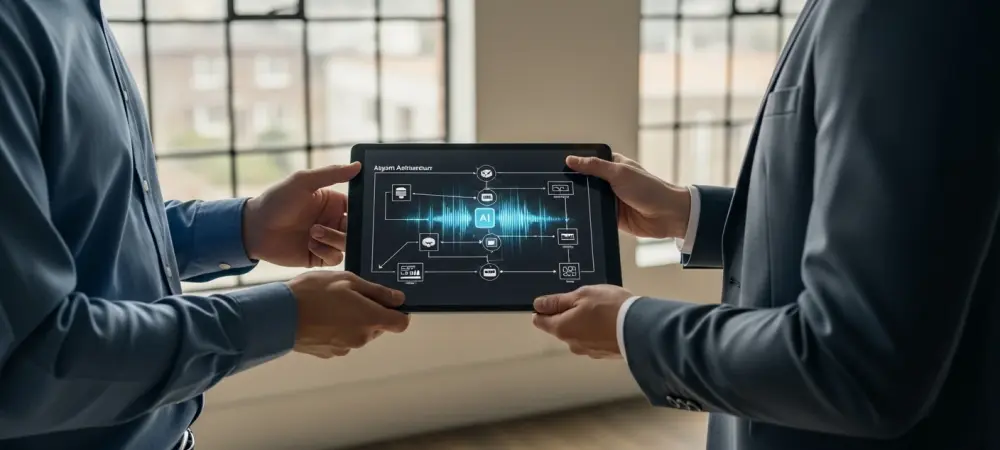
The software development pipeline, once a predictable series of human-driven commands and automated scripts, is quietly undergoing a profound transformation where intelligent agents are beginning to not only execute tasks but also to think, plan, and act on their own initiative. This emerging paradigm, known as Bot-Driven Development (BotDD), is moving beyond simple automation to create a sophisticated, hybrid ecosystem where software bots are no longer passive tools but active, decision-making participants in the entire software development life cycle. At its heart, this shift represents the next evolutionary step for DevOps, one that fundamentally alters workflows, reshapes team dynamics, and redefines the very essence of software engineering by elevating artificial intelligence from a mere assistant to a proactive co-developer. The core thesis is clear: the future of building and operating software lies in a symbiotic collaboration between human intellect and the autonomous, scalable intelligence of AI-powered bots.
Beyond the Script What Happens When Your Pipeline Starts Making Decisions
The fundamental distinction between traditional automation and Bot-Driven Development lies in the concept of agency. For years, DevOps has excelled at automating handoffs and executing predefined tasks within a CI/CD pipeline, essentially teaching machines to follow a detailed set of instructions. BotDD, in contrast, empowers software agents with the autonomy to identify problems, formulate solutions, and execute them independently. This moves the bot’s role from simply answering “how” to perform a human-defined command to proactively determining “what” needs to be done and “why” it is necessary, a critical leap from rote execution to cognitive participation.
This transition from passive script-follower to active decision-maker manifests in powerful ways. Consider a bot that detects a potential security vulnerability within a codebase; instead of merely flagging it for a human engineer, it independently generates a patch, tests it against the existing suite, and submits a pull request for final human approval. Similarly, an intelligent agent monitoring infrastructure can observe a sudden surge in user activity, anticipate the resulting resource strain, and proactively initiate scaling procedures to maintain system performance without any human intervention. These actions transform linear pipelines into intelligent, self-optimizing feedback loops where bots manage the operational noise, allowing human talent to focus on strategic innovation.
The Great Evolution From Pre Programmed Automation to Proactive Agency
This evolution from pre-programmed automation to proactive agency is not merely an incremental improvement but a fulfillment of the original promise of DevOps: creating faster feedback loops and fostering a culture of continuous learning and improvement. By offloading routine yet complex responsibilities—such as managing dependency updates, triaging low-level alerts, or merging feature branches after successful tests—these intelligent agents dramatically reduce the cognitive load on engineering teams. This minimizes the context-switching that drains productivity and frees developers from the tedious work of “babysitting” processes, allowing them to dedicate their expertise to architectural design and complex problem-solving. The focus shifts from managing the mechanics of the process to evaluating the outcomes it produces.
The technological underpinnings for this evolution are now firmly in place, supported by a rapidly expanding ecosystem of AI-driven tools that integrate across every phase of the software development life cycle. Platforms like GitHub Copilot have become AI pair programmers, while services such as AWS CodeGuru automatically review code for performance bottlenecks and security flaws. In project management, Atlassian Intelligence can generate and update Jira tickets from plain language conversations, and in incident response, PagerDuty uses machine learning to analyze alerts and optimize resolution workflows. These tools are no longer novelties; they function as highly efficient digital teammates that monitor systems, surface critical insights, and execute complex actions on command, accelerating development from concept to deployment.
The New DevOps Landscape How Bots Are Becoming Active Co Developers
As these intelligent agents become more integrated into daily workflows, the DevOps landscape is being reshaped around a model of active collaboration between humans and bots. In this new paradigm, developers increasingly define the desired end state—the “what” and the “why”—while the AI co-developer handles the intricate, step-by-step implementation, or the “how.” For instance, a developer might instruct a bot to “refactor this service to use the new authentication API,” and the bot will analyze the codebase, formulate a multi-step plan, write the necessary code, and run tests, all while providing progress updates for human oversight. This elevates the developer’s role from a hands-on coder to that of a system architect and strategic reviewer.
This collaborative dynamic is creating new possibilities for efficiency and innovation. Infrastructure as Code (IaC) platforms like Pulumi can now generate complex cloud configurations from simple English descriptions, abstracting away the boilerplate code required to provision resources. Similarly, observability tools like Dynatrace and Datadog leverage AI to not only report on system health but also predict potential outages before they occur and pinpoint root causes with remarkable speed. This proactive, intelligent assistance means that development teams can tackle more ambitious projects and deliver value faster, as their AI counterparts handle the foundational and repetitive work that traditionally consumed a significant portion of their time.
Evidence in Action Real World Implementations and Measurable Results
The theoretical benefits of Bot-Driven Development are being validated by tangible, real-world implementations that deliver measurable improvements in speed, reliability, and efficiency. At GE Digital, for example, engineers developed an internal chatbot named Riley that is integrated directly into their DevOps pipeline. Riley can initiate code deployments on command, answer developer queries about test statuses, and serve as a central information hub, significantly improving communication and reducing the time required to resolve issues. This automation has freed up engineering talent to focus on more innovative and value-driven work.
On a larger scale, major technology companies are demonstrating the profound impact of AI-augmented development. Netflix famously utilized AI-powered chaos engineering tools to proactively identify system weaknesses, which contributed to a 23% reduction in unexpected global downtime. Similarly, Microsoft has advanced its Visual Studio Copilot with a “Planning” feature that enables the AI to break down complex, multi-step engineering tasks, research the codebase, and implement changes autonomously under developer supervision. Early results from this initiative showed a 15–20% increase in success rates on challenging engineering benchmarks, reinforcing the notion that a hybrid human-bot model drives superior outcomes and accelerates the delivery of more reliable software.
The Human Element Navigating the Challenges and Mastering the Hybrid Workflow
Despite its immense potential, the transition to a bot-enabled DevOps model is not without significant challenges that demand careful navigation. The risk of unsupervised, bot-generated code introducing subtle bugs or increasing technical debt is a primary concern. An extensive study involving GitHub Copilot found that while adoption was high, it correlated with a 41% increase in bugs found within pull requests, likely because early AI models were trained on code of varying quality and replicated poor patterns. This finding underscores the non-negotiable importance of skilled human engineers who must review, validate, and refine all AI-generated output to maintain code quality and architectural integrity.
Furthermore, granting bots the autonomy to alter code and infrastructure raises critical security, compliance, and governance issues. To mitigate risks such as configuration drift, algorithmic bias, or intellectual property violations, organizations must implement robust audit trails, continuous monitoring of AI tools, and strict governance frameworks. This requires a “shift everywhere” security mindset, embedding safeguards at every stage of the AI-augmented life cycle. The successful adoption of BotDD also depends on addressing the skills gap; professionals must evolve their capabilities in cloud-native technologies and AI orchestration to effectively manage and guide their new digital counterparts, ensuring that the hybrid workflow is both productive and secure.
Ultimately, the journey toward Bot-Driven Development was not about replacing human ingenuity but about augmenting it. The organizations that succeeded were those that established a balanced, collaborative culture where humans provided strategic direction, critical thinking, and ethical oversight, while bots delivered speed, scale, and data-driven execution. This hybrid model required a rethinking of team structures, the creation of new roles focused on the human-bot interface, and a commitment to continuous learning. The conclusion reached by industry leaders was clear: mastering this symbiotic partnership was the definitive competitive advantage, creating a win-win scenario of accelerated innovation for businesses, a more fulfilling work experience for developers, and superior products for end-users.