

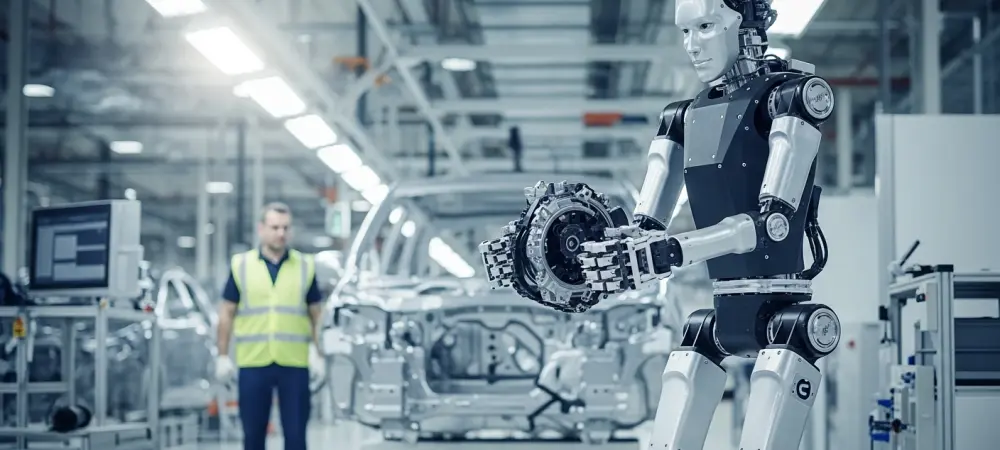
As a specialist in industrial automation, I have witnessed the rapid transition of robotics from static, caged machines to dynamic, mobile partners on the factory floor. The recent expansion of humanoid robotics from pilot programs in the United States to the rigorous manufacturing landscape of Germany marks a pivotal moment for the global automotive industry. This shift highlights not only the maturity of hardware and AI integration but also a significant change in how we approach labor, ergonomics, and production scalability in a high-stakes environment.
Moving humanoid robots from a single pilot site in the U.S. to major manufacturing headquarters in Europe involves massive logistical shifts. What specific technical benchmarks must a startup meet to justify this expansion, and how does the operational environment in a facility like Dingolfing differ from North American sites?
To justify moving from a pilot in Spartanburg to the heart of German manufacturing, a startup must demonstrate exceptional reliability in task versatility and integration with existing production systems. In these high-scrutiny environments, the robot must prove it can handle the “dull, dirty, and dangerous” tasks—like carrying heavy components and inserting parts—without constant human intervention. The German facilities, such as Dingolfing or Munich, represent the most established and complex nodes of the production network, where every second of downtime is scrutinized. Unlike the relatively newer North American sites, these European headquarters often have tighter layouts and a long history of traditional automation, requiring a humanoid that can navigate human-designed spaces with surgical precision.
Traditional industrial robots are typically bolted to the floor and confined to safety cages for specialized tasks. When transitioning to mobile humanoids for part insertion and heavy lifting, what are the primary safety protocols being developed, and how does this flexibility fundamentally change the layout of a production line?
The fundamental shift here is moving away from the “safety cage” mentality to a system where the robot is an autonomous, mobile actor within a shared workspace. Because these robots are designed to move through spaces originally built for people, the safety protocols focus on real-time spatial awareness and the ability to stop or reroute instantly when a human worker is detected. This flexibility allows us to reimagine the factory floor; we no longer have to design production lines around static, bolted-down machines that dictate the flow of parts. Instead, humanoids can move logistics between stations, meaning the layout can become more modular and adaptable to the increasing complexity of electric vehicle assembly.
Integrating advanced AI models that allow robots to interpret and act on natural language commands marks a shift from rigid programming. How does this capability change the daily interaction between floor workers and machines, and what challenges arise when deploying these systems in high-noise, high-speed industrial environments?
The integration of AI, particularly through partnerships like the one between Figure and OpenAI, allows workers to interact with machines using natural language rather than complex coding or rigid interfaces. This turns the robot into a collaborator that can understand a command like “move these parts to the assembly station” without needing a technician to reprogram its path. However, the sensory reality of a factory is a major hurdle; high-noise environments can interfere with voice recognition, and the high-speed nature of production leaves no room for linguistic ambiguity. To succeed, these AI models must be fine-tuned to filter out industrial background noise and respond with 100% accuracy to ensure safety and efficiency are never compromised.
In regions with stringent labor protections and influential works councils, automation is often scrutinized for its impact on the workforce. How is the deployment of humanoids framed to emphasize ergonomic relief over job displacement, and what role do worker representatives play in the technical integration of these platforms?
In Germany, where labor protections are some of the strongest in the world, the introduction of humanoid robots is framed specifically as a solution to ergonomic strain and demographic shifts. By tasking robots with physically taxing and repetitive labor, the company positions the technology as a tool to protect the health of an aging workforce rather than a means to cut headcounts. Works councils are involved early in the process, ensuring that the technology acts as a supplement to human labor, which is essential for getting the necessary buy-in for deployment. This collaborative approach turns the integration into a negotiation about worker well-being, focusing on how these machines can take over the “dirty” jobs that humans no longer want to or should perform.
With major automotive players testing various platforms from competitors like Tesla and Boston Dynamics, the race for factory floor dominance is accelerating. What specific performance metrics, such as uptime or maintenance costs, will determine which humanoid wins out, and how quickly can these fleets realistically scale?
While the hype often focuses on what these robots look like, the “winner” of the factory floor will be decided by cold, hard metrics like uptime, maintenance requirements, and the total cost of ownership. For a fleet to scale, the robots must operate reliably across multiple shifts without frequent breakdowns, and the cost of maintaining them must be lower than the rising costs of manual labor and traditional automation. With Figure having raised over $1.5 billion and boasting a valuation of $2.6 billion, the financial runway is there, but the real test is the next 12 to 18 months of 24/7 operations. If these platforms can prove they aren’t just expensive experiments but durable tools, we could see a rapid scaling where fleets of thousands are deployed across global manufacturing networks.
What is your forecast for humanoid robotics in manufacturing?
I forecast that within the next decade, humanoid robots will transition from a specialized novelty to a standard piece of industrial equipment, much like the robotic arm did forty years ago. We are currently in the “stress-test” phase, where the unforgiving reality of production schedules will weed out platforms that lack durability. Within the next few years, as the EV transition increases production complexity, I expect to see a “land grab” where manufacturers who successfully integrated these AI-driven machines will have a massive competitive advantage in labor flexibility and cost control. Ultimately, the successful deployment in high-standard environments like Germany will serve as the blueprint for the entire global manufacturing sector, proving that the future of the assembly line is mobile, humanoid, and collaborative.