

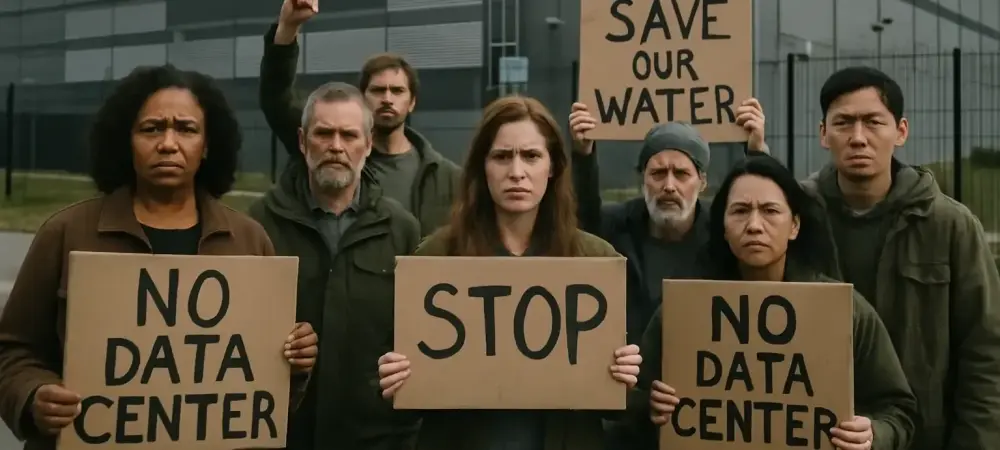
In a striking display of community power, the small city of St. Charles, Missouri, has become a focal point in the national debate over data center developments, with local residents successfully pushing back against a massive project that could have altered their way of life. This resistance, centered on a proposed 440-acre data center known as Project Cumulus, has drawn attention not only for its immediate impact but also for the broader implications it holds for similar initiatives across the United States. Environmental concerns, resource strain, and a lack of transparency fueled the opposition, ultimately leading to the project’s withdrawal just before a crucial city council meeting. The involvement of a prominent political figure has further amplified the story, casting a spotlight on the tension between technological advancement and community welfare. This development signals a growing trend of public scrutiny over industrial projects that prioritize corporate gain over local interests, setting a precedent for how grassroots movements can influence policy and corporate decisions.
Community Pushback and Project Withdrawal
Local Resistance in St. Charles
The saga of Project Cumulus in St. Charles unfolded as a testament to the strength of community organizing, with residents voicing significant concerns over the proposed data center’s proximity to residential areas along Highway 370. Many worried about the undisclosed identity of the end user, fearing it could be a tech giant with little regard for local impact. Additionally, the potential strain on water and energy resources sparked widespread unease, as such facilities are known to consume vast amounts of both. CRG Cumulus LLC, tied to a major construction firm, faced a barrage of criticism for failing to adequately inform the public about the project’s scope and consequences. This lack of communication proved to be a critical misstep, as it galvanized opposition and ultimately led to the application being pulled just before a decisive city council meeting. The outcome highlighted how deeply felt local concerns can derail even well-funded initiatives when transparency is lacking, marking a significant moment for St. Charles residents who felt their voices were finally heard.
Corporate Response and Future Uncertainty
Following the intense backlash, representatives from CRG Cumulus LLC acknowledged their shortcomings in engaging with the St. Charles community, admitting that more proactive dialogue could have mitigated misunderstandings. Korb Maxwell, a spokesperson for the project, expressed intentions to reassess their approach, though no clear timeline or commitment to resubmit a revised proposal has been provided. This uncertainty leaves the door open for future negotiations, but it also underscores a broader lesson for developers: community buy-in is not just a formality but a necessity. The withdrawal of Project Cumulus serves as a cautionary tale for other companies eyeing similar ventures, suggesting that ignoring local sentiment can result in costly delays or outright cancellations. Meanwhile, St. Charles stands as a case study in how public pressure can force corporate entities to rethink their strategies, potentially reshaping how such projects are pitched and implemented in other regions facing comparable challenges.
Broader Implications and Political Support
National Trend of Data Center Opposition
Across the United States, the St. Charles case is far from an isolated incident, as a wave of opposition to data center projects gains momentum in communities from Louisa County, Virginia, to Frankfort, Indiana. These regions have seen proposals from major players like AWS and Logix Realty LLC withdrawn due to similar concerns over environmental impact and resource allocation. The high energy and water demands of data centers, critical to supporting modern technology infrastructure, often clash with local priorities, especially in areas where resources are already stretched thin. This growing scrutiny reflects a shift in public awareness, with citizens increasingly questioning the trade-offs of hosting such facilities. Missouri itself, with significant data center activity near Kansas City and St. Louis involving operators like TierPoint and Iron Mountain, exemplifies this tension. The national pattern suggests that developers must adapt to a new reality where community and environmental considerations carry as much weight as economic benefits.
Political Endorsement and Policy Shifts
Adding a powerful voice to the St. Charles narrative, Senator Bernie Sanders publicly commended the community’s efforts through social media, framing their resistance as a stand against unchecked corporate expansion. His statement resonated with a broader sentiment that prioritizes local welfare over industrial growth, amplifying the significance of the St. Charles outcome on a national stage. This political endorsement aligns with emerging legislative responses, such as St. Charles considering a one-year moratorium on data center applications to better evaluate their impacts. Similar measures, like a recent ban in Oldham County, Kentucky, which also halts ongoing projects, indicate a proactive stance by local governments to regulate such developments. These policy shifts signal a pivotal moment for the industry, where community activism, backed by political support, could redefine the parameters for future data center projects. The interplay between public opposition and legislative action suggests a future where transparency and sustainability become non-negotiable for developers seeking approval.