

Imagine a digital landscape where every millisecond counts, where businesses depend on lightning-fast data processing to stay competitive in an era of IoT and 5G, and where the data center industry is driven by this urgent need for speed. This reality is shaping the market today, and Cogent, a leading fiber and data center company, has just made a significant move by launching seven new Edge data centers in Q2 of this year. With a total portfolio now spanning 187 facilities and 2.1 million square feet, this expansion has sparked lively discussions among industry observers. This roundup dives into diverse opinions, strategies, and analyses from multiple sources to unpack what Cogent’s growth means for the sector, exploring the balance of innovation, financial strategy, and market trends.
Exploring Cogent’s Strategic Growth through Expert Lenses
Innovative Reuse of Legacy Infrastructure
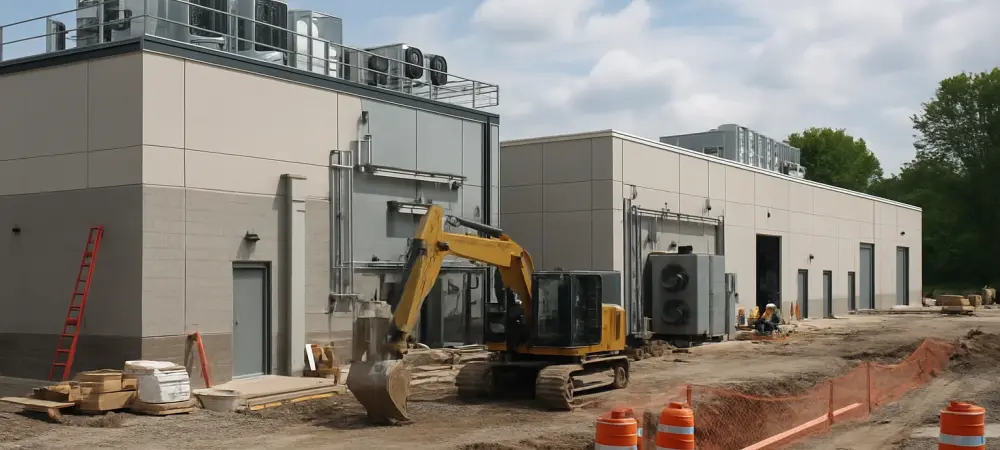
Industry analysts have been quick to comment on Cogent’s approach of transforming former Sprint switch sites, acquired a few years back, into modern Edge and core data centers. Many view this as a smart, cost-effective strategy, emphasizing how repurposing existing structures can save on construction expenses while accelerating deployment timelines. The addition of seven new Edge facilities, each supporting roughly 40 racks and 350 kilowatts of power, is often cited as a practical step to meet localized data needs.
However, not all perspectives are uniformly positive. Some infrastructure specialists caution that retrofitting older buildings comes with hidden complexities, such as outdated electrical systems or zoning restrictions, which could inflate costs over time. A segment of the industry argues that building new facilities might offer better long-term value despite higher upfront investments, highlighting a divide in strategic thinking.
This debate underscores a broader tension in the sector: balancing speed and savings with sustainability and scalability. Observers note that Cogent’s current tally of 86 Edge and 101 core data centers, boasting a combined 214 MW of power capacity, positions it as a key player to watch in navigating these challenges. The consensus leans toward cautious optimism, with many intrigued by how this adaptive model could inspire others.
Riding the Edge Computing Wave
The surge in demand for edge computing, fueled by technologies requiring low-latency data processing, is a hot topic among tech strategists. Many commend Cogent’s focus on smaller-scale Edge facilities as a direct response to regional business needs, especially for applications like real-time analytics and smart infrastructure. These localized solutions are seen as vital in a digital economy where proximity to end-users drives performance.
Contrasting views emerge on the competitive landscape, with some market watchers warning of potential oversaturation in certain geographies. They argue that while Edge data centers are crucial, overinvestment in less densely populated or niche areas could strain returns. This concern is balanced by others who believe Cogent’s calculated expansion offers a first-mover advantage against rivals slower to adapt to this trend.
A recurring theme in these discussions is the transformative potential of edge solutions for industries ranging from manufacturing to healthcare. Analysts highlight that Cogent’s growth aligns with a broader shift toward decentralized data processing, positioning the company as a potential leader if it can manage the risks of market dynamics effectively.
Wholesale Leasing and Asset Monetization Strategies
Cogent’s shift from a retail-only colocation model to exploring wholesale leasing or sales of 24 former Sprint properties has drawn mixed reactions. Some financial consultants see this as a savvy move to unlock capital for further expansion, pointing to ongoing negotiations with six interested parties as evidence of market interest. The flexibility to lease back portions for network needs is also praised as a way to maintain operational control.
On the flip side, skepticism exists around the feasibility of these deals. Industry voices note that buyer hesitancy, particularly the struggle to secure non-refundable deposits, reflects broader financing constraints in the data center space. This raises questions about whether asset monetization can deliver the expected windfall or if pricing adjustments might be needed to close transactions.
A nuanced perspective suggests that Cogent’s approach mirrors a growing trend of portfolio diversification, but success hinges on navigating buyer confidence and market conditions. Commentators agree that this pivot could serve as a case study for other operators grappling with high capital demands and the need to balance growth with liquidity.
Financial Dynamics and Investment Priorities
Financial analysts have dissected Cogent’s Q2 performance, which includes revenue of $246.2 million, a 6.9% rise in adjusted EBITDA to $73.5 million, and a hefty $56.2 million in capital expenditure. Many interpret this aggressive investment in infrastructure as a bold bet on long-term market share gains, even at the cost of short-term revenue dips. The commitment to scaling capacity is often framed as essential in a competitive field.
Differing opinions surface on the sustainability of such high capex levels. Some fiscal experts caution that prolonged heavy spending could strain cash flows if revenue growth doesn’t accelerate in tandem. Others counter that Cogent’s strategy reflects an industry norm where upfront costs pave the way for dominance in high-demand areas like edge computing.
The dialogue around financial strategy often circles back to resilience and adaptability. Observers suggest that Cogent’s ability to maintain a balance between investment and profitability will be critical in shaping its trajectory over the next few years, with many eager to see how these numbers evolve in subsequent quarters.
Key Takeaways from Industry Discussions
Reflecting on the diverse insights gathered, several key themes emerged from the discourse surrounding Cogent’s recent moves. The strategic repurposing of legacy assets was widely recognized as an innovative approach, though tempered by concerns over retrofitting challenges. The focus on Edge data centers resonated as a timely response to market needs, yet sparked debates on geographic saturation risks. Financially, the blend of heavy investment and asset monetization efforts painted a picture of calculated ambition, with varying views on short-term versus long-term trade-offs.
Final Thoughts and Next Steps
Looking back, the roundup of perspectives revealed a complex but fascinating snapshot of Cogent’s role in the data center industry during this pivotal quarter. For businesses and stakeholders, the actionable step forward lies in closely monitoring how such expansions influence localized data access and operational efficiencies. Exploring partnerships with Edge providers could unlock new competitive edges. Additionally, industry players might consider studying adaptive infrastructure models to balance cost and growth. As the sector continues to evolve, staying informed on financial strategies and market responses will be crucial for navigating similar challenges ahead.