

The unprecedented arrival of Beast of Reincarnation has redefined the benchmark for PC performance by forcing even the most capable modern systems to operate at their extreme computational and thermal limits. As a technical showcase for the latest iteration of Unreal Engine 5, this title serves as a rigorous diagnostic tool that exposes the strengths and weaknesses of current-generation silicon. While many contemporary releases aim for broad compatibility, this experience prioritizes uncompromising visual fidelity, utilizing high-density assets and complex simulation layers that were once deemed impossible for real-time rendering. The game effectively signals the end of the cross-generation era, demanding that players adopt modern storage standards and high-bandwidth memory architectures to maintain even a baseline level of playability. Beyond the surface-level aesthetics, the title integrates deep system-level optimizations that take advantage of multi-threaded processing and advanced shader execution, making it a pivotal case study for the current trajectory of interactive software development and high-end hardware synergy.
Narrative Framework: The Synergy of Human and Beast
The world of this title is defined by the haunting remains of a Japan that has been reclaimed by a relentless natural force following a catastrophic event known as the reincarnation anomaly. Players guide Emma, a resilient survivor, and her constant companion Ku, a highly intelligent canine, through environments that transition from the skeletal remains of high-tech megacities to overgrown shrines draped in bioluminescent flora. This setting is not merely a backdrop but a living entity where the story is told through environmental details, such as rusted subway cars serving as makeshift habitats and ancient stone carvings glowing with residual energy. The narrative weight rests heavily on the bond between the two protagonists, moving away from traditional role-playing tropes where companions serve as secondary assets. Instead, the emotional stakes are high as the duo navigates a landscape where every discovery reveals more about the mysterious forces that reshaped the planet and the personal cost of survival in a world that no longer belongs to humanity. Strategic cooperation forms the core of the combat and exploration systems, requiring a level of tactical planning that distinguishes it from standard action titles. Players must issue precise commands to Ku to manipulate the battlefield, using the dog’s ability to stagger heavy enemies or flush out snipers hidden in the verticality of the ruins. While Emma utilizes agile swordplay and acrobatic maneuvers to deal direct damage, the effectiveness of her strikes is often dependent on the openings created by her canine partner. This relationship is further deepened by independent progression systems for both characters, allowing for a high degree of customization through specialized maneuvers and elemental buffs that reflect their growing synchronicity. As players unlock more advanced skills, the coordination between the two becomes a seamless dance of steel and instinct, turning every encounter with the anomaly’s distorted creatures into a test of both reflexes and situational awareness within a beautifully realized post-apocalyptic theater.
Technical Foundation: Unreal Engine 5 at the Limit
The developers have leveraged the comprehensive suite of Unreal Engine 5 features to construct a world of nearly infinite detail, pushing the boundaries of what virtualized geometry can achieve. At the heart of this visual achievement is the Nanite system, which allows for the rendering of millions of polygons in every frame without the traditional performance bottlenecks associated with complex mesh data. This technology ensures that even the smallest details, from the individual pebbles on a forest floor to the intricate carvings on a futuristic monolith, retain their sharpness regardless of the player’s distance. By eliminating the need for traditional level-of-detail transitions, the engine maintains a consistent visual density that enhances immersion, making the transition between cinematic sequences and gameplay virtually indistinguishable. The sheer scale of the environments, coupled with the granular detail of the assets, creates a sense of presence that sets a new industry standard for open-world fidelity and architectural complexity.
Dynamic lighting and environmental physics further elevate the technical presentation, creating a world that responds realistically to every player action and atmospheric shift. The Lumen global illumination system handles light propagation with remarkable accuracy, calculating how sunlight filters through dense canopies or how the glow of magical abilities reflects off damp surfaces in real time. This is complemented by a sophisticated physics engine that governs the movement of characters and the environment alike; for instance, the dog’s interaction with uneven terrain is handled with a level of realism that prevents clipping and ensures grounded movement. Every blade of grass and hanging vine reacts to the character’s passage, while the destruction of environmental objects follows realistic trajectories based on material density. These interconnected systems work in concert to create a believable, reactive ecosystem where lighting, geometry, and physics combine to provide a sensory experience that justifies the significant hardware resources required to run the game.
Hardware Requirements: Balancing Performance and Fidelity
To access this high-fidelity experience, the baseline hardware requirements are significantly more stringent than those of previous years, reflecting a shift toward modern computing standards. A 64-bit operating system and a high-speed SSD with at least 45 GB of free space are mandatory, as traditional mechanical drives cannot handle the rapid data streaming required by the Nanite geometry system. Minimum specifications target a 1080p output at approximately 40 frames per second using low quality settings, which necessitates an Intel Core i5-8400 or an equivalent processor paired with an 8 GB graphics card. At this entry-level tier, players will encounter several visual compromises, such as reduced shadow resolution and more frequent object pop-in, but the fundamental gameplay remains intact. The move toward requiring DirectX 12 and significant VRAM at the entry level highlights how modern developers are prioritizing advanced features over legacy support to ensure the integrity of their creative vision. For players who demand a more fluid 60 frames per second experience at standard resolutions, the recommended specifications call for more robust components like the Intel Core i7-12700K and a 12 GB graphics card. This hardware allows for the activation of higher-quality textures and more complex lighting effects, bringing the world closer to the intended aesthetic without the stuttering often seen on lower-tier systems. The game truly reveals its full potential at the maximum presets, where volumetric effects, high-resolution particles, and long-range draw distances are fully realized. At these settings, the rendering engine provides a visual feast that is devoid of the distracting transitions between different quality levels found in less demanding titles. However, achieving this level of performance requires a balanced system where no single component acts as a bottleneck, emphasizing the importance of a holistic approach to PC building that considers both raw GPU power and the supporting architecture of the CPU and storage.
Performance Analysis: Benchmarking Across Modern Resolutions
Benchmark testing reveals that the title is an exceptionally demanding application that scales aggressively with increased graphics processing power. At a 1080p resolution with ultra settings enabled, a mid-range card like the RTX 4060 Ti is generally required to maintain a consistent 60 frames per second, especially during intense combat sequences involving multiple enemies and particle effects. Moving the resolution to 1440p places a much heavier burden on the hardware, making enthusiast-grade cards like the RX 6800 XT the preferred choice for players who want to avoid resolution scaling or frame generation. The jump in pixel count at this resolution significantly impacts frame times, requiring the GPU to manage a massive influx of lighting data and geometric detail. These tests demonstrate that while the game is highly optimized for modern architectures, there is no substitute for raw horsepower when attempting to run the simulation at high refresh rates without compromising on visual quality. The 4K resolution tier serves as the ultimate stress test for even the most expensive enthusiast hardware currently available on the market. Only top-tier graphics cards, such as the RTX 4080 or the RX 7900 XTX, are capable of maintaining performance above the 60 frames per second threshold when all graphical bells and whistles are enabled. The sheer volume of pixels, combined with the real-time ray tracing of the Lumen system, creates a workload that can saturate the memory bandwidth of lesser components. For those aiming to play at this level, the inclusion of next-generation hardware benchmarks suggests that the game was designed with future scalability in mind, ensuring that as hardware evolves from 2026 into the following years, the game will continue to look and play exceptionally well. This resolution highlights the necessity of advanced cooling solutions and stable power delivery, as the prolonged load of a 4K session can push modern components to their thermal limits, necessitating a well-ventilated chassis.
Resource Management: Memory Allocation and Processor Scaling
While the visual aspects of the title are often the primary focus, the way the engine manages system resources is equally critical for maintaining a stable and responsive experience. Video memory usage is surprisingly well-optimized, typically requiring between 6 GB and 9 GB of VRAM depending on the resolution and texture settings selected by the player. Systems with higher VRAM capacities will see the engine allocate more memory for caching purposes, which helps to smooth out the loading of assets as the player moves between different districts of the city. However, the system RAM requirements are quite rigid, with the game frequently consuming between 13 GB and 15 GB during active gameplay. This makes 16 GB the absolute minimum for a stable experience, as any background tasks could lead to page filing and significant performance drops. Players with 32 GB of high-speed DDR5 memory will find that the game runs with much more consistent frame times, especially in the more open and asset-heavy environments. Processor scaling is another area where the title shows its sophistication, as the engine is designed to distribute its heavy workload across up to 16 hardware threads. This multi-threaded approach is essential for managing the complex artificial intelligence of the canine companion and the varied behavior patterns of the enemies encountered throughout the ruins. The “sweet spot” for performance is found at 12 threads, where the balance between physics calculations, AI logic, and draw call management is at its most stable. While the game can technically run on quad-core processors, such systems often struggle with micro-stuttering during intense action where the physics engine is forced to calculate numerous simultaneous collisions. Utilizing a modern, high-clocked CPU ensures that the frame delivery remains smooth, preventing the input lag that can ruin the timing-sensitive combat. This emphasis on CPU performance underscores the transition toward more complex simulations where the processor is just as vital to the visual experience as the graphics card.
Strategic Integration: Industry Trends and Hardware Reliability
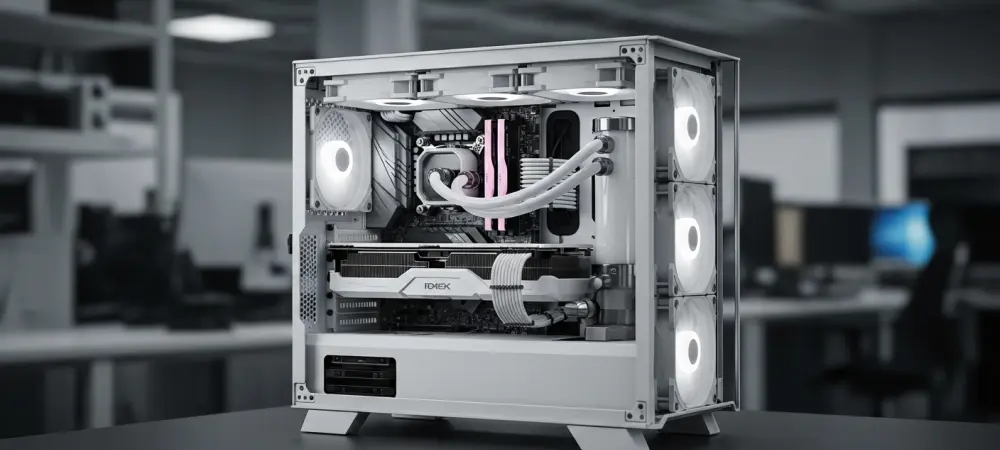
The comprehensive benchmarking of this title utilized a controlled environment featuring the latest motherboards and high-speed memory modules from industry leaders like GIGABYTE and Kingston. These rigorous tests confirmed that the stability of the experience was heavily dependent on the quality of the supporting hardware, particularly the ability of the motherboard to deliver clean power and the efficiency of the liquid cooling systems. By isolating variables such as thermal throttling, the testing process highlighted how critical high-bandwidth DDR5 memory has become for the latest wave of Unreal Engine 5 titles. The results demonstrated that even the most powerful GPUs could be held back by subpar system components, reinforcing the idea that a truly high-end gaming PC must be built with a focus on reliability and thermal management. This data provided a clear picture of how modern hardware should be configured to handle the increasing complexity of digital worlds, offering a blueprint for enthusiasts looking to maintain peak performance over long sessions.
Ultimately, the technical performance of this release signaled a broader shift within the industry toward a new standard of graphical and computational fidelity. By moving away from legacy support and making advanced features like SSD streaming and DirectX 12 mandatory, the developers established a framework that prioritized the future of the medium. The analysis showed that as hardware continues to evolve from 2026, the demand for more sophisticated memory management and multi-threaded optimization will only grow. This title served as a benchmark not just for today’s hardware, but as a roadmap for what will be required in the coming years of development. To ensure a future-proof setup, users were encouraged to invest in components that provide high memory bandwidth and robust cooling, as these factors proved to be the deciders between a stutter-heavy experience and a seamless journey through the ruins. The transition toward this new era of gaming demonstrated that the boundaries between simulation and reality would continue to blur as long as the hardware could keep pace.