

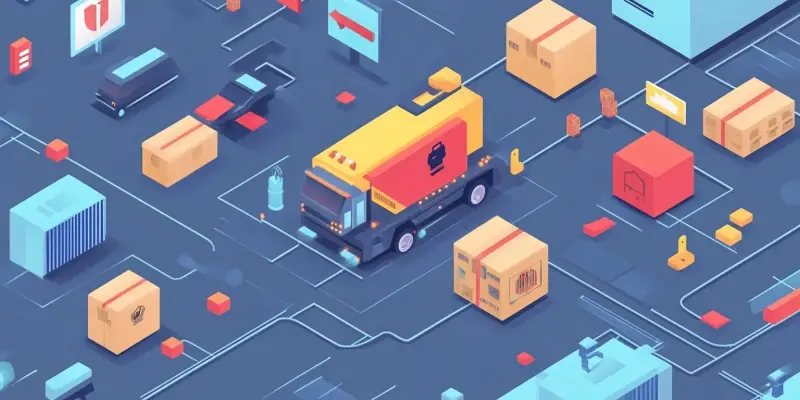
The logistics and last-mile delivery industry is undergoing a significant transformation driven by the surge in e-commerce and the need to enhance efficiency, productivity, and precision. With the market projected to grow from $108.1 billion in 2020 to an anticipated $200 billion by 2027, logistics companies are increasingly turning to automation to meet rising customer expectations and maintain high levels of satisfaction. The impact of automation in this sector is undeniable, as it offers solutions to optimize operations and reduce manual labor, contributing to streamlined processes and a reduction in human errors.
The Role of Robotic Process Automation
Enhancing Efficiency and Productivity
One of the primary forms of automation making a significant impact on the logistics industry is Robotic Process Automation (RPA). This technology leverages software-driven robots to efficiently perform repetitive tasks that were traditionally handled by human workers. These tasks include transporting packages within warehouses, packaging goods, labeling, and other critical processes essential for timely and accurate deliveries. Leading the charge in utilizing RPA is Amazon, which has implemented transport pods like Hercules and Titan to optimize their warehouse operations. These innovations have drastically improved productivity by reducing manual labor and increasing operational speed.
RPA technology’s role extends beyond mere physical handling of goods. It also encompasses the management of data, real-time tracking, and error reduction. Automation ensures that each package is accurately processed, labeled, and routed to its destination, minimizing delays and improving delivery times. By automating these repetitive processes, companies are not only enhancing their operational efficiency but also freeing up their human workforce to focus on higher-level tasks that require problem-solving and critical thinking.
Case Study: Fastway Couriers in South Africa
In South Africa, companies like Fastway Couriers have embraced automation to revolutionize their operations. An example of this is their automated warehouse in Johannesburg, which sorts parcels based on dimensions, weight, and size, catering to destinations like Durban and Cape Town. The automated system has substantially reduced human error, thus enhancing overall operational efficiency. According to Damian Velayadum, Group Financial Director at Fastway Couriers, this technology has significantly boosted productivity by 80-85%, allowing the facility to process over 4,000 parcels an hour.
The automated sorting system allows employees to redirect their efforts towards resolving any issues that may arise and keeping parcel information up-to-date for accurate tracking. This shift not only improves employee satisfaction by reducing monotonous tasks but also leads to better customer service as employees are more available to handle customer inquiries and issues promptly. Fastway Couriers’ adoption of automation stands as a testament to the transformative impact such technologies can have on logistical operations.
Innovations in Last-Mile Delivery
Drone Technology and Its Advantages
In Europe, the adoption of drone technology for last-mile delivery is steadily gaining momentum, offering innovative solutions for reaching hard-to-access locations and substantially cutting down on operational costs. Drones provide a significant advantage over traditional vehicles due to their ability to bypass traffic congestion and navigate difficult terrains, ensuring quicker and more reliable deliveries. Studies have shown that drones can reduce operational costs by up to 70%, making them an attractive option for logistics companies looking to enhance efficiency.
However, despite their potential, the use of drones for logistical purposes faces regulatory challenges. For instance, in South Africa, the South African Civil Aviation Authority (SACAA) imposes stringent regulations that limit the deployment of drones for commercial purposes. Commercial drone operators are required to register their drones, and regulations prohibit the use of drones heavier than 7 kg, presenting a significant hurdle for widespread adoption in logistics. These regulatory barriers highlight the need for evolving policies that keep pace with technological advancements to fully unlock the potential of drone technology in last-mile delivery.
### Future Prospects and Regulatory Considerations
The logistics and last-mile delivery industry is experiencing a major transformation, largely driven by the rapid growth of e-commerce and the necessity to improve efficiency, productivity, and accuracy. With the market expected to expand from $108.1 billion in 2020 to an estimated $200 billion by 2027, logistics firms are increasingly embracing automation to keep up with escalating customer demands and sustain high levels of satisfaction. The role of automation in this sector is profound, providing solutions that elevate operations and diminish manual labor. This, in turn, leads to more streamlined processes and a noticeable reduction in human errors. Automation technologies such as autonomous vehicles, drones, and robotics are being integrated into the logistics chain to handle tasks that were previously done manually, enabling faster, more reliable deliveries. This technological shift not only boosts operational efficiency but also enhances overall customer experience by ensuring timely and accurate deliveries, which are crucial in today’s competitive market.