

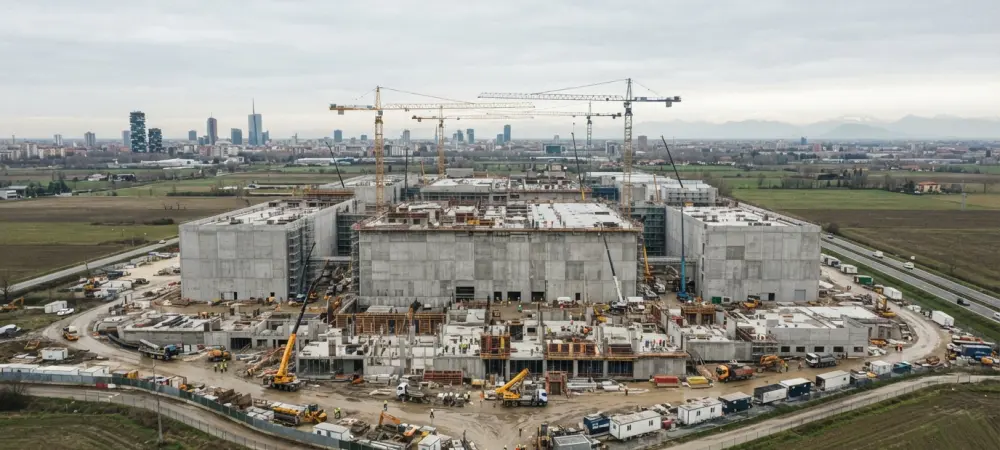
The digital map of Europe is being redrawn as massive cooling fans and server racks migrate from the rainy suburbs of Ireland toward the industrial heart of Northern Italy. For over a decade, Dublin reigned supreme as the cloud capital of the continent, but the winds of change are now blowing through Milan’s expanding tech corridors. This transformation reflects a fundamental reordering of how digital resources are distributed across the region to meet the needs of a new technological era.
A Changing Continental Power Balance
The European data center landscape is undergoing a significant transformation as the city of Milan prepares to leapfrog Dublin to become the fifth-largest market on the continent. While Dublin has long been a primary destination for cloud infrastructure, Milan has seen its market capacity grow sixfold in the period leading up to the current expansion. This rapid trajectory positions the Italian hub for a historic shift in regional dominance from 2026 to 2028.
This evolution signifies more than just local growth; it indicates a broader decentralization of the global internet infrastructure. As cloud giants seek out new territories to house their increasingly complex systems, Milan has emerged as the most viable contender to disrupt the long-standing status quo of Northern Europe. The transition highlights how once-secondary markets are now becoming essential players in the preservation of connectivity.
Why Regional Diversification Matters
Traditional data center hubs, collectively known as the FLAPD markets, are currently grappling with severe operational constraints and chronic power shortages. As these established locations reach a breaking point, the industry is looking toward Southern Europe to find more reliable power availability and competitive energy pricing. This shift represents a trend of geographic diversification that is essential for maintaining the digital backbone.
Beyond just avoiding local congestion, diversification allows for better latency and improved localized service delivery across the Mediterranean. By moving closer to key subsea cable landing stations, providers can serve a wider international audience with significantly greater technical efficiency. This strategic migration is a direct response to the rigid physical limits of legacy power grids.
Drivers of the Mediterranean Data Surge
Milan’s projected rise is fueled by a massive addition of 255MW in new capacity, specifically concentrated in the West Milan region to support hyperscale cloud providers. Although Milan currently trails Dublin by 100MW in operational capacity, the aggressive expansion of infrastructure is designed to bridge this gap quickly. This growth is focused on creating high-density environments capable of supporting next-generation computing.
The focus on the West Milan district provides a clear blueprint for regional success in a tightening market. Local infrastructure is being systematically overhauled to ensure that power delivery remains consistent even as demand from intensive applications continues to spike. This targeted investment ensures that Milan remains the primary gateway for digital services across Southern Europe.
Market Constraints and Research Findings
According to recent industry research, the total demand for colocation capacity is expected to outpace new supply for the first time in recent history. While Milan benefits from a welcoming expansion environment, Dublin’s growth has been stifled by a de facto ban on new grid connections and complex regulatory hurdles. These barriers have slowed Irish progress and forced developers to look elsewhere for their next projects.
Even with new Irish mandates for on-site power generation and battery storage, ongoing legal challenges from environmental groups have created a climate of persistent uncertainty. In contrast, the Italian market streamlined its bureaucratic approach to accommodate massive infrastructure projects more effectively. This difference in the regulatory climate became a decisive factor for institutional investors seeking long-term stability.
Navigating the Supply-Demand Imbalance
To succeed in this tightening market, providers prioritized infrastructure that was specifically optimized for artificial intelligence and neocloud workloads. This involved adopting advanced strategies that focused on high-density liquid cooling and localized power solutions to mitigate the risks of low vacancy rates. Across the European market, vacancy levels dropped to approximately 10.3 percent as the year progressed.
The industry successfully navigated the supply-demand gap by embracing flexible infrastructure models that reduced reliance on central grids. This transition favored regions with proactive energy policies and robust fiber connectivity. Consequently, Milan secured its legacy as a cornerstone of the tech landscape. Future leaders focused on modular facility designs and decentralized power management to sustain the momentum of the digital economy.