

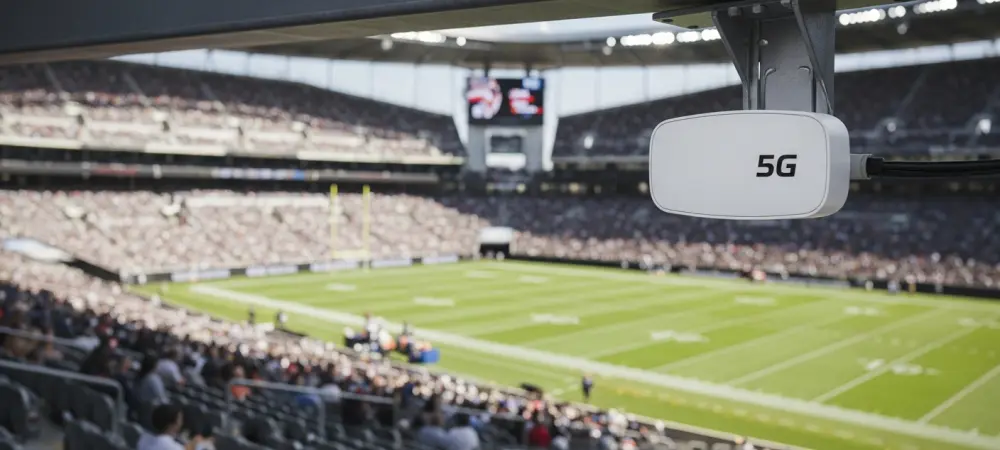
Standing amidst a sea of maroon and white at Mississippi State University’s Davis Wade Stadium, one can feel the electric energy of over sixty thousand fans simultaneously attempting to share their game-day experience with the world through high-definition video and real-time social media updates. This massive surge in digital activity poses a significant challenge for traditional wireless networks, which often buckle under the weight of such concentrated demand. To address this, a comprehensive technological transformation is underway, led by AT&T to ensure that every touchdown, cheer, and halftime performance can be broadcast instantly by those in attendance. This multi-year project serves as a cornerstone of a broader initiative involving a substantial $1.4 billion investment in Mississippi’s telecommunications infrastructure from 2026 to 2030. By deploying a sophisticated, neutral-host Distributed Antenna System, the university is not only solving current connectivity issues but also positioning itself as a leader in modern collegiate sports technology.
Advanced Technical Infrastructure and Network Efficiency
MobileAccess 6000: High-Density Digital Performance
The backbone of this stadium upgrade is the Airspan MobileAccess 6000, a digital platform specifically engineered to thrive in high-density environments where traditional hardware often fails. This system is designed to process massive amounts of data with minimal latency, ensuring that the network remains responsive even when thousands of devices are active in a single section. By moving away from older, analog-heavy systems, the stadium now benefits from a more agile architecture that can be tuned remotely to manage specific traffic spikes. This level of precision is necessary for a modern SEC venue, where the digital needs of the media, staff, and fans are constantly competing for bandwidth. The transition to this digital DAS platform represents a shift toward software-defined networking, where capacity can be allocated dynamically based on the specific flow of the crowd throughout the game-day event.
Beyond just handling raw volume, the hardware utilizes 53-sector MIMO architecture, which creates multiple spatial data lanes to significantly increase total throughput. This technology allows multiple users to transmit and receive data on the same frequency simultaneously without causing interference or signal degradation. In a standard stadium setup, signal jams are common because too many devices are fighting for the same “lane” of data; however, the MIMO configuration effectively builds a multi-lane highway for wireless signals. This ensures that even during peak moments, such as a game-winning play when everyone reaches for their phone at once, the network maintains its integrity. This architectural choice is critical for supporting data-intensive applications like 4K video streaming and real-time interactive apps, providing a seamless layer of connectivity that operates invisibly beneath the roar of the crowd.
Spectrum Management: Utilizing C-Band and Compact Designs
A key component of this modernization involves the strategic use of mid-band spectrum, specifically the C-band, which provides the necessary balance between broad coverage and high-speed data transmission. While high-band millimeter wave offers incredible speed, it often struggles with the physical obstructions found in a concrete stadium; conversely, low-band spectrum lacks the capacity for sixty thousand users. C-band serves as the “Goldilocks” solution, offering the depth required to penetrate stadium structures while providing the high capacity needed for modern 5G applications. By integrating this spectrum into the Distributed Antenna System, the network delivers a consistent experience across the entire seating bowl and into the surrounding concourses. This ensures that fans do not lose their connection as they move from their seats to concession stands or entry gates, maintaining a continuous digital experience throughout the game.
To implement such a powerful system within a historic venue, engineers had to prioritize space-efficient designs that minimize the physical footprint of the equipment. Stadiums are notoriously difficult environments for hardware installation because there is very little room for bulky servers or large antennas without impacting the aesthetic or safety of the stands. The compact design of the Airspan equipment allowed for a discreet installation that maximizes performance without cluttering the architectural lines of Davis Wade Stadium. This space-optimized approach also facilitates future scalability, as more components can be added or upgraded without requiring a complete overhaul of the physical infrastructure. By focusing on a lean engineering model, the university has ensured that the network can grow alongside emerging technologies, providing a future-proof utility that serves the community’s long-term interests while respecting the stadium’s heritage.
Operational Excellence and Regional Economic Impact
Neutral-Host Models: Creating an Inclusive Network Environment
The shift toward a neutral-host connectivity model represents a fundamental change in how large-scale venues manage wireless services for their diverse visitors. Traditionally, individual carriers would install their own proprietary equipment, leading to redundant hardware and uneven coverage depending on which provider a fan happened to use. AT&T’s approach with this project provides a shared utility where the physical infrastructure can support multiple cellular carriers simultaneously. This means that a fan with a different service provider can still benefit from the high-capacity hardware installed by AT&T, fostering a more inclusive and reliable environment for everyone. By acting as the primary host, AT&T has simplified the complexity of stadium communications, creating a single, robust system that serves the public interest rather than just a single segment of the market.
This cooperative model also provides significant cost and operational efficiencies for the university and the participating carriers. Instead of managing multiple separate contracts and maintenance schedules for different sets of antennas, the university can rely on a unified system that is managed with professional oversight. This reduces the risk of signal interference between competing hardware and streamlines the troubleshooting process during high-stakes events. For other carriers, the barrier to entry is significantly lowered, as they can “plug into” an existing, high-quality network rather than investing in their own localized infrastructure from scratch. This collaborative approach not only improves the immediate user experience but also sets a precedent for how public and private entities can work together to provide essential digital services in high-traffic areas across the state.
Strategic Outcomes: Economic Growth and Operational Success
The deployment of this high-capacity infrastructure provided a definitive solution to the chronic connectivity issues that previously plagued large-scale sporting events. By successfully integrating a neutral-host system, stakeholders established a versatile platform that simplified future upgrades and invited broader carrier participation. This success suggested that subsequent phases should prioritize the expansion of this network into surrounding tailgating areas and campus facilities to create a truly unified digital environment. Future considerations included the potential for augmented reality overlays and real-time biometric safety monitoring, both of which were made possible by the robust 5G backbone. This project demonstrated that modernizing a historic venue did not require a compromise on aesthetics, provided that the underlying technology was sufficiently flexible and well-integrated.
The successful rollout of the new network was the result of a specialized partnership between AT&T, Airspan Networks, and M-Communications. While AT&T served as the primary investor and network leader, Airspan provided the hardware backbone, and M-Communications handled the complex physical installation and system integration. Together, these entities created a blueprint for future-ready venues that treat wireless connectivity as an essential utility. The economic narrative regarding the $1.4 billion commitment helped bridge the digital divide and made the state more attractive for tourism and major entertainment events. This regional focus highlighted how telecommunications infrastructure can drive local commerce and improve the overall attractiveness of collegiate sports hubs. Moving forward, other regional institutions began evaluating similar architectures to remain competitive in a digital collegiate sports landscape.