

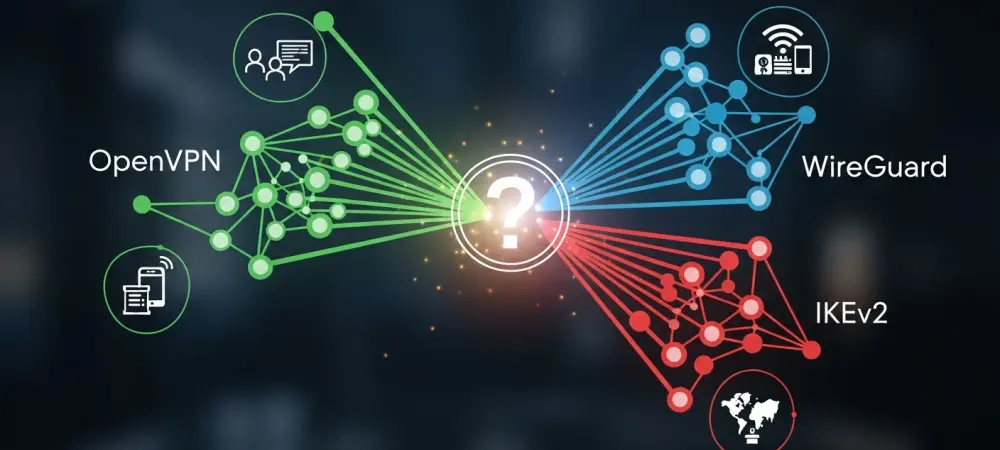
Navigating the complexities of modern digital security requires more than just clicking a single button to encrypt a connection; it demands a granular understanding of the underlying protocols that govern data transit across a fragmented global network. In the current landscape of 2026, where digital surveillance and sophisticated network filtering have become the norm, the choice of a Virtual Private Network protocol can determine the difference between seamless access and complete disconnection. These protocols serve as the structural framework for encrypted tunnels, dictating how data packets are formatted, transmitted, and authenticated between a device and a remote server. While many users rely on automated settings, the diverse array of available technologies—ranging from high-speed modern solutions to stealth-focused modifications—offers specific advantages tailored to distinct environments. Understanding these technical nuances allows individuals to optimize their digital footprint for performance, privacy, and bypass capability.
1. Maximize Speed and Performance with WireGuard
WireGuard has rapidly ascended to become the primary choice for managing routine internet activity on standard networks due to its exceptionally efficient codebase and high-performance throughput. Unlike older, more bloated protocols that rely on hundreds of thousands of lines of code, WireGuard utilizes a streamlined approach that significantly reduces the potential attack surface while maximizing processing speeds. This architectural simplicity ensures that data encryption and decryption occur with minimal latency, making it ideal for high-bandwidth tasks such as streaming high-definition media or participating in real-time communication. For the average user, this protocol provides a near-transparent experience, where the overhead of security does not noticeably impede the speed of the connection. Maintaining WireGuard as the default setting ensures that the cryptographic foundations of a device remain robust without sacrificing the fluid responsiveness expected in today’s digital age.
Beyond its raw speed capabilities, WireGuard is renowned for its ability to connect almost instantly, a feature that is particularly beneficial for mobile users who frequently wake their devices from sleep mode. Because the protocol is stateless and highly optimized, it does not require the lengthy handshake process that often delays connection establishment in traditional tunneling methods. This efficiency also translates into improved battery life for smartphones and laptops, as the processor spends less time and energy managing the secure tunnel during periods of inactivity. Unless a user encounters a specific network restriction that prevents the protocol from functioning, it remains the most logical selection for everyday browsing and professional tasks. The transition to WireGuard as a global standard has effectively neutralized the historical trade-off between strong encryption and device performance, allowing for a consistently secure environment that supports the high demands of hardware.
2. Overcome Strict Firewalls with SoftEther and AmneziaWG
When users face aggressive network filters or corporate firewalls that specifically target VPN traffic, switching to the SoftEther protocol often provides the necessary flexibility to maintain connectivity. This protocol is specifically engineered to circumvent deep packet inspection by hiding encrypted traffic inside standard HTTPS ports, effectively making the data stream appear identical to regular web browsing activity. This level of obfuscation is essential for professionals working in restricted environments like offices, educational institutions, or regions where oversight prevents access to the open internet. Furthermore, SoftEther possesses the unique ability to utilize DNS or ICMP tunneling to penetrate even the most restrictive blocks that would otherwise shut down standard protocols. By mimicking the characteristics of innocuous traffic, it ensures that secure communications can continue uninterrupted, even when the underlying network infrastructure is actively hostile.
For situations requiring a balance between high performance and advanced stealth, AmneziaWG offers a compelling solution by modifying the traditional WireGuard framework to evade detection. While standard WireGuard is fast, its digital signature is easily identifiable by modern filtering systems; AmneziaWG solves this by altering packet headers and sizes to mask the protocol’s identity. This modification allows users to benefit from the incredible speeds and low latency of WireGuard while simultaneously avoiding the heavy slowdowns often associated with more complex stealth protocols like OpenVPN over SSL. It is particularly effective in environments where network administrators employ sophisticated algorithms to detect and throttle encrypted tunnels without blocking all traffic. By subtly changing its digital footprint, AmneziaWG remains a powerful tool for those who need to bypass restrictions while still maintaining the throughput required for data-intensive applications.
3. Prioritize Compatibility and Mobility with OpenVPN and IKEv2
OpenVPN remains an indispensable tool for connecting older hardware or network routers that may not possess the processing power or software compatibility required for modern protocols. Although it is generally slower and more complex to configure than its newer counterparts, its widespread adoption over the last two decades ensures it remains compatible with almost every internet-connected device in existence. This makes it the preferred choice for securing legacy systems, specialized industrial equipment, or smart televisions that lack the ability to run updated VPN applications. Many home and small office routers utilize OpenVPN to create a secure gateway for all connected devices, providing a unified layer of protection at the network edge. While it may require more manual intervention to set up—such as downloading specific configuration files—the protocol’s proven reliability and extensive customizability make it a vital fallback option for maintaining security across a diverse ecosystem.
Stability during transit is a primary concern for mobile users, and the IKEv2 protocol is specifically designed to ensure a secure tunnel remains active while moving between different network environments. This protocol excels at managing handoffs, such as when a smartphone switches from a local coffee shop’s Wi-Fi network to a mobile data provider’s cellular signal. Through the use of the MOBIKE extension, IKEv2 can re-establish a connection almost instantly without dropping the session, which prevents data leaks and maintains the continuity of secure applications. This robustness makes it the ideal selection for commuters, travelers, and field professionals who cannot afford to have their VPN disconnect every time their physical location or network source changes. While other protocols might struggle with the intermittent connectivity common in public spaces, IKEv2 provides a stable foundation that prioritizes session persistence, ensuring that the identity remains protected.
4. Modify Protocol Settings to Enhance Connection Reliability
To adjust these settings effectively, a user must first stop their current connection to ensure the transition between protocols occurs without software conflicts. Many VPN applications may encounter errors or fail to properly re-initialize the encryption engine if a protocol change is attempted while a secure tunnel is still active. Once the session is closed, the user should navigate to the application settings menu, typically located under a label such as Connection or Protocols, to view the available options. After selecting the protocol that best fits the current requirement—whether it is SoftEther for a restricted network or IKEv2 for a commute—the new setting can be applied. It remains essential to confirm that the selected protocol functions correctly on the intended network, as a configuration that works perfectly on home Wi-Fi could still face challenges in a corporate setting. Testing the connection immediately allows for the verification of both speed and stability. Optimizing the VPN experience through careful protocol selection proved to be a decisive factor in maintaining both security and productivity throughout the year. As network environments became increasingly varied, the ability to switch from the high-speed efficiency of WireGuard to the stealthy obfuscation of AmneziaWG provided a necessary layer of adaptability for many users. The deployment of legacy-friendly options like OpenVPN ensured that even older devices remained shielded from emerging threats, while IKEv2 solidified mobile security for those frequently on the move. Once these configurations were properly tested and validated against specific network hurdles, the result was a more resilient digital presence that could withstand both technical limitations and active interference. Moving forward, the focus shifted toward proactive management of these settings, ensuring that encryption remained a dynamic tool rather than a static one, empowering individuals to take control.