
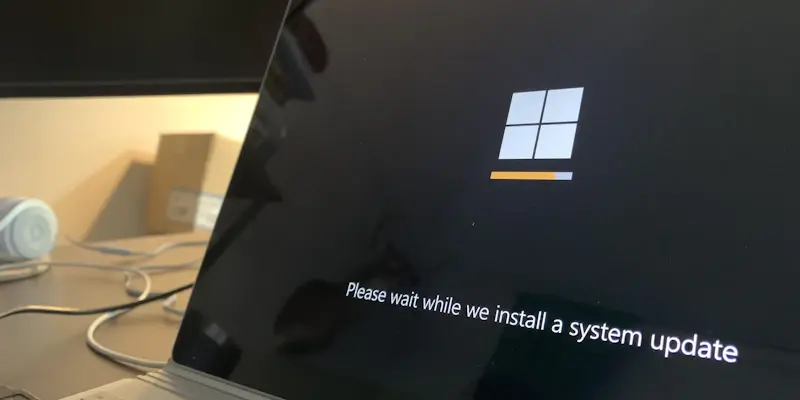
Are Your Windows Updates Failing Due to Citrix Session Recording Agent?

If you’ve recently tried to install Windows security updates KB5049981 for Windows 10 or KB5050009 for Windows 11, only to encounter an error message indicating that the changes are being undone after rebooting, you are not alone. Users with certain Citrix components, particularly Citrix Session Recording Agent (SRA) version 2411, have reported this problem, where updates seem to download and install correctly initially but fail during the reboot process, effectively reverting back to the previous updates on the device. This issue can be particularly frustrating for organizations relying on these updates to maintain device security and performance.

Microsoft has acknowledged the issue, but a direct fix has yet to be provided. The problem appears to mainly affect organizations because version 2411 of the Citrix SRA application is relatively new and has been available only since last month. Most home users are unlikely to encounter this problem, which underscores the selective nature of the issue. In response, Citrix has promptly offered a workaround to enable these crucial updates despite the conflict. Available on Citrix’s website, this workaround comes in two variations designed to help users apply necessary updates before Microsoft phases out Windows 10 later in the year. This interim measure is crucial for users, ensuring they can maintain system security and stability until a permanent solution is introduced.

While the updates fail on systems equipped with SRA version 2411, the majority of users not using this specific Citrix version should not be affected. This situation highlights a broader issue where software conflicts can disrupt essential system security maintenance, stressing the importance of ensuring software interoperability. The problem accentuates the need for developers to keep compatibility in mind when rolling out updates and new software versions. It also serves as a reminder to organizations about the importance of staying informed about software updates and potential conflicts that could impact their operations and security measures.

In conclusion, although the issue concerns a limited group of users, Citrix has provided a workaround to help organizations temporarily secure their Windows devices, emphasizing the continuous need for timely and effective software updates from developers. The necessity of finding long-term solutions to such issues has been reaffirmed, ensuring that all users can avoid disruptions and maintain optimal security.

Explore more

AI and Generative AI Transform Global Corporate Banking

The high-stakes world of global corporate finance has finally severed its ties to the sluggish, paper-heavy traditions of the past, replacing the clatter of manual data entry with the silent, lightning-fast processing of neural networks. While the industry once viewed artificial intelligence as a speculative luxury confined to the periphery of experimental “innovation labs,” it has now matured into the

Is Auditability the New Standard for Agentic AI in Finance?

The days when a financial analyst could be mesmerized by a chatbot simply generating a coherent market summary have vanished, replaced by a rigorous demand for structural transparency. As financial institutions pivot from experimental generative models to autonomous agents capable of managing liquidity and executing trades, the “wow factor” has been eclipsed by the cold reality of production-grade requirements. In

How to Bridge the Execution Gap in Customer Experience

The modern enterprise often functions like a sophisticated supercomputer that possesses every piece of relevant information about a customer yet remains fundamentally incapable of addressing a simple inquiry without requiring the individual to repeat their identity multiple times across different departments. This jarring reality highlights a systemic failure known as the execution gap—a void where multi-million dollar investments in marketing

Trend Analysis: AI Driven DevSecOps Orchestration

The velocity of software production has reached a point where human intervention is no longer the primary driver of development, but rather the most significant bottleneck in the security lifecycle. As generative tools produce massive volumes of functional code in seconds, the traditional manual review process has effectively crumbled under the weight of machine-generated output. This shift has created a

Navigating Kubernetes Complexity With FinOps and DevOps Culture

The rapid transition from static virtual machine environments to the fluid, containerized architecture of Kubernetes has effectively rewritten the rules of modern infrastructure management. While this shift has empowered engineering teams to deploy at an unprecedented velocity, it has simultaneously introduced a layer of financial complexity that traditional billing models are ill-equipped to handle. As organizations navigate the current landscape,