
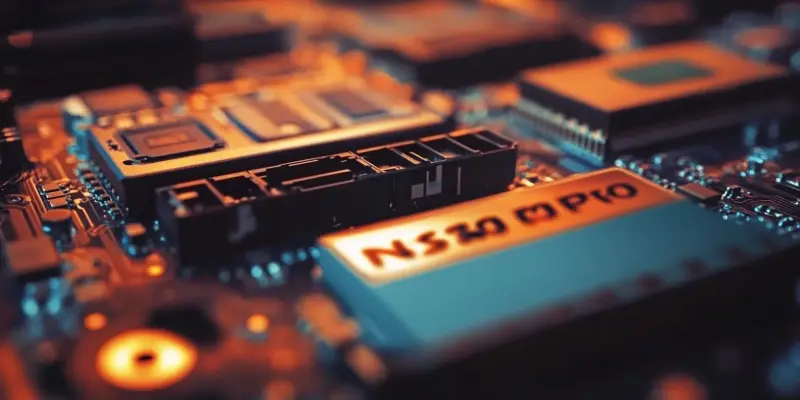
Are Toshiba N300 PRO HDDs the Best Choice for NAS and Plex Servers?

In the burgeoning world of media streaming and data storage, choosing the right hard disk drive is crucial for an optimal experience. Network-attached storage (NAS) and Plex servers require reliable, high-performance drives to store and stream vast amounts of data seamlessly. One contender making waves in this space is Toshiba’s N300 PRO HDD, a series that promises both endurance and speed at a competitive price point. But can Toshiba’s offering truly outshine established names like Seagate and WD in delivering top-tier performance for NAS and Plex configurations?

For those considering Toshiba’s N300 PRO HDDs, the 6TB model stands out as particularly affordable and effective, though it also comes in several other variants, including an 8TB model. These drives leverage conventional magnetic recording (CMR) technology, known for its reliability and suitability for intensive 24×7 operations. Notably, the N300 PRO series supports RAID setups, accommodating up to 24 drive bays, an essential feature for large-scale storage needs. With a spindle speed of 7200 RPM and a substantial 512MB cache, these drives are capable of delivering sustained performance speeds of up to 281 MB/s, ensuring smooth data access and retrieval.

Endurance is another highlight of the Toshiba N300 PRO HDDs. Rated to handle 300 TB of data writing per year and boasting a Mean Time to Failure (MTTF) of 1.2 million hours, these drives are designed for long-term use without frequent replacements. The operating temperature range of 5 to 60 degrees Celsius means they can function efficiently in a variety of environmental conditions. Moreover, with an idle acoustic level as low as 20dB, the drives operate quietly, making them suitable for home environments where noise can be a significant concern.

Toshiba’s market reputation has been bolstered by favorable reliability reports, including recent failure data from Backblaze that positions these HDDs alongside the quality and durability of competitors like WD and Seagate. This development makes Toshiba’s N300 PRO HDDs a compelling option for NAS and Plex servers, especially for users seeking reliability paired with cost-effectiveness. While more established brands have their own strengths, the N300 PRO series offers a robust alternative worth considering in today’s market.

Explore more

Can the Zeus GPU Solve the Precision Gap Left by Nvidia?

The modern semiconductor industry is currently navigating a silent trade-off where massive gains in artificial intelligence come at the expense of traditional mathematical accuracy. While the world celebrates the speed of neural networks, a growing number of engineers and data scientists are finding that the hardware in their workstations no longer speaks the language of absolute precision. The race to

AMD Boosts RX 7000 Performance With FSR 4.1 AI Update

The satisfying click of a high-end graphics card seating into a motherboard remains a rite of passage for many enthusiasts, but that physical milestone is rapidly losing its status as the only way to achieve a significant performance leap. In the current era of hardware development, the most profound changes to a gaming experience no longer arrive exclusively in cardboard

AI Transforms Email Targeting and Personalization

The modern digital consumer expects every interaction with a brand to reflect their unique history, preferences, and current needs, yet many companies continue to rely on outdated strategies that ignore these fundamental behavioral signals. In a landscape where the average inbox is flooded with hundreds of generic notifications daily, the margin for error has narrowed to a razor-thin line between

How Is Generative AI Transforming Financial Services?

The rapid maturation of generative artificial intelligence has fundamentally altered the structural foundations of global finance, moving far beyond mere automation to create a landscape where precision and human-like reasoning are the new standards. This technological evolution has moved past the initial phase of experimental implementation and is now deeply embedded in the daily workflows of the world’s most prestigious

AI Redefines the Strategic Foundations of Global Finance

The traditional architecture of the global banking system is currently dissolving under the weight of a monumental technological shift that places artificial intelligence at the very center of every capital movement. Finance departments are no longer the quiet record-keeping back offices of the past; they have evolved into command centers where data serves as high-octane fuel for real-time strategic maneuvers.