

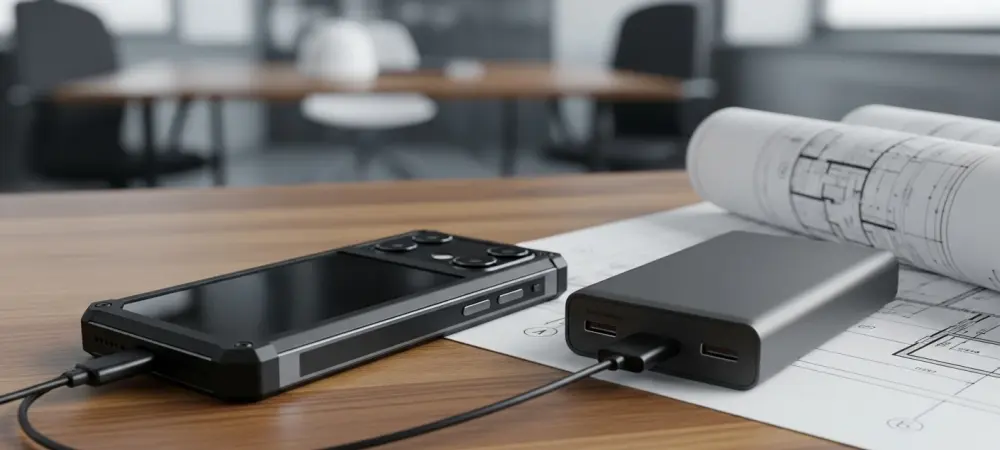
The pursuit of an unbreakable smartphone that never needs a midday charge has led to the creation of hardware that feels like a throwback to the era of utilitarian power bricks. While most manufacturers focus on shaving millimeters off their flagship frames, recent retail insights from Thailand suggest that the Realme C100 and C100i are heading in the opposite direction. These devices prioritize sheer endurance and physical toughness above the sleek aesthetics typically found in the budget segment. This shift addresses a persistent pain point for users who operate far from power outlets, but it forces a conversation about what we are willing to sacrifice for a phone that refuses to die.
By examining the specifications and market positioning of these new entries, it becomes clear that Realme is testing the limits of the entry-level tier. This roundup analyzes whether a massive battery can compensate for modest internals, or if the compromises in speed and display quality make these handsets a tough sell for the modern consumer. For workers in demanding environments or travelers navigating long transit routes, the value proposition is unique, yet it remains shadowed by more balanced alternatives already available on the shelves.
The Endurance Paradox: Why Realme is Betting Big on the C100 Series
The smartphone market is witnessing a shift where “battery anxiety” is being countered by extreme hardware specifications, even at the entry-level tier. Recent leaks and retail listings in Thailand have unveiled the Realme C100 and C100i, two handsets that prioritize longevity and physical resilience over traditional processing power. This shift is significant because it targets a specific user demographic—outdoor workers, long-distance travelers, and budget-conscious consumers—who value uptime over ultra-fast speeds. This article explores whether these devices truly deliver a balanced experience or if the compromises made to achieve their massive capacity are too steep for the average user.
Industry observers note that the ruggedized budget market is often underserved, usually filled by niche brands rather than mainstream giants. By entering this space, Realme is attempting to validate the idea that a primary device can also be a durable tool. However, the success of this strategy depends heavily on whether the intended audience prioritizes a 7,000mAh reservoir over the fluid performance that has become a standard expectation in the mid-2020s.
Weighing the Cost of High-Capacity Mobile Power
The 7,000mAh Powerhouse and the 15W Charging Bottleneck
The defining characteristic of the C100 series is the colossal 7,000mAh battery, a capacity rarely seen in mainstream budget devices. While this ensures multi-day usage on a single charge, it introduces a significant challenge: the 15W charging speed. In an era where 45W and 65W charging are becoming standard, a 15W limit on such a large cell means users may face several hours of downtime to reach a full charge. This section analyzes whether the convenience of a long-lasting battery is negated by the lack of rapid replenishment, especially for users with fast-paced lifestyles.
Many tech enthusiasts argue that a large battery without fast charging is a lopsided feature. If a user forgets to plug the device in overnight, a quick fifteen-minute top-up before leaving the house will barely move the needle on a 7,000mAh tank. Consequently, the device requires a disciplined charging routine, which might feel archaic to those used to modern rapid-charging standards that provide a full day of power in less than an hour.
Resilience Over Resolution: Rugged Design and Display Compromises
Both the C100 and C100i lean heavily into durability, with the C100i even boasting MIL-STD-810H military-grade protection and the ability to survive two-meter drops. However, this ruggedness comes at the expense of visual fidelity. By utilizing 720p+ LCD panels on large 6.8-inch screens, the pixel density is noticeably lower than competitors. We examine the trade-off between a chassis that can survive a construction site and a display that may struggle with crispness, questioning if the high refresh rates (up to 144Hz) are enough to mask the lower resolution.
The decision to pair a high refresh rate with a low-resolution panel creates a strange visual dichotomy. While scrolling feels smooth, the lack of sharpness is apparent when watching high-definition video or reading small text. This compromise suggests that Realme views the display primarily as a functional interface rather than a medium for high-end entertainment, reinforcing the utilitarian nature of the C100 series.
Under the Hood: Balancing 5G Ambition with Entry-Level Silicon
The C100 introduces the Dimensity 6300 chipset to provide 5G connectivity, while the C100i sticks to 4G with the Unisoc T606/T616. These choices highlight a regional divide in connectivity needs but also expose performance limitations. In a market where apps are becoming more resource-heavy, these chips represent the bare minimum for a smooth experience. This analysis explores the risk of these devices becoming obsolete faster than their peers due to their conservative RAM configurations and modest processing overhead.
Technical reviewers often point out that entry-level silicon can struggle with the background tasks required by modern operating systems. With only 4GB or 6GB of RAM in the base configurations, multitasking may feel sluggish compared to devices that offer 8GB as a baseline. For a device intended to last for years, the modest processing power might become a bottleneck long before the physical hardware or battery begins to degrade.
Cannibalizing the Catalog: Internal Competition with the Realme C85
One of the most disruptive factors for the C100 series is Realme’s own existing portfolio, specifically the C85 and Narzo 90X. These alternatives often provide faster charging (up to 60W) and superior IP68/IP69K water resistance for a comparable price. By comparing the C100’s niche battery focus against the C85’s more balanced feature set, we uncover the potential “value trap” where consumers might sacrifice modern essentials—like fast charging and better cameras—simply for a larger battery capacity.
The overlap in pricing makes the purchasing decision more complex than it first appears. While the C100 wins on battery size, the C85 offers a more refined daily experience with its superior ingress protection and significantly faster power delivery. This internal competition suggests that the C100 is not a general replacement for current models but a specialized alternative for a very specific type of buyer.
Navigating the Value Curve: Choosing Between Longevity and Speed
When considering the C100 or C100i, buyers must prioritize their specific use cases rather than just looking at the battery figure. If your priority is a device that can survive a week of light use or harsh environments without a case, these models offer a unique advantage. However, for the general consumer, the recommendation is to look toward the Realme C85 series, which offers a more cohesive daily experience. Potential buyers should weigh the “cost per hour” of charging against the “hours of usage” gained to determine if the 15W limitation fits their routine.
Furthermore, the environmental impact of these large cells should be considered. A battery that lasts longer per charge might reduce the total number of charge cycles over the life of the device, potentially extending its overall lifespan. However, if the software experience becomes unbearable due to the low-end chipset, the hardware’s longevity matters little. Balancing these factors is essential for making an informed purchase in an increasingly crowded budget market.
The Final Verdict on Realme’s High-Capacity Experiment
The Realme C100 and C100i served as a fascinating case study in hyper-specialized budget hardware, proving that “more” was not always “better” in every category. While the 7,000mAh battery and ruggedized frames were impressive engineering feats for the price point, they existed in a vacuum that ignored the necessity of quick charging and display clarity. As the mobile industry continued to evolve, these devices reminded us that true value lay in balance. For those who lived away from a power outlet, the trade-off was worth it, but for most, the quest for the ultimate battery remained a balancing act of compromises.
Moving forward, shoppers should look for upcoming firmware updates that might optimize the power consumption of the Dimensity 6300 or Unisoc chips to eke out even more life from the hardware. Additionally, checking for regional variants with higher RAM configurations might alleviate some of the performance concerns. For those still undecided, researching the impact of 720p resolution on modern application layouts can provide a clearer picture of whether the visual sacrifice is manageable for daily tasks.