

With the demand for AI processing power pushing terrestrial data centers to their limits, some of the biggest names in technology are looking to the stars for a solution. But is putting our data infrastructure into orbit a visionary leap or an engineering fantasy? To unravel the complexities, we sat down with Dominic Jainy, an IT professional with deep expertise in AI, machine learning, and blockchain. We explored the immense physical challenges of operating in space, from the fundamental problem of cooling in a vacuum and the astronomical cost of repairs to the cascading threat of orbital debris.
Data centers generate enormous heat, which in a vacuum can only be shed through radiation. Could you detail the specific engineering hurdles this presents for sensitive hardware and describe what practical cooling systems might look like for a zero-atmosphere environment?
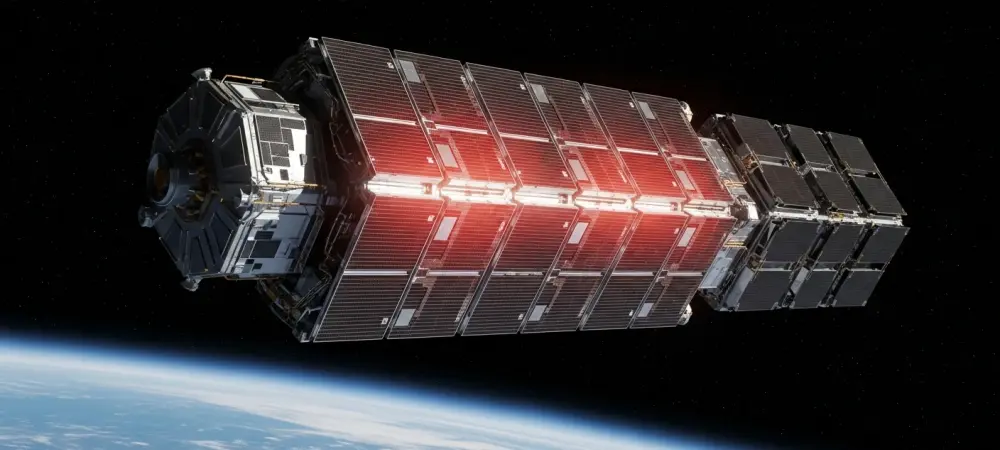
It’s a foundational problem of physics that terrestrial engineering has solved with air and water. On Earth, we just move heat away from components using fans or liquid cooling loops—conduction and convection. It’s efficient and straightforward. In the absolute vacuum of space, those options vanish. You’re left with thermal radiation, which is an incredibly inefficient way to dissipate the kind of intense, concentrated heat a server rack produces. The engineering nightmare is that you would need massive, complex radiator panels, making each satellite bulky and heavy. Imagine trying to keep a CPU from frying when the only way to cool it is by letting it slowly glow its heat away into the void. This silent, relentless build-up of thermal energy would put constant, severe stress on every single component.
On Earth, technicians can quickly service malfunctioning data centers. How would this process work in orbit? Please outline the logistical steps and potential costs of a repair mission, and assess the current viability of using robotics for such complex, hands-on tasks.
The contrast is almost comical. On Earth, a drive fails, and a technician is on-site within the hour to swap it out. In orbit, that same simple fix becomes a monumental undertaking. You’re not just dispatching a person in a van; you’re planning a multi-million dollar rocket launch. The logistics involve securing a launch window, maneuvering a service vehicle to rendezvous with a specific satellite out of potentially thousands, and then performing the repair. Today’s robotics are simply not up to the task of the delicate, hands-on work required inside a server chassis. This isn’t just bolting on a new panel; it’s about diagnosing a fault and replacing a specific module. The cost and complexity for even the most routine maintenance would be astronomical, rendering the entire economic model completely unworkable.
With heightened risks from thermal stress and micrometeoroid impacts, malfunctions in space could be far more common. How would the fundamental design of server hardware need to evolve to be more resilient, and what new automated redundancy protocols would be required to ensure system integrity?
We would have to completely rethink server architecture from the ground up. Terrestrial servers are designed for the pristine, climate-controlled environment of a data center. In space, every piece of hardware would be under constant assault from thermal cycling and the ever-present risk of impact from dust-sized particles that can cause catastrophic damage. This means moving beyond standard components to radiation-hardened electronics, which are inherently more expensive and less powerful. Redundancy would have to be extreme—not just backup power supplies, but entire mirrored processing units and storage arrays that could be activated remotely the instant a primary system fails. The system would need sophisticated self-diagnostic and failover protocols that could operate autonomously, because sending a technician is simply not an option.
The prospect of adding one million satellites raises concerns about orbital debris. Could you explain the concept of a collision “tipping point” and the cascading risks one uncontrolled satellite could pose? What specific traffic management technologies or policies would be essential to prevent this?
This is perhaps the most frightening aspect of the whole proposal. There’s a concept of a “tipping point” where the density of objects in orbit becomes so great that a single collision can set off a chain reaction. Imagine one of these data centers malfunctioning and starting to drift. These objects are hurtling through space at about 17,500 miles per hour. A collision at that speed isn’t a fender bender; it’s a violent explosion that shatters both satellites into thousands of pieces of shrapnel. Each piece of debris becomes a new projectile, threatening every other satellite in its path. An uncontrolled cascade could render entire orbits unusable for generations. Before we could even consider a project of this scale, we would need a globally enforced, hyper-accurate space traffic management system, far beyond anything that exists today, to track and de-orbit satellites with pinpoint precision.
What is your forecast for the future of space-based data infrastructure?
In the near term, the vision of a million fully-fledged data centers in orbit is pure science fiction. The fundamental obstacles of thermal management, maintenance, and orbital debris are simply too great with our current technology. However, I do see a future for specialized, edge-computing nodes in space to support satellite-to-satellite communication, Earth observation data processing, and perhaps communications for future lunar or Martian missions. These would be small, highly-resilient, and purpose-built systems, not sprawling data centers. The dream of offloading a significant portion of Earth’s data processing to space will remain just that—a dream—until we see multiple, revolutionary breakthroughs in radiator technology, autonomous robotics, and global space traffic control.