

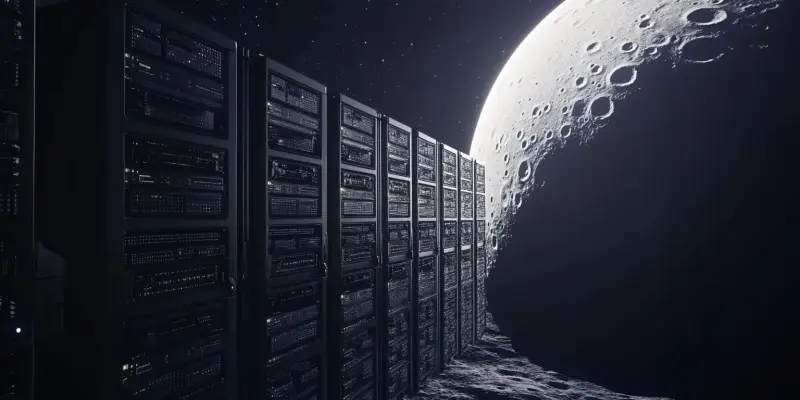
The concept of moon-based data centers might seem like the realm of science fiction, but recent developments in space technology suggest otherwise. These extraterrestrial data storage solutions could offer unprecedented levels of security and disaster recovery, making them an attractive option for governments, NGOs, and commercial enterprises. By situating data centers on the Moon, organizations can safeguard crucial information against natural disasters and social threats here on Earth. The advent of moon-based data centers ushers in a new era in data storage, backed by real-world missions that are already testing the viability of this groundbreaking technology.
Transformative Collaborations and Missions
A notable initiative is Lonestar Data Holdings’ partnership with Flexential, which centers around testing synthetic DNA storage and data center equipment on the Moon. Through the Blue Ghost Mission, the collaboration has launched experiments on the lunar surface, successfully landing on March 2. This mission is more than just a proof of concept; it’s a step toward making extraterrestrial data centers a reality. Another mission involving the Intuitive Machines’ landing vehicle, which carried the Lonestar Freedom data module, landed on March 6, though not in an optimal position. These initial missions pave the way for scalable solutions to support both Earth-based and interplanetary data needs.
Adding to the momentum, Phison’s partnership with Lonestar aims to enhance backup and recovery capabilities using SSD storage on the Moon. Phison’s Pascari enterprise-grade solution is designed to provide robust, petabyte-scale long-term storage solutions. The Freedom data module’s ultimate vision is to offer storage capabilities that can support local data center operations while ensuring critical data is securely backed up on the Moon. These collaborative efforts indicate a growing trend towards leveraging the Moon’s environment for data storage and disaster recovery needs, pushing the boundaries of what’s possible in this innovative field.
Edge Computing and Distributed Data Centers in Space
The development of extraterrestrial data centers is not only aimed at improving data security and disaster recovery on Earth but also at facilitating edge computing for future space missions. Edge computing, which brings computation and data storage closer to the location where it is needed, is crucial for real-time data processing and decision-making in space missions. NASA’s upcoming Artemis missions and potential Mars explorations will significantly benefit from the low-latency, high-efficiency data management capabilities provided by edge computing. Moon-based data centers will play a pivotal role in these missions, ensuring data is processed effectively and securely, both on Earth and in outer space.
The creation of a series of distributed data centers in space or on other planetary bodies could eventually lead to the establishment of an extraterrestrial internet. This network would involve local data storage, caching of data and messages, and distributed computing across various celestial locations. This pioneering approach not only supports human endeavors in space but also enhances our understanding of outer space and the solar environment. With distributed data centers, information can be processed and shared more swiftly, enabling faster responses and greater insights during space missions. The integration of these technologies marks a new chapter in our journey to explore and inhabit other parts of our solar system.
Future Prospects of Lunar Data Centers
The idea of moon-based data centers might sound like something out of science fiction, but recent strides in space technology make this a plausible reality. These off-world data storage solutions promise unparalleled levels of security and disaster recovery, making them an intriguing option for governments, NGOs, and commercial businesses. Placing data centers on the Moon allows organizations to shield vital information from natural disasters and social upheavals on Earth. As we venture into this new territory of data storage, the concept is supported by real-world missions that are already exploring the feasibility of this innovative technology. The push for moon-based data centers heralds a new chapter in how we handle and protect critical data. This concept not only transforms traditional views on data security but also leverages the Moon’s unique environment to offer solutions that were previously thought impossible. As technology continues to advance, the potential for extraterrestrial data centers becomes increasingly tangible, opening new avenues for the safe storage and protection of essential information.