

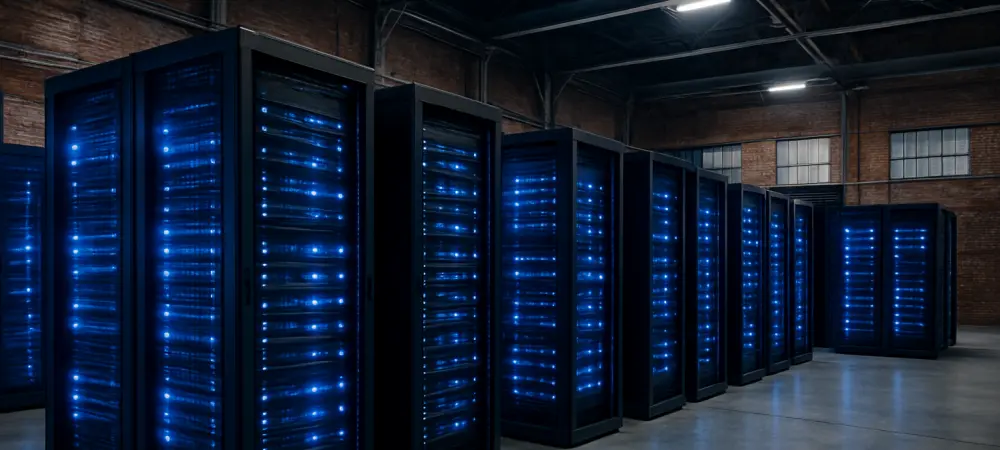
The breakneck acceleration of generative artificial intelligence has fundamentally disrupted the traditional infrastructure lifecycle, turning even the most expensive state-of-the-art facilities into functional relics before their initial depreciation cycles have concluded. While the tech industry often treats older data centers as liabilities nearing total obsolescence, a counterintuitive trend is emerging among the world’s most sophisticated operators. These “relics” of the previous decade are not bottlenecks; they are the most valuable strategic assets in the race for computational supremacy. By shifting the focus from the age of a building to its “evolutionary capacity,” organizations are discovering that the path to scaling AI does not always lead to a fresh patch of dirt, but back to the concrete and steel they already own.
This paradigm shift is driven by a realization that the billion-dollar facilities planned only five years ago are now the baseline for modern experimentation. In the current 2026 landscape, the industry is moving away from the “build-new-at-all-costs” mentality that characterized the start of the decade. Instead, a new strategy has taken hold: the “live heart transplant,” which involves upgrading the internal power and cooling systems of an existing shell while maintaining the heartbeat of current operations. By treating data centers as modular platforms rather than static commodities, operators are unlocking massive amounts of power that would otherwise be tied up in multi-year planning and permit queues.
The Paradox of the Digital Relic
The term “legacy” has become a pejorative shorthand in the technology sector, yet it fails to account for the massive temporal disconnect between building lifecycles and hardware evolution. While a data center facility is designed to stand for decades, the GPUs and high-density clusters required for modern AI evolve in eighteen-month cycles. In an industry where planning and construction can take half a decade, nearly every operational site on the planet could technically be classified as legacy. The real distinction lies not in the date the foundation was poured, but in the structural and electrical “bones” of the facility.
Smart operators are moving away from chronological age as a primary metric for asset value. They are focusing instead on a facility’s latent adaptability. A site built ten years ago might possess a robust electrical backbone that is simply waiting for a mechanical upgrade to support 100kW racks. This transition from viewing age as a liability to viewing it as a foundation for expansion is the cornerstone of the modern scaling strategy. Moreover, the ability to perform these upgrades without interrupting the existing client base allows for a hybrid environment where traditional cloud workloads and cutting-edge AI training coexist within the same four walls.
Why the Definition of “Legacy” Is Holding You Back
The greatest challenge to AI scaling is not a lack of advanced chips, but a critical lack of grid connectivity. New “greenfield” developments are increasingly stalled by multi-year waits for utility substations and complex zoning approvals that can delay a project until 2030 or beyond. Existing sites possess three “moats” that no new build can replicate: established power allocations that would be impossible to secure in today’s saturated market, existing fiber-optic pathways, and pre-approved planning status. These facilities represent locked capacity that is ready for immediate deployment.
By clinging to a definition of legacy that focuses on outdated cooling vents or older floor tiles, companies overlook the sheer power of the utility meter already on-site. Securing a new 100-megawatt connection in a primary market now takes years of negotiation; however, a legacy site with an underutilized 20-megawatt permit is a goldmine for immediate AI pilot programs. The time saved by avoiding the bureaucratic hurdles of new land development is the single most important factor in maintaining a competitive edge during the current computational arms race.
Unlocking the Hidden Value of Existing Infrastructure
Refurbishing an existing site can shave years off the timeline to bring AI capacity online. While competitors are navigating the permit process for new land, an operator modernizing a legacy site can commence revenue generation in a fraction of the time. This agility is the decisive factor in an AI market where being first to market often dictates long-term dominance. Modernization efforts often focus on the transition from air-cooled rows to liquid-cooled clusters, allowing for a ten-fold increase in density within the same physical footprint.
Detailed engineering audits frequently reveal “stranded” power—electrical capacity that was allocated but never utilized due to inefficient configurations or outdated cooling methods. By upgrading mechanical plants and integrating high-efficiency switchgear from 2026 to 2028, operators can often find enough power to support modern high-density AI racks without ever requesting an additional kilowatt from the utility grid. This process of “harvesting” existing power transforms an underperforming asset into a high-performance engine for neural network training and inference.
A legacy site also comes with an intangible but vital asset in the form of an experienced operational team. These professionals understand the specific nuances and thermal behavior of their facility, which is a significant advantage over a green crew at a brand-new site. This institutional knowledge reduces the operational risk associated with deploying high-density, high-heat hardware. The familiarity with the building’s limits allows for more aggressive tuning and optimization, ensuring that the facility operates at peak efficiency even as the workloads become more demanding.
Expert Perspectives on Modernization and Sustainability
Industry veterans and engineering firms are increasingly advocating for a circular infrastructure model. This approach views the data center not as a disposable commodity, but as a platform designed for continuous improvement. Sustainability in data centers is often measured by Power Usage Effectiveness, but experts point to embodied carbon as the next frontier. Every existing facility represents a massive investment in carbon-intensive materials like steel and concrete; demolishing these structures to build “greener” replacements creates an environmental debt that takes decades to repay.
The primary technical hurdle for older sites is the heat density of AI clusters, but industry leaders are proving that these hurdles are surmountable. Legacy facilities are being retrofitted with rear-door heat exchangers and direct-to-chip liquid cooling systems that allow sites designed for 5kW racks to support the 50kW requirements of modern GPUs. By engineering through the heat rather than running from it, operators are future-proofing their assets without the massive environmental cost of new construction, aligning commercial growth with global sustainability goals.
A Framework for Assessing Your Evolutionary Capacity
The most successful firms prioritized a “bone-deep” analysis of their facilities to determine which assets were candidates for AI modernization. They realized that evaluating the structural floor loading was the first step toward supporting the immense weight of liquid-cooled racks. This audit focused on identifying the path of least resistance for electrical upgrades. By mapping existing network routes against the surging demand for low-latency AI interconnects, these operators identified their most commercially viable sites. They recognized that proximity to mature fiber ecosystems made legacy sites more valuable than isolated greenfield locations.
This strategic shift proved that the risk-adjusted refurbishment of existing infrastructure was the most effective way to scale during the mid-2020s. Operators established “AI cells” within their legacy shells, creating high-density zones that coexisted with older hardware to balance capital expenditure with immediate market demand. The industry eventually moved toward a model where the sovereign AI requirements of 2026 were met by revitalizing local infrastructure, ensuring that the digital backbone remained robust and fiscally responsible. These decisions allowed organizations to secure their position in the market before the next wave of hardware arrived.