

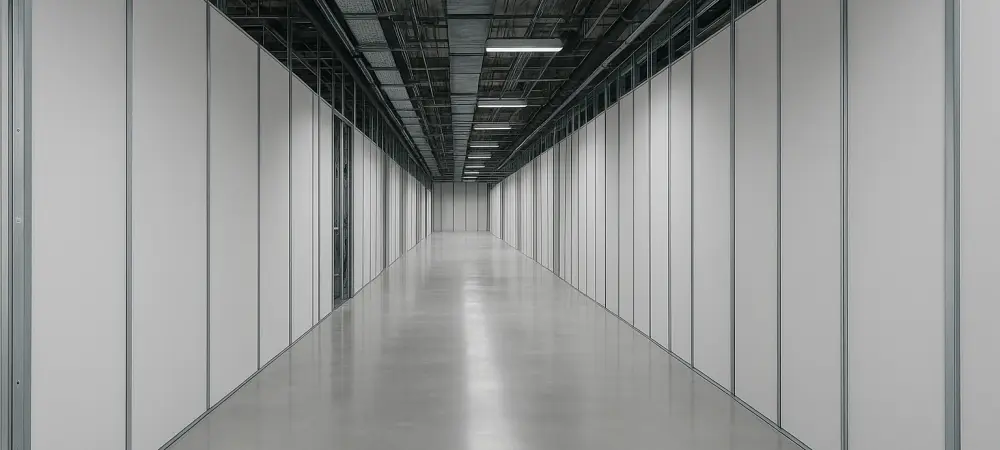
The digital heartbeat of the United Kingdom now pulses through vast halls of silicon and fiber that the government has recently classified as Critical National Infrastructure, elevating data centers to the same level of strategic importance as power grids.
Navigating the High-Stakes Race for Digital Infrastructure
The UK data center market currently sits at a $7.46 billion valuation, yet the speed of expansion is testing the limits of efficiency. As the industry races toward a 6GW AI-capable capacity target by 2030, contractors are caught between ambitious deadlines and a volatile economic landscape. Inflation and labor shortages are now the primary hurdles threatening the progress of projects.
The margin for error has effectively vanished in this high-pressure environment. When a facility is designated as critical infrastructure, any delay in delivery transcends financial loss to become a national security concern. This necessitates a robust construction strategy capable of withstanding the unpredictable nature of supply chain disruptions and shifting labor markets.
The Economic and Regulatory Pressures Driving Rapid Expansion
Looking ahead from 2026 to 2034, the market is projected to reach $12.46 billion, fueled by a mandate to triple AI processing capacity within eight years. This explosive demand has fundamentally altered the construction lifecycle, forcing a move away from traditional timelines toward highly accelerated schedules. Such compressed windows leave projects exposed to external shocks.
Regulatory shifts have intensified the situation, as the new classification of these sites as Critical National Infrastructure brings heightened scrutiny. Developers are no longer just building warehouses; they are constructing the backbone of the modern economy. Consequently, the industry is seeking ways to insulate projects from cascading risks, ensuring that rapid scaling does not sacrifice integrity.
Mitigating Environmental Hazards Through Proactive Shielding
A major portion of the strategy focuses on neutralizing weather risk, a factor that has historically plagued UK construction with costly, reactive fixes. Data centers are sensitive; internal atmospheres must be stabilized against dust and moisture long before servers arrive. Traditional methods often fail to provide this level of protection, leading to contamination that can compromise hardware. By utilizing specialized wrapping technology like Flexiscreen, contractors can fully enclose a structure during the build. This creates a sealed internal climate that allows delicate trades to proceed without interruption from wet seasons. Proactive shielding ensures the interior remains pristine, preventing the patchwork approach that often leads to failure in mission-critical facilities.
Shifting the Industry Paradigm From Reactive to Proactive
CEO Murray Gates argues that treating environmental protection as an afterthought is a luxury the industry can no longer afford. Drawing on experience in the aerospace and defense sectors, the strategy emphasizes that the cost of downtime is prohibitive from day one. This shift moves risk management from the periphery of a project into the core of the planning phase to prevent overruns.
Having completed 12 projects this year with dozens more in the pipeline, the company is demonstrating the value of foresight. By treating the build environment as a controlled variable, contractors avoid the snowballing costs of delays. This paradigm shift encourages stakeholders to view environmental screening as a fundamental safeguard against the systemic issues that often derail infrastructure.
Practical Frameworks for Ensuring Operational Continuity
To ensure digital infrastructure reached its potential, stakeholders adopted structured frameworks that integrated screening into the primary budget. This shifted focus from using contingency funds for emergency repairs to allocating resources for climate control at the inception. The result was a predictable construction cycle where specialist trades maintained consistent schedules regardless of outdoor conditions.
Integrating these systems transformed environmental protection into a foundational pillar of project delivery rather than a supplemental expense. By protecting high-value equipment from contamination, contractors ensured facilities met rigorous operational requirements from the first day of service. This approach provided a roadmap for future developments, showing that resilience depended on neutralizing variables early.