

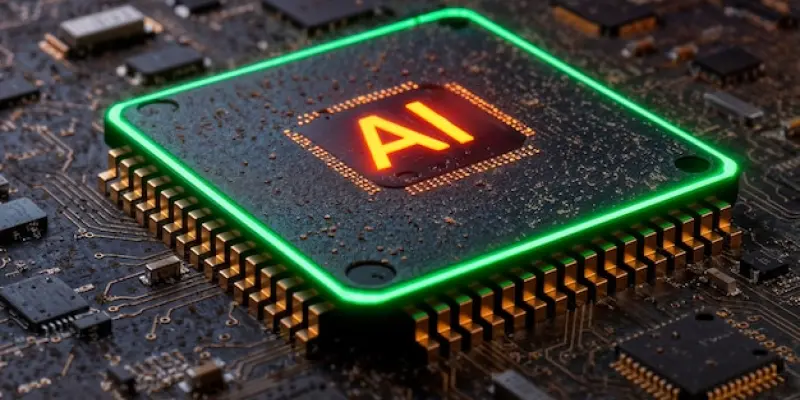
As the landscape of artificial intelligence (AI) continues to evolve at an unprecedented pace, a significant technological innovation is beginning to redefine the realm of AI computing. Hybrid chip architectures, which integrate both AI training and inference capabilities into a unified platform, are emerging as a revolutionary force in driving the efficiency and performance of AI systems. This development departs from the traditional approach of separate infrastructures, which historically imposed significant limitations on performance and scalability. By addressing these constraints, hybrid chips promise to transform AI computing by optimizing the entire AI lifecycle, from model training to deployment.
Optimization of the AI Lifecycle
Memory and Resource Efficiency
Hybrid chips, designed to integrate memory and computing units, have brought about marked improvements in the AI lifecycle by optimizing resource management. These architectures have demonstrated significant advancements, with memory bandwidth efficiency reaching an increase of up to 83% and latency experiencing a reduction of 45%. As a result, the chips are not only more efficient but also less complex to operate, simplifying transitions between phases of training and inference. This seamless integration enables optimal resource utilization with a notable improvement of 67%, while minimizing memory overhead to less than 5%. The ability to manage resources effectively in real-time allows hybrid chips to outperform traditional architectures. This efficiency helps make the AI system cycle more streamlined and practical, supporting quicker adaptation to different operational demands. Consequently, these advancements in chip architectures represent a pivotal shift towards unified and efficient intelligence systems that are vital for meeting the complex requirements of AI applications across various industries.
Thermal Management Innovations
Hybrid chips must handle substantial computational loads, leading to notable thermal output increases. To address this challenge, innovative thermal control mechanisms have been integrated, enhancing chips’ capacity to maintain safe temperature thresholds even under intense demands. Technologies like vapor chamber cooling and heterogeneous integration provide an effective way to manage power densities exceeding 500 W/cm² without risking overheating or compromising system longevity.
Additionally, dynamic thermal algorithms have achieved significant breakthroughs by reducing peak temperatures by 23% while maintaining performance levels. This capability is crucial for sustaining the durability of devices subjected to prolonged high computational demands. Thus, advanced thermal management plays a key role in ensuring the reliability and efficiency of hybrid chip technology, further solidifying its place in the future landscape of AI computing.
Decentralization and Edge Computing
Impact on Cloud and Edge Systems
The rise of hybrid chips signifies a notable shift from centralized cloud computing toward decentralized edge computing. This transition addresses the growing need for local training and inference capabilities. By facilitating operations on edge devices, hybrid chips allow systems to function efficiently while decreasing energy consumption by up to 65%. Moreover, these chips maintain operations in power-restricted environments, supporting resilience during network interruptions.
In industries such as robotics and industrial automation, hybrid chips enable local inference rates of up to 120 frames per second. This capability supports real-time model updates and increases system responsiveness by 40%, while reducing latency by 75%. The considerable decrease in bandwidth required by IoT networks, up to 85%, further highlights their potential in promoting sustainable solutions for edge computing.
Enhancements in Software Optimization
Software optimization represents a critical aspect of increasing hybrid chip efficiency. Custom software stacks designed for such chips have resulted in performance improvements of up to 35% and a reduction in bandwidth consumption by 42%. Techniques like operation fusion and intelligent scheduling ensure hardware efficiency remains consistent when transitioning between training and inference tasks.
Complementary runtime systems employing adaptive scheduling contribute to a power efficiency of up to 38%, lowering latency by 25%. These optimizations ensure that the hardware runs at maximum efficiency regardless of workload fluctuations, reinforcing the potential of hybrid chips to redefine AI computing dynamics.
Future Directions and Implications
Reconfigurable Systems and Domain-Specific Accelerations
The progression of hybrid chip technology is steering toward the development of reconfigurable systems and domain-specific accelerations. FPGA-based platforms are currently offering performance improvements of 42% and a reduction in power consumption by 35%. Such platforms can adjust configurations according to workload demands, ensuring both flexibility and efficiency.
Enhancements in memory systems and AI-driven workload management are projected to improve system efficiency by up to 48% and decrease energy utilization by 30%. This evolution paves the way for hybrid chips to serve a diverse range of applications more effectively, with increased adaptability and agility suited to dynamic environments.
Advances in Deployment Strategies
New deployment strategies are evolving to support frameworks for continuous learning and distributed model management. These approaches aim to enhance model responsiveness by 32% and boost distributed resource utilization by 40%. Such innovations are particularly vital in edge computing environments, where minimal latency and efficient on-site learning are crucial for sustaining effective AI operations.
These contemporary systems balance processing power with adaptability, enabling devices to maintain operational efficiency and context awareness throughout their lifecycle. As hybrid chips continue to adapt and expand their capabilities, the role they play in reshaping AI computing is set to become more pronounced.
Future Horizons for AI Computing
As artificial intelligence (AI) continues to advance rapidly, a groundbreaking technological innovation is reshaping the landscape of AI computing. Hybrid chip architectures, which seamlessly combine AI training and inference capabilities into a single platform, are emerging as a transformative force. These chips enhance the efficiency and performance of AI systems by overcoming the limitations of traditional separate infrastructures, which often hindered scalability and performance. The integration of training and inference within one chip addresses these issues and positions hybrid chips to revolutionize AI computing. By optimizing the AI lifecycle, from the initial model training phase to ultimate deployment, these innovative architectures promise significant improvements. Hybrid chips are poised to drive advancements in AI technology, ensuring systems not only operate more effectively but also scale efficiently, marking a pivotal shift in AI computing dynamics and operational strategies.