

Introduction: The Great Silicon Valley Real Estate Pivot
A quiet plot of land in Sunnyvale, once earmarked for a bustling office complex designed to house the brightest minds in tech, is now slated to become a fortress of servers, a tangible sign of a monumental shift occurring across Silicon Valley. This transformation from a hub for human collaboration to an engine for artificial intelligence is more than just a change in architectural plans; it is a powerful bellwether for the tech economy’s future. The new currency of innovation is no longer just talent but the raw computational power that fuels it, suggesting that the most valuable real estate in the world’s premier tech corridor is now that which houses data, not people.
This trend underscores a fundamental re-evaluation of what constitutes critical infrastructure in the digital age. As remote work becomes entrenched and the demand for AI processing skyrockets, the traditional, sprawling tech campus is giving way to a new kind of nerve center. The pivot toward data centers reflects a strategic bet that the future will be built on a foundation of immense digital capacity, fundamentally altering the landscape and economic priorities of a region long defined by its iconic office parks and headquarters.
From Office Dreams to Data Realities: The Sunnyvale Story
The journey of the 8.9-acre site at 888-894 Ross Drive perfectly captures this industry-wide metamorphosis. In 2022, real estate firm Menlo Equities acquired the property for a significant $88.5 million, inheriting plans that had already been approved for a state-of-the-art office and research campus. The original vision was ambitious: a 391,000-square-foot complex designed to be a vibrant center of innovation, a physical embodiment of Silicon Valley’s collaborative spirit.
However, those blueprints remained just that—a vision that never broke ground. The post-pandemic world presented a different set of demands, and the once-insatiable appetite for premium office space had waned considerably. Instead of moving forward with a project tailored to a workforce that was increasingly remote, Menlo Equities made a decisive pivot, scrapping the office plans entirely in favor of an asset class whose demand was exploding: the high-powered data center. This dramatic change in strategy was not an act of surrender but a calculated move toward the new epicenter of the tech economy.
The MD-SV1 Project: A Blueprint for the Future
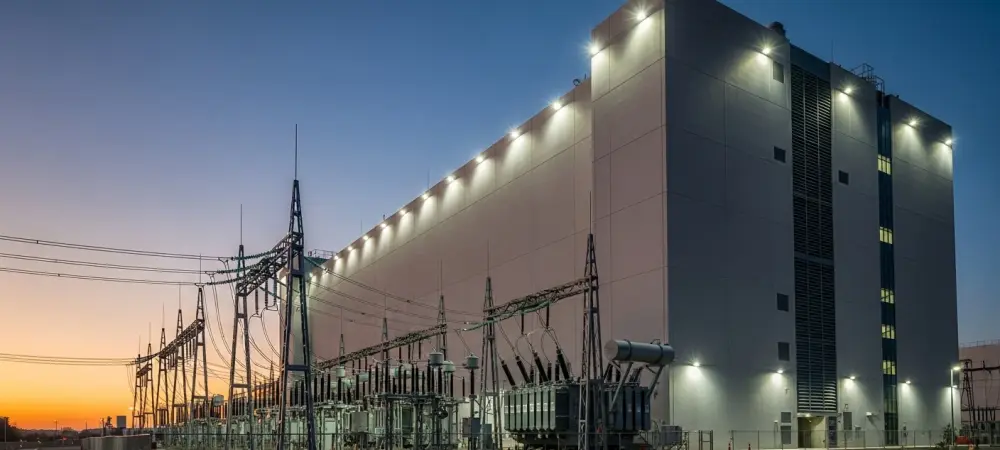
The new development, designated MD-SV1, stands as a concrete and steel testament to this new era. It is a project designed not for aesthetics or human comfort but for maximum power, efficiency, and computational density, serving as a blueprint for how prime real estate will be utilized in the age of AI.
A New Vision in Concrete and Steel
In place of the multi-building office campus, a single, monolithic structure will rise: a two-story data center spanning 244,215 square feet. The contrast in purpose could not be starker. Where open-plan offices, conference rooms, and employee cafes were once envisioned, there will be server racks, cooling systems, and redundant power supplies. This is a building designed to house the digital consciousness of modern technology, a stark departure from the human-centric architecture it replaced.
The design prioritizes function over form, with its primary goal being to support the immense technical requirements of modern computing. This shift reflects a broader reality where the physical presence of a company’s workforce is becoming secondary to the resilience and power of its digital infrastructure. MD-SV1 is a physical manifestation of a virtual world, built to be a critical node in the global data network.
Powering the AI Revolution
The technical specifications of the MD-SV1 facility reveal the sheer scale of the industry’s needs. The data center is engineered to deliver a massive 49 megawatts (MW) of critical power, a capacity essential for handling the intense processing demands of artificial intelligence and machine learning workloads. Such immense energy requirements necessitate dedicated infrastructure, which will be met by an on-site substation, ensuring a stable and robust power supply independent of the surrounding grid’s fluctuations.
With a projected completion date around 2027 or 2028, the project is timed to meet the next wave of demand from cloud providers and large enterprises. This facility is not just about storing data; it is about providing the raw power needed to process it, making it a crucial engine for the ongoing AI revolution that is reshaping every sector of the global economy.
The Strategy Behind the Switch: Menlo Equities’ Digital Focus
Menlo Equities’ decision to transform the Sunnyvale site is not a mere reaction to a cooling office market but the culmination of a deliberate, long-term strategy. The firm’s involvement in digital infrastructure is deep-rooted, dating back to its development of a data center in 1998, long before the current AI-driven boom. This history gives the company a seasoned perspective on the sector’s cycles and its foundational importance to the tech ecosystem. This long-standing commitment was formalized in 2023 with the launch of Menlo Digital, a dedicated platform to manage and expand its data center assets. This move signaled a definitive shift in the company’s focus, positioning digital infrastructure not as an alternative investment but as a core pillar of its portfolio. The Sunnyvale project, therefore, is a flagship example of a carefully calculated pivot, leveraging decades of experience to capitalize on one of the most significant economic transformations of the century.
Building a Digital Empire: Current Developments and Ambitions
The MD-SV1 project is just one piece of Menlo Equities’ rapidly expanding digital empire. The firm’s development pipeline is approaching a colossal 800MW of capacity, spread across key strategic markets in the United States, including the data center hubs of Northern Virginia and Arizona. This expansive portfolio demonstrates a clear ambition to become a dominant player in the digital infrastructure space.
Furthermore, the company’s growth is being accelerated through strategic acquisitions, including a portfolio of facilities purchased from Digital Realty, one of the world’s largest data center providers. Looking ahead, Menlo Equities is exploring a potential landmark partnership with energy company NRG to develop over 1 gigawatt (GW) of data center capacity at existing power plant sites. Such a move would be a game-changer, directly co-locating immense computational power with its energy source, and would solidify the firm’s position at the forefront of the industry.
Reflection and Broader Impacts
The strategic pivot exemplified by Menlo Equities’ Sunnyvale project carries profound implications for Silicon Valley and the commercial real estate sector at large. It represents both a massive opportunity and a complex set of challenges that will define the region’s development for decades to come.
Reflection
Capitalizing on the insatiable demand for data driven by the AI boom is an undeniable strength of this strategy. Data centers are now a high-yield asset class with long-term leases from some of the world’s most stable companies. However, this path is not without its difficulties. The immense energy consumption of these facilities places a significant strain on local power grids and raises environmental concerns. Moreover, the capital costs are staggering, and navigating the complex web of regulatory approvals and community opposition can be a formidable hurdle.
Broader Impact
In the long term, this trend is poised to redefine the very concept of “prime real estate” in Silicon Valley. Proximity to robust power and fiber-optic networks may soon become more valuable than proximity to highways or talent pools. This could reshape local economies, as data centers generate substantial tax revenue but create far fewer permanent jobs than a comparable office complex. The iconic tech “campus,” a symbol of innovation and corporate culture, may evolve into a decentralized network of human talent connected to a centralized core of computational power.
Conclusion: The New Foundation of Silicon Valley
Menlo Equities’ transformation of a planned office park into a high-capacity data center represented a defining moment for Silicon Valley. It was a clear and powerful symbol of a fundamental economic realignment, where the infrastructure for housing data supplanted the infrastructure for housing people as the region’s most critical asset. This project stood not as an isolated business decision but as a tangible marker of a new era.
The implications of this shift extended far beyond the commercial real estate market. It signaled a permanent change in the priorities and physical landscape of global tech hubs, establishing a new foundation built on megawatts and fiber rather than glass-walled offices and collaborative spaces. The move to prioritize the digital over the physical reshaped the valley’s identity for the years that followed.