

A troubling paradox sits at the heart of the digital infrastructure boom: multi-billion dollar, hyper-complex data centers, the very engines of our global economy, are increasingly quality-assured by what has often devolved into a superficial administrative process. As the world’s appetite for data grows exponentially, fueled by artificial intelligence and high-density computing, the margin for error in these critical facilities has evaporated. Failure is simply not an option. Yet, the discipline designed to prevent it—commissioning—is undergoing a dangerous dilution. This analysis will dissect the trend of simplified commissioning, contrast it with the foundational principles of certification and verification, and advocate for a return to the rigorous, technical validation that these massive investments demand.
The Devaluation of a Critical Discipline a Decade of Semantic Erosion
The very language surrounding commissioning has shifted, reflecting a fundamental misunderstanding of its purpose. What was once universally understood as a rigorous engineering discipline has been eroded by marketing and generalization, often treated as just another line item in a project management plan. This semantic drift has real-world consequences, creating a gap between client expectations and the services delivered, ultimately exposing owners to significant operational and financial risk. The industry is at a crossroads, where it must decide whether to continue down a path of diluted assurance or reinvest in the technical depth that defined the discipline.
From Engineering Proof to Project Management Paperwork
Modern data center projects are scaling at an astonishing rate. The industry benchmark has rapidly shifted from an average of 40 MW to facilities exceeding 60 MW, with some hyperscale builds pushing well beyond that. This increase in electrical capacity is matched by a surge in technical complexity, driven by the demands of AI workloads that require high-density racks and sophisticated liquid cooling systems. The intricate interplay between power, cooling, and control systems has never been more critical to operational success.
In stark contrast to this escalating complexity, the practice of commissioning is often being marketed as a simplified, late-stage management service. It is now common to see commissioning vaguely listed between “design management” and “handover support” in service proposals, stripping it of its technical significance. This repositioning treats a vital quality assurance process as mere administrative paperwork, a box-ticking exercise designed to facilitate a smooth project closeout rather than to provide tangible proof of a facility’s performance, resilience, and operational integrity.
The Parachute in Model How Box Ticking Fails in the Real World
To understand the danger of this trend, consider two distinct approaches. In the first scenario, a commissioning provider is brought on late in the construction phase—the “parachute in” model. Their team focuses primarily on document control, verifying that test scripts are signed and that the handover package is complete. They perform isolated system tests but lack the historical context of the project’s design and construction journey. They offer an illusion of assurance, a tidy paper trail that suggests everything is in order.
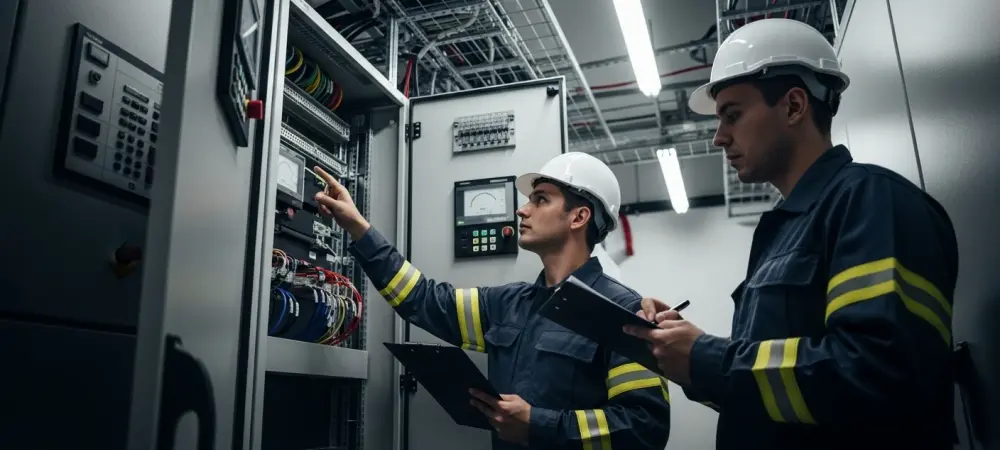
Now, contrast this with a true commissioning agent embedded in the project from the initial design phase. This agent actively interrogates the design, questions control sequences, and observes installations throughout construction. During integrated systems testing, they identify a subtle but critical flaw in the control logic between the chilled water plant and the computer room air handlers that only manifests under a specific, high-load failure scenario. This deep-seated integration issue would have gone unnoticed by the parachuting provider, leading to a catastrophic thermal event months after handover. The first approach provides a checklist; the second prevents a disaster.
Expert Perspectives Redefining Commissioning’s Core Purpose
The central thesis held by industry experts is that true commissioning is not an administrative task but a certifying discipline. Its ultimate purpose is to provide measurable, and often legally defensible, evidence that a facility performs exactly as designed under all anticipated conditions. This is not about managing a process but about delivering a verdict. The final output is a certification of readiness, a guarantee to the owner that their multi-million or billion-dollar asset is fit for purpose, reliable, and free from latent defects that could cripple operations. This certification is built upon the foundational discipline of verification. Verification is the rigorous, hands-on, and data-backed process of testing systems to generate actual proof, not just opinions or completed checklists. It involves pushing the facility’s infrastructure to its operational limits—simulating utility failures, testing redundant power paths, and validating cooling capacity under full IT load. It is an empirical process where engineers use specialized equipment to measure performance and compare real-world data against design specifications. Without this methodical verification, any claim of assurance is hollow. Therefore, the commissioning agent’s proper role is that of an independent validator and technical authority. Acting as the owner’s last line of defense, the agent serves as an unbiased arbiter, ensuring that the finished product aligns perfectly with the design intent. Their loyalty is to the performance of the facility, not to the construction schedule or budget. This independence is crucial for uncovering and resolving performance gaps, integration flaws, and construction deficiencies before they become embedded in the operational facility, where they are exponentially more difficult and expensive to correct.
Future Trajectory the High Stakes Consequences of a Widening Gap
If the trend of superficial, “box-ticking” commissioning continues, the consequences will be severe. The industry can expect an increased frequency of day-one failures, where brand-new facilities suffer significant outages shortly after going live. These failures not only cause immediate financial damage from downtime but also erode client trust and brand reputation. Furthermore, next-generation facilities designed for high efficiency may suffer from chronic underperformance, consuming more energy and costing more to operate because their complex systems were never properly validated to work in harmony. This exposes owner-operators to significant financial risk from unmet performance targets and service-level agreement penalties.
Conversely, the benefits of course-correcting toward rigorous, certification-focused commissioning are profound. For owners, it is the ultimate form of risk mitigation, safeguarding massive capital investments against costly rework and operational instability. For the burgeoning AI infrastructure sector, it is the only way to guarantee the extreme levels of reliability and uptime that these high-stakes workloads demand. Ultimately, a recommitment to deep technical validation ensures operational excellence from the moment of handover, allowing facilities to achieve their designed efficiency, resilience, and performance targets for their entire lifecycle.
The primary challenge to this course correction is overcoming industry inertia. Stakeholders, including developers and general contractors, have become accustomed to the lower-cost, lower-friction model of administrative commissioning. Educating these parties to differentiate between a superficial management service and deep technical validation is essential. It requires a collective effort to resist the allure of low-cost, low-value offerings and to recognize that the upfront investment in genuine, verification-driven commissioning pays for itself many times over by preventing a single major outage.
Conclusion Reclaiming Commissioning as an Essential Certification Discipline
The key findings of this analysis highlighted a dangerous divergence. As data centers grew in complexity, the industry’s most critical quality assurance process was paradoxically simplified, creating a significant vulnerability at the heart of our digital infrastructure. This trend has weakened the very mechanism designed to guarantee performance and reliability in these mission-critical facilities. It was reaffirmed that the true value of commissioning lies not in its administrative oversight but in its power to certify performance through empirical, data-driven verification. This process is not a project management add-on but a fundamental engineering discipline that provides tangible proof of a facility’s readiness. Ultimately, a call to action emerged for all stakeholders—owners, operators, and engineers—to champion a return to the foundational principles of the discipline. By demanding and investing in rigorous, verification-focused commissioning, the industry can safeguard it as the essential certification process that underpins the reliability of the global digital economy.