

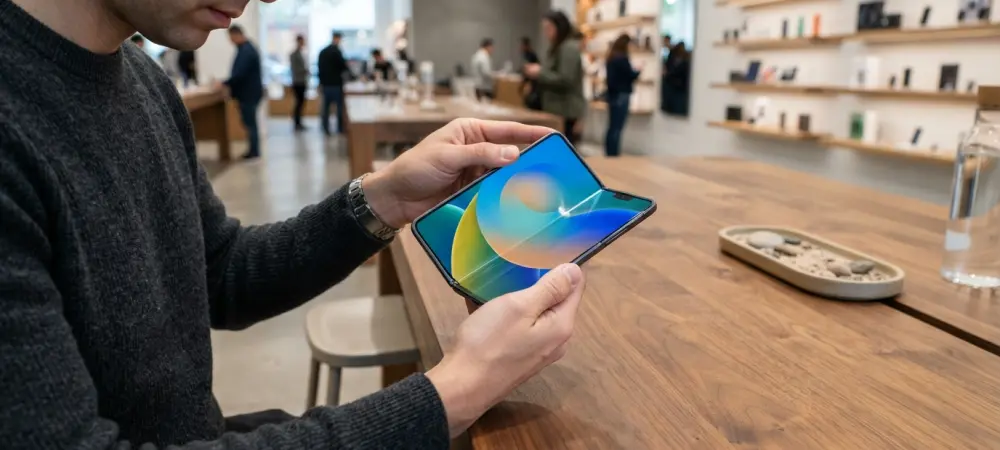
The launch of the iPhone Duo marks a pivotal moment in mobile history, signaling the definitive arrival of the foldable era for the world’s most valuable tech brand. As enthusiasts scramble to secure the device, we sat down with Dominic Jainy, an IT professional with deep expertise in artificial intelligence and hardware lifecycles, to discuss the logistical complexities and user experience shifts defining this release. From the aggressive inventory controls to the surprising software-first reception, Jainy provides a masterclass in how modern electronics are brought to market under intense global scrutiny.
Apple is restricting iPhone Duo purchases to two units per customer while discouraging walk-in sales on launch day. How do these inventory controls impact consumer behavior, and what specific metrics do retailers use to determine if such limits effectively deter professional scalpers?
These strict inventory controls create a high-stakes environment where the “fear of missing out” drives immediate action from the core fan base. When Apple implemented the two-unit limit on the website and the Apple Store app, they signaled that supply is incredibly tight, which often causes a surge in early pre-orders from those who were previously on the fence. Retailers use sophisticated metrics like “shipping address collision” and “payment fingerprinting” to see if multiple orders are heading to the same warehouse or using the same credit card profile, which are classic signs of scalper bots. By forcing customers to see the “adjust the total quantity” message at checkout, Apple effectively slows down bulk automated purchases, ensuring that the devices reaching the market on October 23 are held by individual users rather than sitting on a third-party auction site at a 300% markup.
With shipping estimates for new pre-orders in certain regions slipping as far back as January 2027, what logistical hurdles are causing these extreme delays? Could you provide a step-by-step breakdown of how a manufacturer manages the expectations of customers facing multi-month wait times?
The primary hurdle is the incredibly low yield rate of the specialized foldable components, which are far more difficult to mass-produce than standard glass slabs. When you see shipping dates in India slipping to January 23, 2027, it highlights a massive gap between the initial production batch and the secondary manufacturing wave. To manage this frustration, a manufacturer first sets a very conservative “cushion” date to avoid under-delivering, followed by a series of status updates, such as Apple’s recent instruction for customers to check their order status again on October 24. This creates a psychological “refresh” for the consumer, making the wait feel like an active process rather than a stagnant delay. Finally, they prioritize retail partners for specific SKUs to ensure at least some physical presence in the market, even if the main online pipeline is clogged.
Early feedback suggests the user interface of the foldable is a more significant draw than the folding hardware itself. What are the specific design challenges of adapting a mobile OS for a dual-screen device, and how does a software-first approach change the long-term value proposition for the buyer?
Adapting an operating system for a foldable requires solving the “continuity” problem, where an app must instantly transition from a compact state to an expanded layout without losing the user’s place or state. Developers have to account for three or four different aspect ratios simultaneously, which is a nightmare for standard coding but a playground for AI-driven responsive design. A software-first approach is brilliant because hardware eventually ages or gets scratched, but a refined UI makes the device feel like a productivity powerhouse that justifies its high entry price. If the interface feels like the “real star,” as early impressions suggest, the buyer perceives the device as a long-term investment in a new way of working rather than just a fragile piece of experimental glass.
Third-party retailers currently show much earlier shipping dates for specific base models compared to the manufacturer’s own storefront. What are the trade-offs of purchasing through these secondary channels, and how does stock allocation typically work between a flagship brand and its retail partners?
The main trade-off is often the lack of customization; for instance, a retailer like Croma might promise an October 29 shipping date, but that is strictly limited to the 256GB model they have in their specific allotment. When you buy through a partner, you might get the device months earlier than the manufacturer’s January 2027 estimate, but you often lose out on direct trade-in bonuses or the seamless AppleCare integration offered at the flagship level. Stock allocation is a strategic game where the brand gives partners a fixed percentage of “base” models to maintain a global retail footprint and prevent the brand from appearing entirely “sold out” to the general public. This ensures that even if the enthusiast-grade high-capacity models are backordered, the average consumer can still walk into a partner store and find a 256GB unit in stock.
What is your forecast for the iPhone Duo?
I believe the iPhone Duo will follow a trajectory of high-end exclusivity for its first year, eventually becoming the blueprint for the entire premium smartphone segment by 2028. While the current supply constraints and the two-unit purchase limits are frustrating for early adopters, they are actually building a prestigious “halo effect” that will sustain demand long after the October 23 launch. As the software matures and the UI continues to outshine the hardware, we will see the foldable form factor move from a luxury curiosity to a mandatory tool for professionals who require a tablet-sized canvas in a pocketable frame. This isn’t just another product launch; it is the beginning of a multi-year transition where the traditional “slab” phone starts to look like a relic of the past.