

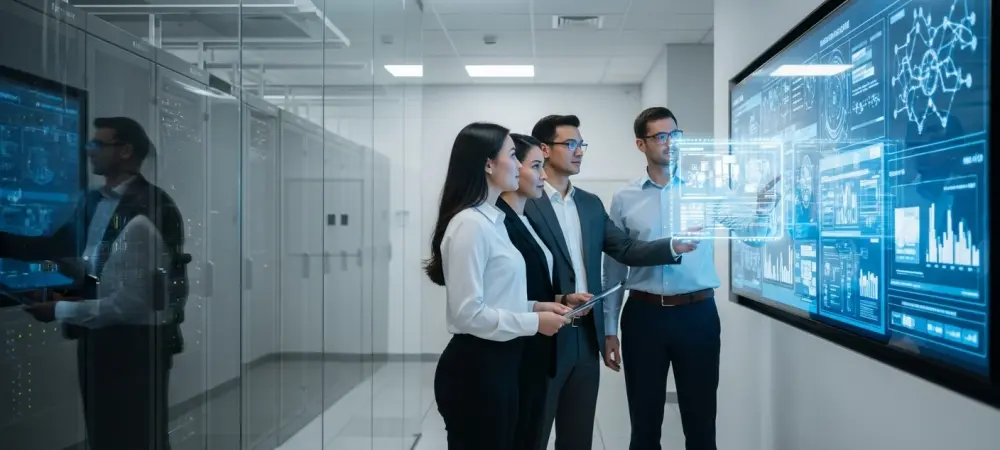
The explosive demand for massive computational power in 2026 has rapidly outpaced the capabilities of traditional data center architectures, forcing a fundamental shift toward specialized AI silos. Anthropic is responding to this pressure by launching Theseus, a collaborative infrastructure project designed to streamline model training and deployment at an enterprise scale. The focus of this initiative is on deep vertical integration, combining custom hardware accelerators with high-bandwidth optical interconnects to minimize latency during heavy training phases. Unlike general-purpose cloud solutions that often struggle with the unique demands of large language models, Theseus emphasizes a tight feedback loop between the Claude model architecture and the underlying silicon. This partnership involves leading hardware manufacturers and energy providers to ensure that scaling laws remain sustainable despite rising power requirements. By optimizing the physical layer for workloads, the initiative aims to reduce the carbon footprint.
The Technical Foundation: Specialized Silicon and Optical Fabrics
The technical foundation of the Theseus framework hinges on a modular liquid-cooling system that supports the extreme thermal design power of next-generation tensor processing units. This modularity allows for rapid expansion and maintenance without the multi-month downtime typically associated with upgrading traditional server racks in a high-demand environment. Furthermore, the networking stack utilizes a proprietary optical switching fabric that eliminates the bottlenecks often seen during the all-reduce operations essential for distributed training across thousands of nodes. This shift away from legacy Ethernet and standard InfiniBand protocols represents a significant leap in how data moves between clusters. The software layer is equally critical, as Theseus integrates a compiled execution environment that automatically optimizes kernel operations for specific Anthropic model variants. This synergy ensures that software engineers spend less time on low-level performance tuning and more on safety research.
Operational Resilience: Energy Solutions and Strategic Integration
Deploying this specialized infrastructure across multiple global regions established a new benchmark for how private-public energy agreements could facilitate high-density computing projects. The implementation of Theseus required a sophisticated approach to localized power grids, utilizing hydrogen fuel cells as a primary backup source to maintain continuous uptime during peak demand periods. Organizations looking to leverage these advancements prioritized the transition to hardware-aware software development cycles to fully capitalize on the massive gains in efficiency. This project demonstrated that the bottleneck for artificial intelligence development shifted from purely algorithmic improvements to the physical constraints of power and connectivity. The industry addressed the need for decentralized power management to mitigate the risks of regional grid failures. Purpose-built AI environments provided a clear path for scaling safe and reliable intelligence systems beyond the limitations of standard hardware.