

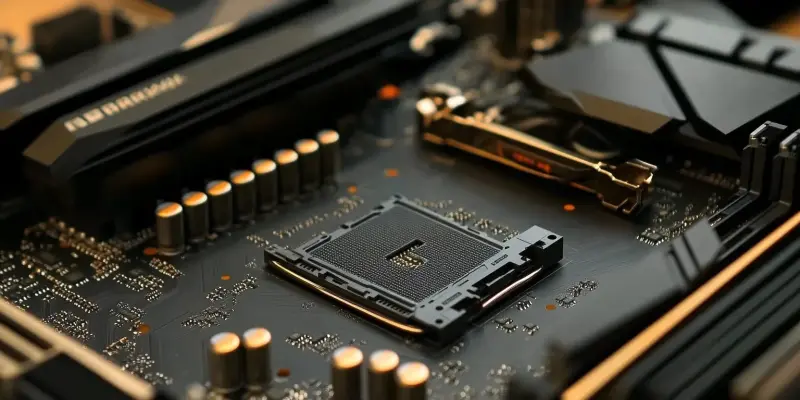
In the ever-evolving landscape of high-performance computing, AMD has consistently positioned itself as a frontrunner, consistently delivering cutting-edge solutions that cater to the most demanding users. The upcoming Threadripper 9000 series, codenamed “Shimada Peak,” continues this tradition by offering powerful new CPUs based on the highly anticipated Zen 5 architecture. AMD’s latest offering promises a mix of unprecedented core configurations and efficiency, setting new benchmarks in the realm of workstation processors.
Advanced Core Configurations
One of the standout features of the Threadripper 9000 series is its diverse range of core configurations. This includes 96-core, 64-core, 32-core, and 16-core variants, all maintaining a robust 350W TDP. AMD’s flagship model within this series boasts an impressive 96 cores and 192 threads, complemented by a staggering 384MB of L3 cache. These specifications mark a significant leap from previous models and indicate AMD’s commitment to pushing the envelope in terms of sheer processing power.
The performance improvements come not only from the increased core count but also from the advanced Zen 5 architecture. Coupled with a more refined TSMC manufacturing process, these new CPUs promise enhanced performance-per-watt metrics. This level of efficiency ensures that users can undertake demanding computational tasks without facing significant power and heat drawbacks, making the Threadripper 9000 series a highly attractive option for power users and professional environments.
Compatibility with Existing Platforms
An important aspect of the Threadripper 9000 series is AMD’s focus on maintaining compatibility with existing sTR5 motherboards, specifically those using the TRX50 and WRX90 chipsets. This strategy aligns with AMD’s commitment to supporting the sTR5 socket across at least two generations, a departure from past transitions that often required substantial hardware overhauls. This approach provides users with a degree of future-proofing, ensuring that their investment in high-end platforms remains sound even as new technologies emerge.
This compatibility extends the life of current setups, allowing users to upgrade their CPUs without the added expense and hassle of replacing essential components like motherboards. For technology enthusiasts and workstation owners, this user-friendly move underscores AMD’s understanding of their market’s needs and its dedication to providing solutions that blend performance, efficiency, and practicality.
Speculations and Market Expectations
In the dynamic sphere of high-performance computing, AMD consistently emerges as a leader, delivering top-tier solutions designed for the most demanding users. The upcoming Threadripper 9000 series, codenamed “Shimada Peak,” is a testament to AMD’s commitment to innovation. This new lineup features CPUs built on the highly anticipated Zen 5 architecture, offering a powerful combination of unprecedented core configurations and efficiency. AMD’s latest processors set new benchmarks in the domain of workstation CPUs, ensuring they meet the rigorous needs of today’s professionals and enthusiasts alike. The Zen 5 architecture is expected to bring significant improvements over its predecessors, including enhanced performance metrics and energy efficiency, which are crucial for demanding tasks such as 3D rendering, video editing, and complex simulations. These advancements not only ensure that users have access to cutting-edge technology but also facilitate greater productivity and faster processing times, underscoring AMD’s unwavering dedication to driving forward the future of computing.