

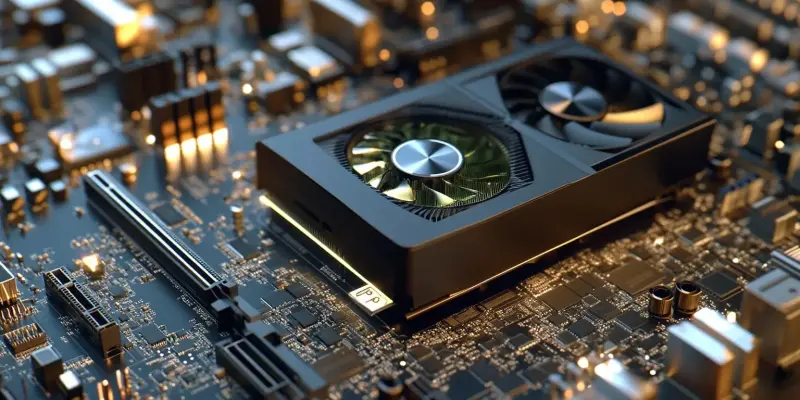
NVIDIA’s upcoming GeForce RTX 5090 and RTX 5090D GPUs in the RTX 50 “Blackwell” series promise significant performance improvements, particularly for rendering tasks in Blender. With the RTX 5090 anticipated to achieve a nearly 30% performance increase and the RTX 5090D showing a similar leap over their predecessor, the GeForce RTX 4090, these new GPUs are poised to push the boundaries of what’s possible in professional and gaming applications. The advancements come amid NVIDIA’s continued focus on refining GPU technology, ensuring that both professional users and gaming enthusiasts can benefit from the substantial gains. The performance leap is further supported by benchmarks, including Geekbench OpenCL and Vulkan APIs, demonstrating up to a 37% improvement in some tasks. Whether you’re a professional 3D artist or a gamer, the RTX 5090 series represents a major upgrade in rendering efficiency and overall GPU power.
Generational Improvements and Benchmark Results
The generational improvements of the RTX 5090 series are glaringly evident when comparing it to its predecessor, the RTX 4090. The median score for the RTX 5090 in benchmark tests is a staggering 17822.17, underscoring the nearly 30% performance gain. This improvement is not just a marginal increase but a substantial leap that can significantly enhance rendering tasks in Blender and other demanding applications. The RTX 5090D, designed specifically for the Chinese market, also shows impressive benchmarks, with an approximate 28% performance increase over the RTX 4090. These results highlight NVIDIA’s commitment to pushing the boundaries of GPU capabilities, ensuring that users experience unparalleled performance in their rendering tasks.
Geekbench tests using OpenCL and Vulkan APIs further endorse the capabilities of the RTX 5090 series, revealing up to a 37% performance boost depending on the specific workload. This indicates that the actual performance gains can vary, but the generalized 30% to 40% increase paints a promising picture. These benchmark results are not just numbers; they translate into real-world enhancements for professionals who depend on powerful GPUs to handle complex rendering tasks. With these new GPUs, tasks that once took hours could be completed in significantly less time, boosting productivity and creativity alike.
Launch and Specifications of RTX 50 Series
The much-anticipated launch of the RTX 5090 series is poised to make waves in the tech community. With an MSRP of $1,999, the RTX 5090 is earmarked to be the fastest GPU in the entire RTX 50 lineup, positioned as a flagship model that will set new performance standards. Simultaneously, the RTX 5090D is also set for release, tailored specifically for the Chinese market. These GPUs promise not just exceptional performance but also advanced features that cater to a diverse range of users, from professionals to avid gamers.
NVIDIA’s RTX 50 lineup showcases significant enhancements in terms of GPU cores, clock speeds, memory capacity, and bandwidth. The increases in these specifications aren’t merely incremental but represent a substantial upgrade from the previous generation. By focusing on these key areas, NVIDIA has ensured that the RTX 5090 series can handle even the most demanding tasks with ease. Whether rendering complex 3D models or running high-end gaming applications, users can expect superior performance and efficiency. The advancements in the RTX 50 series mark a new era in GPU technology, one that prioritizes both raw computational power and user experience.
Implications for Rendering Efficiency and Professional Applications
The introduction of the RTX 5090 and RTX 5090D GPUs signifies more than just an upgrade in hardware; it marks a significant advancement in rendering efficiency for applications like Blender. For professionals in fields such as 3D modeling, animation, and visual effects, the improved performance means they can tackle more complex projects without being hampered by hardware limitations. This GPU series is particularly beneficial for those who rely on quick rendering times and high-quality outputs. The roughly 30% performance boost translates into smoother workflows, allowing artists and designers to iterate and refine their work with less downtime.
These GPUs aren’t just about raw power; they also come with enhanced features tailored to professional applications. Improved memory capacity and bandwidth ensure that large datasets and complex scenes can be handled more effectively. For instance, scenarios involving high-resolution textures and detailed 3D models will see significant performance improvements. Additionally, the increased clock speeds contribute to faster data processing, ensuring that real-time rendering and previews are more responsive. These enhancements collectively make the RTX 5090 series a compelling choice for professionals looking to elevate their work to new heights.
Advancing GPU Technology for Gaming Enthusiasts
The eagerly awaited launch of the RTX 5090 series promises to stir the tech community. Priced at $1,999, the RTX 5090 is set to be the fastest GPU in the entire RTX 50 lineup, serving as a flagship model that will establish new performance benchmarks. Additionally, the RTX 5090D is slated for release, specifically designed for the Chinese market. These GPUs not only promise exceptional performance but also feature advanced capabilities that cater to a diverse range of users, from professionals to avid gamers.
NVIDIA’s RTX 50 lineup brings notable improvements in GPU cores, clock speeds, memory capacity, and bandwidth. These enhancements are not just slight but represent a significant upgrade from the previous generation. By enhancing these key specifications, NVIDIA has ensured that the RTX 5090 series can effortlessly manage even the most demanding tasks. Whether rendering intricate 3D models or running high-end gaming applications, users can anticipate superior performance and efficiency. These enhancements signal a new era in GPU technology, prioritizing both raw computational power and user experience.