

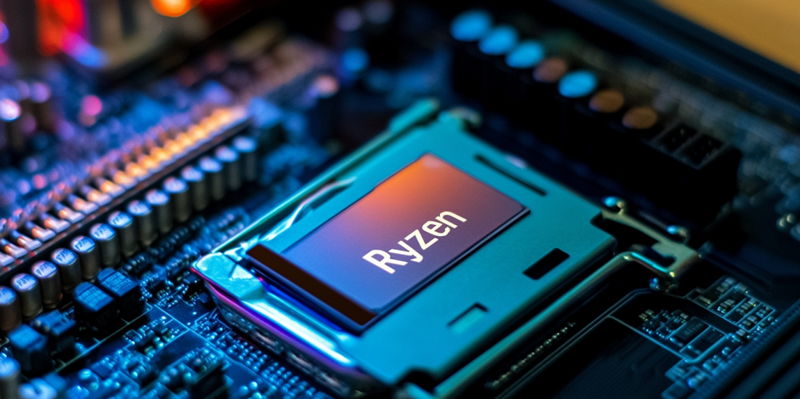
AMD has once again stirred excitement in the CPU market with the announcement of the Ryzen 7 9800X3D, set to launch on November 7th. Alongside this headline-grabbing reveal, AMD has also slashed prices on several CPUs within its Ryzen 9000 series, a move aimed at solidifying the company’s standing amidst fierce competition, particularly from Intel. These developments reflect AMD’s ongoing strategy to capture greater market share by offering high-performance products at compelling price points. The latest updates from AMD promise consumers not just cutting-edge technology but also better value for their investment. Let’s delve deeper into what these intriguing updates mean for the tech market and consumers alike.
Launch of the Ryzen 7 9800X3D
The highlight of AMD’s latest announcements is undoubtedly the introduction of the Ryzen 7 9800X3D. Targeted at high-performance enthusiasts, this CPU leverages AMD’s newest Zen 5 architecture along with groundbreaking 3D V-Cache technology to deliver unprecedented speed and efficiency. Featuring 8 cores and 16 threads, the Ryzen 7 9800X3D operates with a base clock speed of 4.70 GHz and a boost clock that can reach up to 5.20 GHz. Moreover, it boasts a significant 96 MB of L3 cache, complemented by 8 MB of L2 cache. All this power is managed under a thermal design power (TDP) of 120W, indicating that the CPU is designed for demanding tasks while maintaining reasonable thermal efficiency.
This new CPU is expected to be priced competitively around $449, much like its predecessor, the Ryzen 7 7800X3D. With its enhanced specifications and cutting-edge technology, the Ryzen 7 9800X3D is not just an upgrade but a significant leap in performance. It is positioned to captivate the interest of both gamers and professional users who demand top-tier computational capabilities. The base and boost clock speeds promise improved performance in both single-threaded and multi-threaded tasks, making this CPU versatile for a variety of high-demand applications, from immersive gaming to complex professional workloads.
Specifications and Innovation
The Ryzen 7 9800X3D’s standout feature is undoubtedly its 3D V-Cache technology, designed specifically to elevate performance in gaming and other compute-intensive applications. This innovative technology allows for a considerable increase in cache size, which in turn significantly boosts data access speeds. Users can expect smoother performance in video games and quicker computation times for professional tasks requiring heavy data processing. Essentially, the 3D V-Cache provides the CPU with more immediate data, reducing latency and enhancing overall system responsiveness dramatically.
In conjunction with its powerful cache, the CPU’s inclusion of 8 cores and 16 threads enables it to handle multitasking and parallel processing with exceptional ease. The high base and boost clock speeds further amplify its performance, ensuring that the Ryzen 7 9800X3D excels in a variety of use cases. Whether you’re rendering complex animations, compiling sizable codebases, or engaging in intensive gaming sessions, this CPU promises optimal performance. Its adaptable nature makes it suitable for both single-threaded tasks, where speed is crucial, and multi-threaded tasks, where efficiency and the ability to handle multiple processes simultaneously are key.
Price Cuts for the Ryzen 9000 Series
In a strategic move to attract a broader audience, AMD has rolled out significant price reductions for select Ryzen 9000 series CPUs. This comes just a few months after the initial launch of the Zen 5 "Ryzen 9000" family, making these high-performance CPUs more accessible to a larger segment of the market. Specifically, the Ryzen 9 9950X now retails at $599, marking a 7.7% reduction from its original price of $649. Meanwhile, the Ryzen 9 9900X has seen a more substantial reduction, now priced at $419, which is a 16% drop from its initial $499 price tag.
Other models in the series have also become more affordable. For instance, the Ryzen 7 9700X is now available at $329, down from its earlier price of $359. Similarly, the Ryzen 5 9600X has dropped to $249 from its original $279 price point, making it an enticing option for consumers interested in building or upgrading their systems without breaking the bank. These reductions are expected to be reflected across various retailers, including popular platforms like Newegg, Amazon, and Microcenter, making it easier for consumers to take advantage of these new prices.
Competitive Market Positioning
AMD’s aggressive pricing strategy is a well-timed move aimed at countering upcoming releases from Intel, particularly the anticipated Core Ultra 200S series. By lowering the prices of its existing CPUs and introducing the high-performance Ryzen 7 9800X3D, AMD aims to present a compelling value proposition that appeals to a wide range of consumers. This approach is not just about immediate sales but also about capturing long-term market share in a highly competitive landscape.
The timing of these announcements is no coincidence. AMD has strategically chosen a moment ahead of the holiday season and Intel’s product launch window to unveil these updates. This calculated timing allows AMD to attract immediate consumer interest and generate buzz, while also setting the stage for sustained market engagement through attractive pricing and innovative product offerings. This is a strategic maneuver designed to ensure that AMD products remain top-of-mind for consumers looking to upgrade their PCs or invest in powerful new systems, particularly as they make purchasing decisions during the high-traffic holiday shopping season.
Enhanced Value Propositions
To further sweeten the deal, AMD is offering popular game titles like Space Marines 2 and Unknown9: Awakening bundled with purchases of Ryzen 9000 series CPUs. This added incentive is designed to enhance the overall value of AMD’s offerings, making them even more appealing to gaming enthusiasts who are looking for both cutting-edge hardware and the latest gaming experiences. Bundling these in-demand games not only provides immediate value but also adds to the long-term enjoyment and utility of AMD’s CPUs.
These game bundles, coupled with the impressive performance and newly reduced prices of the CPUs, underscore AMD’s commitment to offering a comprehensive value proposition. By delivering high-quality hardware along with extra perks like popular games, AMD makes a compelling case for why consumers should consider their products over competitors. This approach not only aims to attract new customers but also to retain existing ones who may be considering an upgrade, thereby fostering brand loyalty and long-term customer satisfaction.
Technological Advancements
The shift to the Zen 5 architecture is a significant milestone for AMD, promising notable improvements in both performance and efficiency. Zen 5 introduces higher clock speeds, increased cache sizes, and enhanced thermal management, which collectively deliver superior computational power. These improvements make the CPUs more efficient at handling intensive tasks, thereby offering a more robust performance compared to previous generations. This architectural overhaul signifies AMD’s ongoing commitment to innovation and performance optimization.
In addition to these enhancements, the integration of RDNA 2 graphics across AMD’s CPU lineup means that even users without discrete GPUs can still enjoy reasonable graphical performance. This feature extends the utility of AMD’s CPUs to a broader audience, ranging from casual gamers to professional content creators who may not require a dedicated graphics card. By providing decent integrated graphics, AMD ensures that a wider range of users can benefit from their products, thereby expanding their market reach and appeal.
Market Dynamics
AMD’s recent moves reflect a nuanced understanding of market dynamics and consumer preferences. By delivering high-performing CPUs coupled with competitive pricing and innovative technologies, AMD positions itself to gain both mindshare and market share across various consumer segments. This proactive stance is especially crucial as competition in the CPU market heats up, with Intel gearing up to release its latest series and other players continually pushing the envelope in terms of technology and performance.
The key to AMD’s strategy lies in its ability to offer value without compromising on technology. By focusing on both cutting-edge innovations like 3D V-Cache and practical value through aggressive pricing and game bundles, AMD aims to create a comprehensive and compelling product lineup. This approach not only attracts immediate consumer interest but also builds a foundation for sustained engagement and loyalty, crucial factors for long-term success in the highly competitive tech market.
Conclusion
AMD has generated buzz in the CPU market once again with the announcement of the Ryzen 7 9800X3D, scheduled for release on November 7th. In addition to this exciting news, AMD has reduced prices on various models within its Ryzen 9000 series. This strategic move is designed to enhance the company’s position amidst intense competition, particularly from Intel. AMD’s latest actions highlight its ongoing commitment to capturing a more significant share of the market by delivering high-performance products at attractive prices. These updates usher in not just advanced technology but also greater value for consumers, making AMD’s offerings even more appealing. The price cuts and the introduction of the Ryzen 7 9800X3D reflect a broader strategy to appeal to both tech enthusiasts and the average consumer looking for top-notch performance without breaking the bank. As the release date approaches, anticipation grows, promising a shift in market dynamics and potentially swaying buyers towards AMD’s innovative and cost-effective solutions. Let’s explore what these new developments mean for the tech market and everyday users.