

Introduction
The global semiconductor landscape has undergone a seismic shift as major players re-evaluate their long-standing manufacturing alliances to overcome persistent supply chain bottlenecks. In an environment where the demand for artificial intelligence and high-performance computing surges daily, the pressure on established foundry models has reached a breaking point. This shift has prompted industry leaders to look toward unconventional partnerships to sustain growth.
This article examines how Advanced Micro Devices navigates these challenges through strategic pivots and technical innovation. Readers can expect an exploration of the burgeoning partnership with Intel, a comparison of market share projections, and a review of the specialized architectures aiming to redefine performance. The objective is to provide a clear view of the shifting dynamics within the data center sector.
Key Questions or Key Topics Section
Why Is AMD Partnering With Intel for Foundry Services?
The reliance on a single primary manufacturer has often created capacity constraints that stifle growth and delay critical product launches. For AMD, the bottleneck at Taiwan Semiconductor Manufacturing Company has become a significant hurdle in the race to meet the soaring demand for AI hardware. Diversifying the manufacturing base has transitioned from a strategic option to a survival necessity in this hyper-competitive market. Consequently, AMD is expected to tap into Intel Foundry Services to utilize specialized packaging technologies. By 2027, the company likely will implement Intel’s Embedded Multi-die Interconnect Bridge, which offers a cost-effective alternative to existing solutions. While Intel has faced challenges with substrate yields, its package yields are nearing 90 percent, making it a viable choice for high-volume production.
How Significant Is the Competitive Disparity in the Data Center Market?
The gap between the market leader and its closest competitor remains staggeringly wide in the data center rack segment. For a challenger to gain ground, it must overcome NVIDIA’s massive lead in shipment volumes and established proprietary ecosystems. Success in this category requires matching the sheer industrial scale and logistical reach that the current incumbent commands.
Projections indicate that this disparity will persist throughout the current decade. In 2026, NVIDIA is expected to ship approximately 50,000 racks, whereas AMD is forecast to ship around 5,000 units. This tenfold lead in volume is projected to continue through 2028, reinforcing the perception of AMD as a perennial underdog in this category despite its recent technological improvements.
What Technical Breakthroughs Are Reshaping the Hardware Landscape?
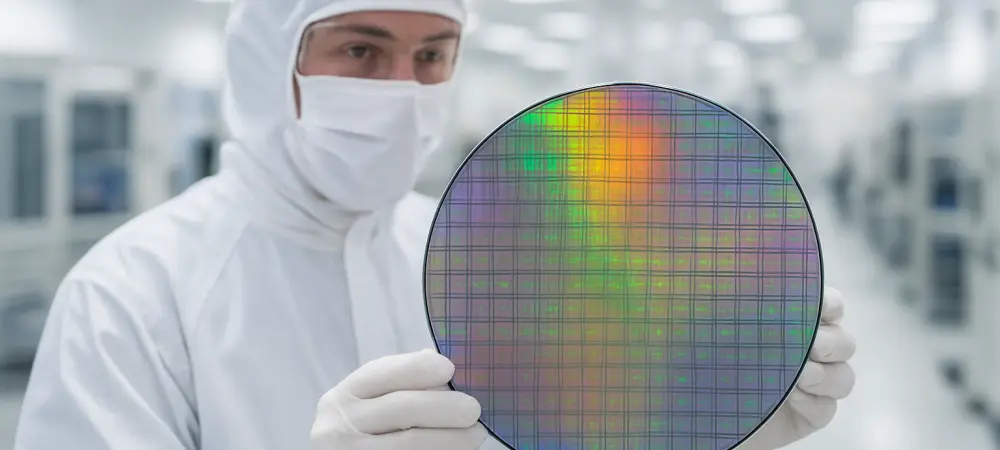
Innovation is moving toward specialized designs that eliminate the latency caused by data moving between memory and compute cores. AMD is pursuing this through collaborations like the one with Cerebras to utilize Wafer-Scale Engine technology. This approach integrates vast amounts of memory and compute onto a single silicon sheet, effectively removing traditional network bottlenecks. Furthermore, the acquisition of Taalas introduces a unique circuit-as-memory design where AI logic is hard-wired into transistor paths. This reduces the energy and time required for data fetching, though it limits the chip to specific models. These bold architectural choices represent a focused effort to provide performance advantages that could eventually offset current shipment volume disadvantages.
Summary or Recap
The current strategic landscape for AMD is defined by a dual-track approach of manufacturing diversification and aggressive architectural innovation. By leveraging Intel’s foundry services, the company seeks to stabilize its supply chain and reduce production costs through advanced packaging. This move reflects a pragmatic shift toward utilizing every available industrial resource to remain competitive.
At the same time, the company continues to face a significant uphill battle in terms of market volume compared to NVIDIA. While technical integration and specialized AI hardware provide a path toward niche dominance, the projected shipment numbers through 2028 suggest the industry hierarchy will not change quickly. These factors highlight the balance between technical brilliance and industrial scale.
Conclusion or Final Thoughts
The transition toward a more flexible manufacturing strategy signaled a broader trend of pragmatism within the technology sector. It showed that even the fiercest rivals found common ground when the need for reliable supply chains and cost-effective production became the primary priority. This shift fostered a more collaborative approach to hardware manufacturing, which ultimately benefited the broader ecosystem.
Industry leaders considered how these strategic pivots redefined the long-term trajectory of AI hardware development. As architectural efficiency and logistical resilience became as important as raw compute power, the focus of the market shifted toward more specialized solutions. The decisions made during this period provided a vital framework for navigating the pressures of a maturing and highly competitive industry.