

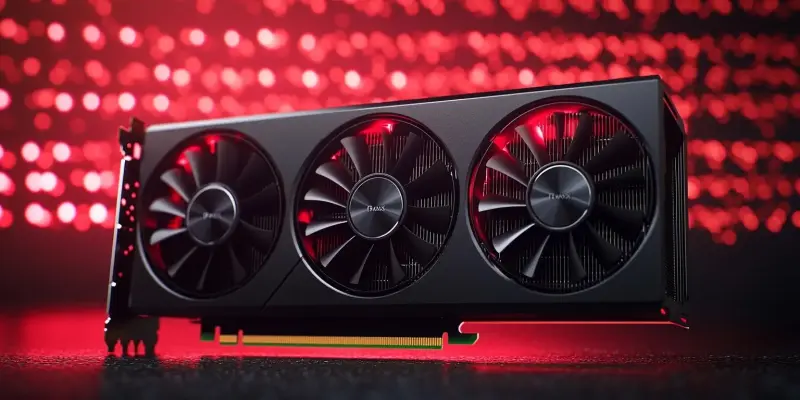
As the competitive landscape of the PC hardware market continues to intensify, AMD has set its sights on making a significant impact with the upcoming release of its Radeon RX 9000 series of graphics cards. Expected to be launched between January and March of 2025, this new series aims to solidify AMD’s position within a rapidly evolving industry. The eagerly anticipated flagship model, the Radeon RX 9070 XT, is projected to make its debut at the Consumer Electronics Show (CES) in Las Vegas on January 6, 2025. Following this debut, additional models in the Radeon RX 9000 series are expected to hit the market in March. Although specifics regarding these subsequent models remain unclear, industry enthusiasts are keenly watching for any new developments.
Technological Innovations and Feature Enhancements
FidelityFX Super Resolution 4 (FSR4)
One of the most eagerly anticipated features in the Radeon RX 9000 series is FidelityFX Super Resolution 4 (FSR4). AMD’s cutting-edge upscaling technology is expected to incorporate artificial intelligence-based enhancements, akin to Nvidia’s Deep-Learning Super Sampling (DLSS). Both gamers and professionals are awaiting FSR4, as it promises to deliver significantly improved frame rates and image quality. With its sophisticated AI-based upscaling and frame generation techniques, FSR4 aims to push the boundaries of what users can expect from their gaming experiences.
Though direct comparisons between FSR4 and DLSS remain speculative at this juncture, many industry experts anticipate that AMD’s new technology could potentially rival or even surpass Nvidia’s offerings. The heightened competition between these two giants is poised to drive further innovation, ultimately benefiting end-users who demand the latest and greatest in graphical performance. The implementation of FSR4 in the Radeon RX 9000 series will undoubtedly be a pivotal factor in AMD’s strategy to capture consumer interest and establish a strong foothold in the high-end GPU market.
Advanced Hardware Configurations
Beyond its innovative software features, the Radeon RX 9000 series is expected to showcase significant advancements in hardware design and performance. The flagship Radeon RX 9070 XT model, in particular, is rumored to boast an array of improvements, including increased core counts and higher clock speeds. These enhancements not only aim to elevate gaming performance but also cater to creators and professionals who require robust graphical capabilities for tasks such as video editing and 3D rendering.
AMD’s commitment to pushing technological boundaries is further exemplified by the anticipated inclusion of second-generation 3D V-Cache technology in the new GPUs. This cutting-edge cache design has already proven its potential in AMD’s Ryzen 7 9800X3D processor, enhancing gaming performance by reducing latency and increasing data throughput. By integrating this advanced technology into the Radeon RX 9000 series, AMD aims to deliver unparalleled performance and efficiency, setting a new benchmark for the industry.
Market Position and Competitive Landscape
AMD’s Strategic Response
AMD’s strategic timing for the Radeon RX 9000 series release is deliberate, aligning with a period of intense competition in the GPU market. Nvidia’s ongoing advancements and Intel’s recent foray into the market with its Battlemage graphics card generation underline the need for AMD to maintain a strong market presence. The introduction of Intel’s Arc B580, targeting 1080p and 1440p gaming at competitive price points, exemplifies the shifting dynamics of the industry. Priced at $249, the Arc B580 poses a direct challenge to AMD’s Radeon RX 7600 and Nvidia’s GeForce RTX 4060, underscoring the budget segment’s importance.
AMD’s recent introduction of the Ryzen 7 9800X3D, equipped with second-generation 3D V-Cache technology, highlights the company’s commitment to innovation. This launch not only reinforces AMD’s gaming performance credentials but also demonstrates the brand’s dedication to providing superior value and cutting-edge technology. The competitive landscape necessitates that AMD continues to innovate and deliver compelling products to capture and retain consumer interest in an ever-evolving market.
Consumer Expectations and Market Response
Consumer expectations for the Radeon RX 9000 series are high, with many eagerly awaiting performance benchmarks and real-world testing results. As more details emerge and the products inch closer to market availability, the anticipation continues to build. While the official reveal of the Radeon RX 9070 XT at CES 2025 will likely provide valuable insights, true performance assessments will come only once the GPUs are in consumers’ hands.
The staggered release strategy for the Radeon RX 9000 series allows AMD to maintain consumer interest over an extended period, keeping the brand at the forefront of market conversations. This approach not only maximizes visibility but also provides the opportunity to fine-tune later releases based on initial feedback. As these new GPUs gradually reach the market, their reception will serve as a litmus test for AMD’s strategy and the effectiveness of its technological advancements. For now, industry observers and consumers alike will have to wait with bated breath as AMD prepares to make its next significant move.
AMD’s Vision for the Future
Upcoming Ryzen 9000 CPUs
In addition to the anticipated launch of the Radeon RX 9000 series, AMD is rumored to be working on its next generation of Ryzen 9000 CPUs. While details remain sparse, it is expected that these processors will continue leveraging the successful formula of previous Ryzen series, incorporating performance enhancements and architectural improvements. The synergy between Ryzen CPUs and Radeon GPUs could unlock new performance levels, creating a cohesive ecosystem that caters to both gaming enthusiasts and professional users.
AMD’s future vision rests on the strategic development and release of cutting-edge products designed to meet varying consumer needs. The addition of new Ryzen CPUs to the product lineup would further solidify AMD’s position within the PC hardware market, offering consumers a comprehensive suite of high-performance components. As the tech giant continues to innovate and push the boundaries of what is possible, its commitment to delivering value and performance will be crucial in shaping the company’s trajectory and its impact on the industry.
Impact on the Tech Industry
As competition in the PC hardware market heats up, AMD is gearing up to make a substantial impact with the forthcoming launch of its Radeon RX 9000 series graphics cards. Set for release between January and March 2025, this new series is aimed at reinforcing AMD’s stance in the fast-evolving tech industry. The most anticipated model, the Radeon RX 9070 XT, is projected to make its grand entrance at the Consumer Electronics Show (CES) in Las Vegas on January 6, 2025. Following the CES debut, other models in the Radeon RX 9000 lineup are expected to be available by March. While detailed specifics about these subsequent models are currently sparse, industry followers are eagerly tracking any updates or leaks. AMD’s strategic timing and innovative advancements with the RX 9000 series reflect its commitment to staying ahead in a competitive market, poised to captivate tech enthusiasts and professionals alike. With a keen eye on developments, the tech community is poised for what could be a groundbreaking series of releases from AMD.