

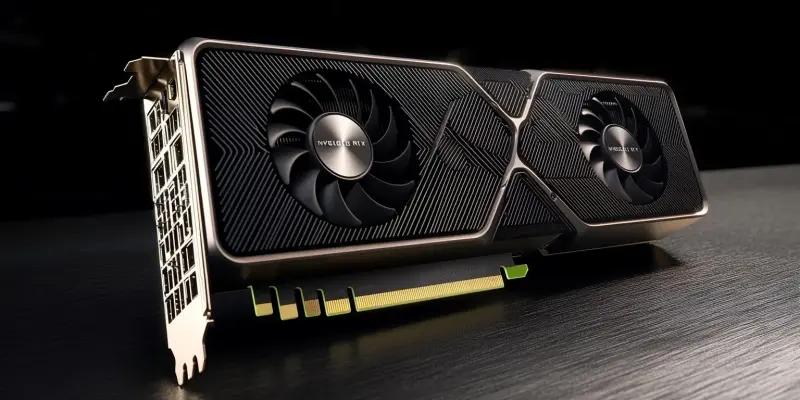
As the technology world eagerly awaits the next generation of graphics processing units, NVIDIA’s upcoming GeForce RTX 50 series GPUs promise to bring significant advancements, particularly with the inclusion of DLSS 4.0 technology. With growing interest and speculation, a specific early listing of the ASUS RTX 5080 variant on a European retail site has attracted attention, illuminating what consumers might expect from these cutting-edge GPUs. The RTX 50 series is set to deliver enhanced upscaling and performance, marking a milestone in NVIDIA’s continuous quest for innovation.
Pricing and Market Strategy
Anticipated Price of the RTX 5080
The early listing of the ASUS RTX 5080 variant suggests that the GPU will be priced at €1,699, which converts to approximately $1,748 USD when accounting for VAT. However, once VAT and the additional retail markup common to ASUS-branded products are factored out, the expected price for the North American market hovers around $1,349. This pricing aligns the RTX 5080’s potential launch price with its predecessor, the RTX 4080, which was initially considered overpriced until the corrective Super Edition was introduced.
Initial projections hinted that the Founders Edition (FE) of the RTX 5080 would be priced between $1,200 and $1,300, contradicting earlier rumors of pricing exceeding $1,500. By setting a price point that mirrors the RTX 4080, NVIDIA appears to be making a strategic move to avoid past pricing mistakes and ensure greater market acceptance. If the RTX 5080 delivers significant performance enhancements, it could substantially bolster the attractiveness of the new card and enhance NVIDIA’s position in a competitive market.
Comparison to Previous Models
Comparing the RTX 5080 to its predecessor reveals how NVIDIA has learned from past missteps. The RTX 4080’s initial pricing was widely deemed excessive, prompting the introduction of a Super Edition to rectify the market perception. By aligning the RTX 5080’s price with that of the RTX 4080, NVIDIA is not only recalibrating its pricing strategy but also aiming to appeal to a broader consumer base. This approach highlights the company’s adaptability and responsiveness to market feedback, positioning the RTX 5080 as a potentially more attractive option for consumers.
The anticipation around the RTX 5080’s pricing strategy is indicative of NVIDIA’s attempt to strike a balance between technological advancements and consumer affordability. The company’s focus on competitive pricing, combined with the promise of improved performance, sets the stage for a potentially successful launch. As the release date approaches, the market’s reaction to these pricing decisions will be critical in determining the RTX 5080’s reception and overall success.
Technical Specifications and Release Details
Advanced Features of the RTX 5080
The technical specifications of the RTX 5080 showcase NVIDIA’s commitment to pushing the boundaries of graphical performance. The GPU is reported to feature 10,752 CUDA Cores and 16 GB of GDDR7 VRAM, delivering a significant boost in computational power. Additionally, it boasts a TDP of 360W, indicative of its robust performance capabilities. One of the standout features is the inclusion of the fastest GDDR7 memory at 30 Gbps, surpassing the 28 Gbps memory found in other models within the same series.
These enhancements underline NVIDIA’s focus on providing a high-performance GPU that caters to the needs of gamers and professionals alike. The introduction of DLSS 4.0 technology further enhances the RTX 5080’s appeal, offering improved upscaling and performance. This combination of advanced features positions the RTX 5080 as a formidable contender in the market, capable of delivering exceptional graphical capabilities and efficiency.
Release Date and Market Availability
As tech enthusiasts eagerly anticipate the next leap in graphics processing power, NVIDIA’s upcoming GeForce RTX 50 series GPUs are generating considerable excitement. This new series promises substantial improvements, especially with the introduction of DLSS 4.0 technology. Dubbed as a game-changer, this technology aims to enhance both upscaling and overall performance. Recently, an early listing of the ASUS RTX 5080 on a European retail website has caught the eye of many, offering a glimpse into what consumers can expect from these advanced GPUs. The RTX 50 series signals a significant milestone in NVIDIA’s ongoing mission to push the boundaries of innovation in the graphics processing realm. This eagerly awaited GPU lineup is expected to deliver impressive enhancements that will cater to gamers, designers, and tech aficionados alike. With the industry abuzz with speculation and high hopes, the GeForce RTX 50 series is poised to set new standards in the field, exciting not just the core gaming community but also professionals relying on powerful graphics capabilities.