

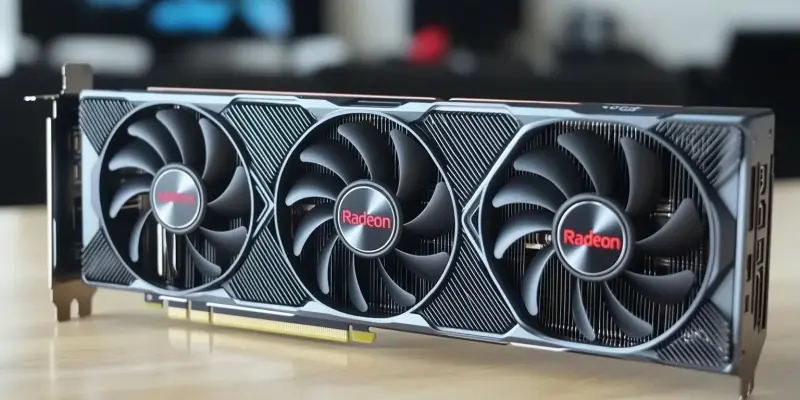
The global GPU market is rife with competition as technology giants AMD and NVIDIA constantly strive for dominance. AMD’s anticipated launch of its Radeon RX 9070 series GPUs is set to intensify this rivalry, especially with the significant focus on competitive pricing and enhanced performance. Interestingly, while AMD did not publicly showcase these GPUs during their CES 2025 keynote, they have confirmed that the RX 9070 series will be revealed at a separate dedicated event. This decision has set the tech community abuzz with speculation and excitement, particularly since promotional activities from partners such as ASUS suggest an imminent launch in just a few days.
The interesting part about AMD’s upcoming RX 9070 series is the expected pre-orders scheduled to start by January 23rd, indicating that retail units are nearly ready for distribution, just waiting for AMD’s official green light. The price range for these GPUs is anticipated to be between $300 and $1,000, which positions them in direct competition with NVIDIA’s 70-class and 80-class GPUs. The Radeon RX 9070 XT is expected to have a retail price around $500-$600, with recent leaked listings showing a Gigabyte variant priced precisely at $529. This competitive pricing strategy highlights AMD’s intention to enhance their market position by delivering high performance per dollar, effectively targeting the mainstream GPU market segment.
Retail Launch and Market Strategies
ASUS’s teaser posts and various other promotional activities have built up substantial anticipation around the RX 9070 series launch. These developments, combined with retailers’ readiness to begin pre-orders, suggest that AMD is on the cusp of a major product announcement. The tech community is expecting a dedicated event to reveal the RDNA 4 architecture, possibly within the next week. This launch represents a strategic move for AMD as they are keen on asserting their competitiveness and reinforcing their position in the highly lucrative GPU market.
The consensus among industry analysts is that the RX 9070 series will indeed be a substantial and competitive release. The potential aggressive pricing coupled with performance enhancements is believed to play a pivotal role in drawing consumer interest away from NVIDIA’s offerings. AMD’s focus on delivering substantial value for money aligns with their strategic objectives to capture a larger market share. The excitement surrounding this launch is a testament to the tech community’s high expectations and the general market readiness for these new GPU models.
Impact on the GPU Market
The global GPU market is a battleground where tech giants AMD and NVIDIA constantly vie for supremacy. AMD’s upcoming launch of its Radeon RX 9070 series GPUs promises to heat up this competition with a focus on competitive pricing and enhanced performance. Notably, AMD chose not to reveal these GPUs during their CES 2025 keynote, opting instead for a dedicated event to unveil the RX 9070 series. This decision has fueled speculation and excitement within the tech community, especially since promotional campaigns from partners like ASUS suggest a launch is only days away.
One intriguing aspect of AMD’s forthcoming RX 9070 series is the expected pre-orders, set to begin by January 23rd, indicating that retail units are nearly ready for distribution, pending AMD’s official approval. The anticipated price range for these GPUs is between $300 and $1,000, putting them in direct competition with NVIDIA’s 70-class and 80-class GPUs. The Radeon RX 9070 XT might retail around $500-$600, with leaked listings of a Gigabyte variant priced precisely at $529. This strategic pricing underscores AMD’s aim to bolster their market position by delivering high performance per dollar, targeting the mainstream GPU market segment effectively.