

Dominic Jainy is a seasoned IT professional whose career has been defined by his deep engagement with artificial intelligence and the practical application of machine learning across consumer tech. As Oppo begins deploying its ColorOS 16 May 2026 update to the Find and Reno series, Dominic’s insights help us understand how these technical shifts impact the user experience. He looks past the spec sheets to explain how new features like Live Space and cross-platform synergy redefine the relationship between our devices and our daily routines.
How do the fluid animations and capsule-style notifications in Live Space change the way users interact with their lock-screen environment?
The introduction of Live Space transforms the lock screen from a static gateway into a truly immersive and responsive canvas for the Find and Reno series. By integrating fluid animations, the system feels less like a set of independent menus and more like a living entity that reacts to every touch with a refined, liquid elegance. The capsule-style notifications are a standout because they deliver real-time updates through a clean, distraction-free interface that keeps the user focused. Whether you are tracking a timer or checking for a quick update, the visual design ensures information is accessible at a glance without cluttering the screen. It creates a seamless bridge between the hardware and software, making the entire device feel more intuitive and alive during daily use.
What does the integration of O+ Connect with Apple devices mean for users who operate within a multi-brand digital ecosystem?
The update to O+ Connect is a genuine game-changer for digital flexibility because it finally breaks down the walls between Oppo and Apple devices. By allowing seamless cross-platform file sharing and connectivity, users no longer have to deal with the friction that usually comes with moving data between competing operating systems. This move acknowledges the reality of the modern consumer who might use an Oppo phone alongside an iPad or a Mac, ensuring their creative workflow remains uninterrupted. It is a refreshing step toward a more open technological future where the hardware you choose doesn’t limit your ability to collaborate or share content instantly. The ease of this connection eliminates the need for clunky third-party workarounds, making the process feel native and incredibly fast.
In what ways do the new AI-powered organization and creativity tools, specifically features like AI Mind Pilot and the AI Recording Sticker, elevate the professional utility of these smartphones?
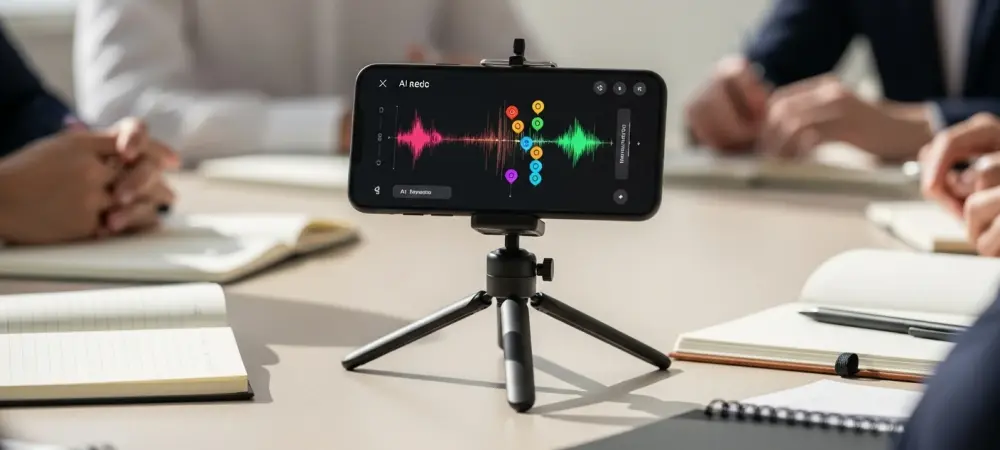
The ColorOS 16 update introduces a suite of tools that turn the smartphone into a proactive assistant rather than just a communication tool. AI Mind Pilot and the AI Recording Sticker are significant additions because they allow users to capture and organize information with much higher precision than before. For instance, being able to add text and image markers while recording audio means that a long meeting can be distilled into key moments without the need for manual transcription. The addition of AI-generated summaries for Live Translation, which even provides automatic titles, helps professionals manage international conversations with much better clarity and less effort. Furthermore, the ability to generate rich visual summaries with flowcharts and diagrams in markets like India, Singapore, and Vietnam adds a layer of depth that standard note-taking apps simply cannot match.
Beyond the high-profile AI updates, what impact do the smaller UI refinements like the enhanced App Cloner and color-based app searching have on daily efficiency?
Efficiency is often found in the small details, and the enhancement of the App Cloner to support up to three clones is a perfect response to the needs of power users. This allows people to maintain distinct environments for work, daily life, and entertainment within a single device, preventing the overlap of notifications and private data. Similarly, the ability to find apps by color in Drawer mode taps into our visual memory, making navigation feel more natural and less cognitive-intensive when you are in a rush. Even the cleaner layout of the Eye Comfort settings page and the addition of the LUMO watermark for image branding reflect a commitment to a distraction-free experience. When you combine these with the smoother switching animations for apps like Weather and Calendar, you see a comprehensive effort to refine every touchpoint of the user journey.
What is your forecast for mobile operating systems as they become more deeply integrated with artificial intelligence?
I believe we are entering an era where the operating system will transition from being a simple platform for apps to being a predictive personal concierge. As AI becomes more context-aware, as we have seen with the improved Live Translation and its new summary features, the OS will start to anticipate user needs before the user even touches the glass. We will likely see even deeper cross-platform integration where the boundaries between different hardware brands continue to blur in favor of user convenience and data mobility. In the next few years, the measure of a great OS won’t just be its processing speed, but its ability to filter the noise and provide a truly personalized, calm, and efficient digital environment. The rollout that started on May 5 and concludes by May 31 is just the first step toward this more intelligent, AI-centric mobile future.