

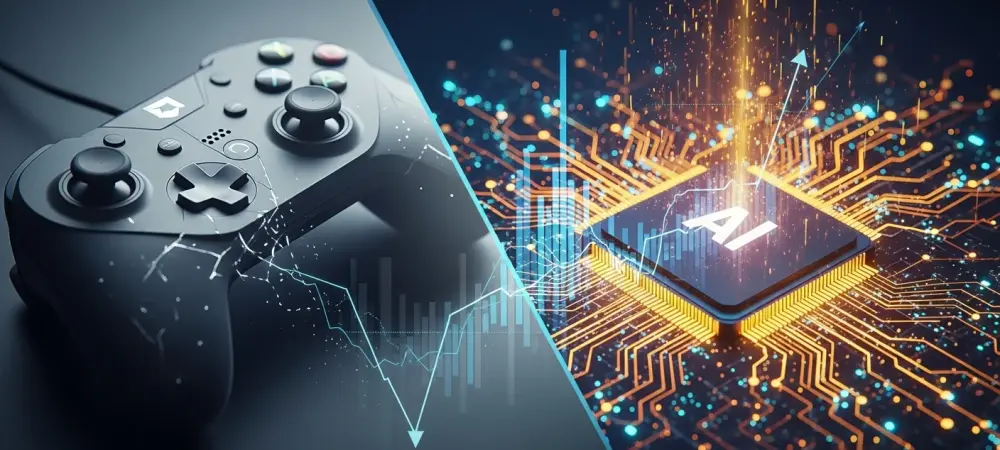
The global semiconductor landscape is currently witnessing a historic divergence as the explosive demand for artificial intelligence infrastructure begins to cannibalize the resources traditionally reserved for the consumer gaming market. Recent financial disclosures from AMD reveal a complex narrative where a staggering 38 percent increase in overall revenue, reaching a total of 10.3 billion dollars, masks a looming downturn for enthusiasts and casual players alike. While the data center segment has achieved a remarkable 57 percent surge driven by the widespread adoption of Epyc processors and Instinct accelerators, the outlook for the remainder of 2026 suggests a sharp decline in gaming-related income. Projections indicate that gaming revenue will likely plummet by more than 20 percent compared to the first half of the year. This shift marks a significant transition in corporate priorities as the industry navigates the most lucrative technological gold rush seen in decades.
The Consequences of a Constrained Memory Market
At the heart of this manufacturing tension lies a phenomenon often described as a tight memory environment, where the production of high-bandwidth memory for AI servers is being prioritized over standard components. Manufacturers have aggressively pivoted their fabrication lines to satisfy the insatiable hunger for HBM, which commands premium prices from enterprise clients building massive neural networks. This strategic reallocation has left the supply of consumer-grade materials, such as GDDR6 and standard DRAM, in a precarious and increasingly expensive position. CEO Lisa Su recently clarified that while the company has secured enough physical supply to meet its internal baseline targets, the prioritization of high-margin AI products inevitably creates a ripple effect that leaves the gaming sector vulnerable. As a result, the costs for memory-heavy components like Radeon graphics cards and high-end gaming laptops are expected to remain inflated, even as foundational processing power becomes more accessible.
Adapting to the New Reality of Hardware Costs
The ripple effects of this supply chain evolution extended far beyond discrete graphics cards, impacting the semi-custom silicon found in home consoles and the broader pricing of solid-state drives. Prospective builders found that rising prices for RAM and SSDs made new PC configurations significantly less attractive, even during a period where GPU prices appeared relatively stable on the surface. This environment presented a formidable challenge for the interactive entertainment industry, especially as developers prepared for the launch of major titles like Grand Theft Auto VI. To navigate this landscape, industry analysts recommended that consumers shift their focus toward mid-range hardware configurations or cloud-based gaming services to mitigate the impact of component inflation. Manufacturers were encouraged to diversify their supply chains and explore alternative memory architectures to maintain market viability. Ultimately, the industry moved toward a model that balanced high-end AI development with the practical economic realities of the global consumer hardware ecosystem.