

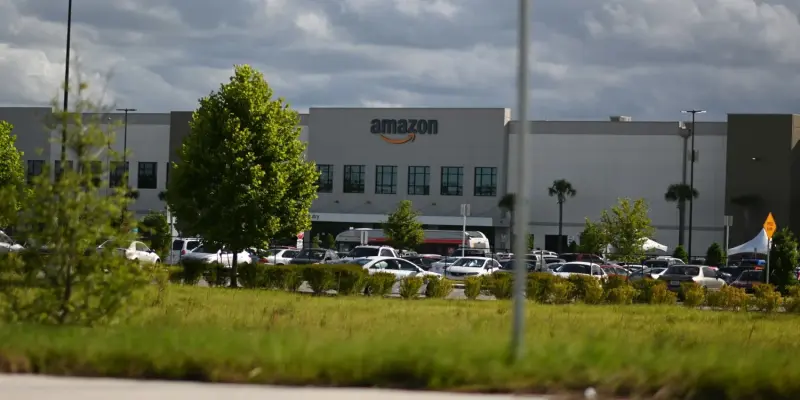
Amazon Web Services has embarked on a transformative journey by announcing an investment of $10 billion towards establishing a groundbreaking AI data center in Richmond County, North Carolina. This colossal financial commitment marks Amazon’s largest single investment in the state, following their $12 billion expenditure in the region over the past fifteen years. This initiative underscores Amazon’s strategic endeavor to drive advancements in AI technology and bolster its cloud computing operations. Beyond nurturing Amazon’s technological objectives, this move solidifies North Carolina’s rising stature as a crucial hub for technological innovation, reflecting the state’s ideal setting for tech infrastructure ventures.
Strategic Importance and Economic Impact
Reinforcing North Carolina’s Position as a Tech Powerhouse
The data center’s establishment signals a significant stride in cementing North Carolina’s position as a formidable player in the tech industry. Amazon’s decision to establish its operations in this region underscores the state’s favorable business environment, enhanced by infrastructure conducive to technological projects. North Carolina’s emergence as a prominent tech hub is increasingly attracting substantial investments like Amazon’s, which magnifies the state’s appeal as a target for future tech infrastructure projects. Enhancing North Carolina’s economic landscape, the Richmond County data center is projected to generate approximately 500 high-skilled jobs, encompassing roles such as data center engineering and security. The economic ripple effect is amplified as thousands of indirect jobs in construction and supply chains are expected to emerge in tandem. Such large-scale investments echo a broader industry trend wherein major cloud providers, including Microsoft and Google, are ramping up infrastructure expenditure to meet evolving computing demands. The focus is shifting towards AI-specific infrastructure designed to accommodate the soaring demand for enterprise-level AI applications, necessitating specialized computing architectures that prioritize machine learning capabilities.
Regional Economic Strategy and Benefits
Positioning this major facility in Richmond County aligns with Amazon’s strategy to bring its operations closer to its southeastern clientele. This deliberate geographical choice offers potential operational cost savings compared to more traditional tech markets, resulting in efficiency gains that benefit both Amazon and the local economy. However, it also raises questions about the potential economic dependencies that could emerge in the region due to heavy reliance on a single industry. It necessitates a consideration of long-term community impacts and the development of robust economic diversification strategies that ensure sustained growth over time.
Incorporating a comprehensive approach, Amazon’s investment extends beyond infrastructure to actively cultivating local talent. Collaborating with educational institutions to implement programs for data center technicians alongside fiber optic fusion splicing workshops forms an integral part of this strategy. Additionally, the creation of the Amazon Richmond County Community Fund reinforces Amazon’s commitment to enhancing STEM education, sustainability, and economic development within the community. Furthermore, Amazon’s provision of scholarships to promising North Carolina high school seniors underscores its dedication to nurturing local talent pipelines, thus supporting the broader ecosystem.
Navigating Challenges and Community Engagement
Addressing Environmental Concerns
The substantial investment, while promising, is also accompanied by environmental considerations that require careful management. Although Amazon has highlighted its commitment to renewable energy ventures, such as solar and wind farms in North Carolina, the degree to which the data center aligns with stringent environmental standards remains to be seen. Stakeholders may be particularly interested in how Amazon mitigates its ecological footprint while maintaining operational efficiency. These concerns are compounded by the need to understand the timeline for the data center to reach full operational capacity, ensuring that environmental sustainability is achieved alongside the desired economic benefits. Amazon’s commitment to environmental sustainability is further reinforced by its initiatives to harness renewable energy sources, an endeavor that coincides with global sustainability trends in corporate enterprise. This strategic approach exemplifies Amazon’s intention to align its operations with environmentally friendly practices, which in turn enhances its corporate image amid growing awareness of sustainable practices. Nonetheless, effective monitoring and consistent communication of progress towards achieving these goals will play a pivotal role in ensuring that stakeholders remain engaged and confident in the overarching sustainability mission.
Impact on Local Workforce Development
Perhaps one of the most profound impacts of this investment is its contribution to fostering workforce development within the region. By cultivating a skilled workforce through targeted training programs, Amazon is not only filling immediate job requirements but also equipping the local population with valuable skills that extend beyond the tech industry. This multifaceted approach serves as a catalyst for driving economic empowerment and, in the long run, ensures that the community reaps sustainable benefits from Amazon’s investment. In facilitating knowledge transfer and skill enhancement, Amazon’s partnerships with educational institutions offer a dynamic pathway for individuals to enter the tech industry. These initiatives are emblematic of Amazon’s holistic approach to community engagement, underscoring its commitment to fostering economic and educational development in tandem with technological advancements. Through these endeavors, Amazon reinforces its role as a catalyst for regional growth by empowering residents with the tools needed to successfully navigate the evolving economic landscape.
Forward-Looking Reflections on the Investment
Amazon Web Services is embarking on an ambitious path by announcing its massive investment of $10 billion to set up a cutting-edge AI data center in Richmond County, North Carolina. This substantial financial pledge stands as Amazon’s largest single investment in the state, following their cumulative $12 billion investment in the area over the last fifteen years. The initiative highlights Amazon’s strategic effort to propel advancements in AI technology while strengthening its cloud computing operations. By choosing to nurture technological development in this region, Amazon emphasizes North Carolina’s growing status as a vital hub for technological innovation. This move demonstrates North Carolina’s ideal setting for ventures focusing on tech infrastructure, boosting the state’s prominence in the tech sector. Additionally, such endeavors promise economic growth, job creation, and enhanced access to technological resources, further benefiting the state’s communities and workforce.