

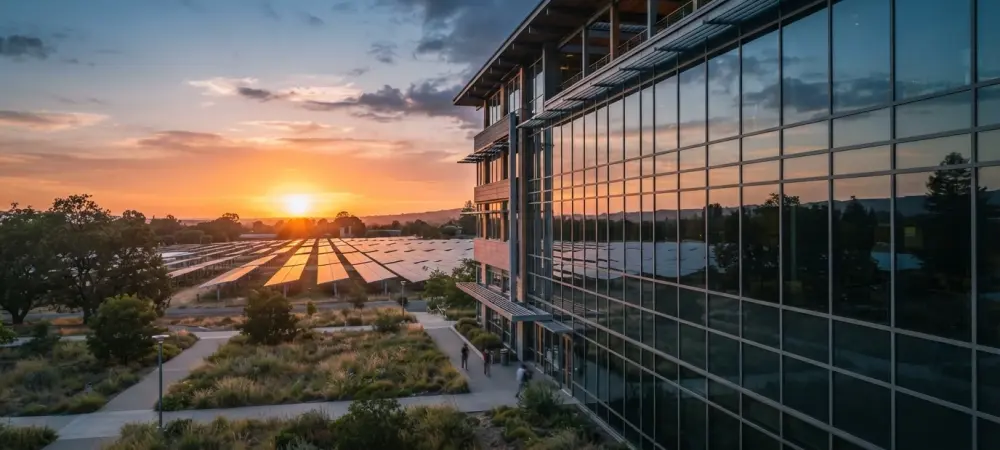
The insatiable appetite for computational power is driving a fundamental collision between the rapid evolution of artificial intelligence and the fragile stability of global energy grids. As traditional infrastructure buckles under the weight of exponential data processing needs, the shift toward self-sustaining green campuses has become a critical strategic pivot in today’s climate-conscious economy. This transition represents a departure from grid-dependent facilities toward a decentralized model where energy production and digital consumption coexist. By examining the current landscape from 2026 through the end of the decade, specifically the NexaCore project in Grenada, it becomes clear that the future of AI relies on this integrated, sustainable roadmap.
The Evolution of the Green Computing Market
Statistical Growth and Market Momentum
Current market momentum reflects a staggering surge in investment for infrastructure that can handle AI workloads without depleting municipal power supplies. Reports indicate that the market value of green data centers has accelerated as tech giants prioritize renewable energy adoption to satisfy ESG mandates and operational efficiency.
This surge is driven by the realization that traditional energy costs and carbon taxes are making old-school facilities financially unviable. Consequently, capital is flowing toward projects that integrate high-density computing with on-site solar, wind, or geothermal sources to ensure predictable long-term overhead.
Strategic Co-location and Global Adoption
The NexaCore AI & Renewable Energy Infrastructure Campus serves as a definitive case study for this movement. By pairing a high-performance GPU facility directly with a solar farm and advanced battery storage, NexaCore Technologies is demonstrating how to bypass the physical constraints of local utility grids.
Strategic co-location allows companies like Marwynn Holdings to mitigate the risks of power outages while maximizing land use in emerging markets. This model is being adopted globally as firms seek regions where they can build energy-sovereign environments that operate independently of aging national infrastructures.
Expert Perspectives on Infrastructure Integration
Industry experts argue that pairing high-performance computing with dedicated renewable sources is no longer optional for ensuring operational uptime. Relying on public grids often results in throttling, which is unacceptable for the processing of complex AI models that require constant, high-voltage throughput.
Moreover, professionals emphasize the importance of exclusivity agreements and detailed feasibility studies to secure these multi-million dollar investments. As seen in the recent MoU between Grenada National Resort and NexaCore, these legal frameworks are essential for navigating the logistical hurdles of sourcing high-end hardware in non-traditional tech hubs.
Future Projections: Decentralized AI and Regional Tech Hubs
Building AI campuses in non-traditional regions like the Caribbean is set to reshape the global digital topography. This diversification provides regional tech sovereignty and offers socioeconomic benefits, such as selling surplus energy back to local communities, thereby turning data centers into civic assets.
However, the long-term technical viability of these projects hinges on government incentives and the stability of infrastructure funding. While energy-sovereign centers set a new global standard, the volatility of hardware cycles remains a challenge that requires flexible architectural planning and robust financial backing to maintain a competitive edge.
Conclusion: The New Standard for Digital Infrastructure
The transition toward integrated renewable campuses marked a definitive end to the era of unchecked, grid-dependent data expansion. It was clear that sustainable scaling provided the only protection against a systemic collapse precipitated by chronic power scarcity. Projects in the Caribbean demonstrated that industrial efficiency and environmental stewardship could coexist, ultimately defining the digital infrastructure blueprint for the decade. This shift moved the industry beyond mere compliance and into a period of genuine energy independence, where technology functioned as a catalyst for regional development rather than a drain on local resources.