

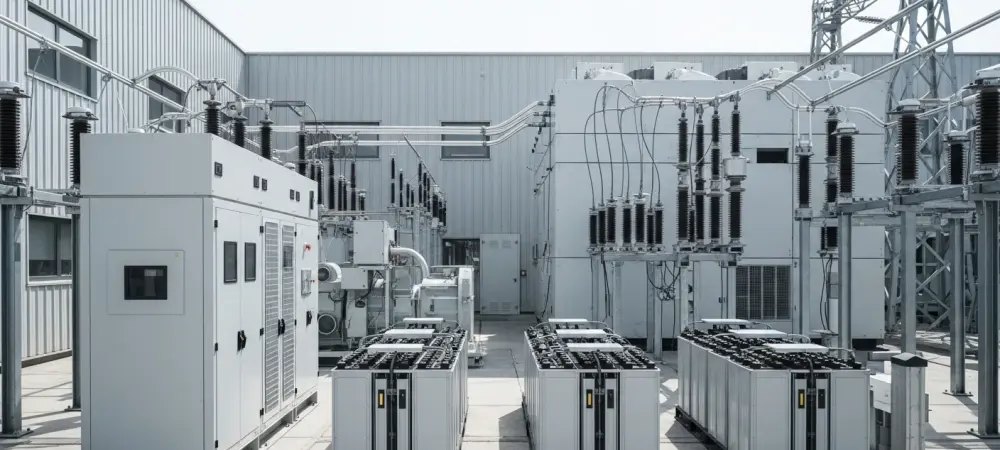
The rapid evolution of artificial intelligence has pushed the boundaries of modern computing so far that traditional data centers are being forced to undergo a total structural identity crisis. For decades, these facilities operated as digital warehouses where the primary goal was to house rows of server racks within a controlled environment, but the arrival of massive GPU clusters has turned that model upside down. In this new era, the data center is shedding its identity as a simple IT repository and is instead becoming a high-capacity power utility and industrial cooling plant. This transformation is driven by the fact that the actual compute hardware now requires an unprecedented amount of physical support infrastructure to function without catastrophic failure. As a result, the once-dominant white space dedicated to servers is shrinking relative to the grey space required for massive liquid cooling systems, backup generators, and high-capacity transformers that keep these AI factories running 24/7.
The Density Surge: Breaking the Density Ceiling
The primary catalyst for this architectural overhaul is the vertical trajectory of rack density, which has shattered all previous industry forecasts and forced a complete rethink of power delivery. Only a short while ago, a rack drawing 100 kW was considered a technical marvel or a specialized outlier, yet the current landscape sees hyperscale deployments reaching average densities of 34 kW as a baseline for 2026 and beyond. Systems like the Nvidia Blackwell NVL72 have pushed these requirements even higher, with individual racks now consuming roughly 130 kW, and many engineers are already designing for a future where 600 kW per rack becomes the standard. This rapid escalation means that the electrical substations and internal switchgear that were sufficient just two years ago are now hopelessly undersized for the demands of modern generative AI training. Consequently, providers are abandoning the practice of incremental upgrades in favor of entirely new power architectures that can support these loads. This shift in power requirements has led to a physical inversion of the data center floor plan where the mechanical and electrical rooms are starting to consume more real estate than the server halls. In traditional enterprise setups, the majority of the square footage was allocated to the white space where the racks lived, with the supporting grey space tucked away in the periphery of the building. However, the sheer volume of high-capacity transformers, massive battery arrays, and sophisticated backup generators needed to stabilize the grid for AI workloads has forced a spatial reallocation. Modern AI factories are now designed with the industrial utility infrastructure as the centerpiece, reflecting the reality that the facility is essentially a power conversion plant that happens to run servers. This transition highlights a broader industry trend where the limiting factor for AI expansion is no longer the availability of silicon chips, but the physical capacity of the building to provide enough electricity and cooling to keep them alive.
Infrastructure Bifurcation: Legacy Versus AI Factories
The divergence between standard IT workloads and the intense requirements of artificial intelligence is creating a distinct bifurcation in the global data center market today. Legacy enterprise facilities were built for air-cooled, low-density environments where the floor loading and plumbing were never intended to support the weight or liquid requirements of modern GPU clusters. Attempting to retrofit these older sites is often a logistical nightmare and a financial drain, as the structural modifications needed to accommodate liquid cooling and heavier racks can exceed the cost of new construction. Because of these physical constraints, a separation of fleets is occurring throughout the industry, with older inventory relegated to traditional cloud and enterprise applications. Meanwhile, new purpose-built AI campuses are rising from the ground up, designed specifically to handle the extreme thermal and electrical demands that define the current technological landscape. This creates a two-tiered ecosystem where infrastructure is the main differentiator.
Managing the heat generated by these high-density clusters has necessitated the adoption of a dual-cooling paradox that adds layers of complexity to daily operations within the facility. While direct-to-chip liquid cooling has become a necessity for preventing modern GPUs from thermal throttling, it does not entirely eliminate the need for traditional air cooling systems. Operators must now maintain parallel architectures, using liquid loops to pull heat directly from the most intensive components while simultaneously running massive air-conditioning units to manage the ambient environment and peripheral hardware. This dual-requirement approach further expands the footprint of rooftop cooling towers and dry coolers, making the facility look more like a chemical processing plant than a traditional office or tech hub. The sophistication required to orchestrate these disparate systems is driving a massive demand for advanced management software that can balance thermal performance across both liquid and air mediums in real time.
Standardization: The Shift Toward Modular AI Pods
As the complexity of custom-built high-density environments continues to climb, the industry is shifting toward standardization as a way to mitigate the risks and delays of bespoke engineering. Custom designs for every new data center hall are becoming unsustainable given the breakneck speed at which AI models are being deployed and updated. As a solution, standardized AI Pod architectures and prefabricated infrastructure modules have become the preferred method for scaling capacity quickly and reliably. These modules come pre-configured with the necessary power distribution and liquid-cooling interfaces, allowing operators to drop high-density compute power into a facility with minimal site-specific engineering. This movement is heavily influenced by the Open Compute Project and reference architectures from leading hardware vendors, which provide a unified blueprint for rack-level integration. By adopting these standardized units, providers can focus on site acquisition and power procurement rather than the intricacies of individual rack designs. The massive power requirements of these new AI factories are sending shockwaves through the global supply chain and putting unprecedented pressure on electrical grids in major tech hubs. The shift from selling hardware to providing operational availability means that the market now prioritizes the ability to secure a consistent and massive energy feed above all other operational metrics. This has led to a situation where the manufacturing of electrical components, such as high-voltage transformers and specialized switchgear, has become a significant bottleneck for the entire industry. Furthermore, as the US power grid struggles to keep up with the demand from these concentrated energy hubs, developers are increasingly looking for ways to integrate on-site power generation and advanced energy storage systems. The competitive landscape for providing AI compute is no longer just about who has the fastest chips, but who can effectively manage the massive industrial scale of the power and cooling systems required to keep those chips operational in a constrained market.
The transition toward industrial-scale AI factories marked the most significant metamorphosis the data center industry ever experienced in its history. Stakeholders who recognized the shift from air-cooled enterprise rows to specialized liquid-cooled campuses early on secured a critical advantage in the global technological race. It became clear that the gap between traditional IT facilities and high-performance AI environments would only continue to widen, making specialized infrastructure the primary differentiator for future success. To maintain leadership, operators moved aggressively to secure long-term energy contracts and invested heavily in modular, liquid-ready cooling designs. Looking ahead, the focus remained on diversifying energy sources and optimizing the software-defined management of the grey space to ensure maximum uptime. The industry proved that physical infrastructure was no longer just a support system but the fundamental foundation upon which the future of intelligence was built.