

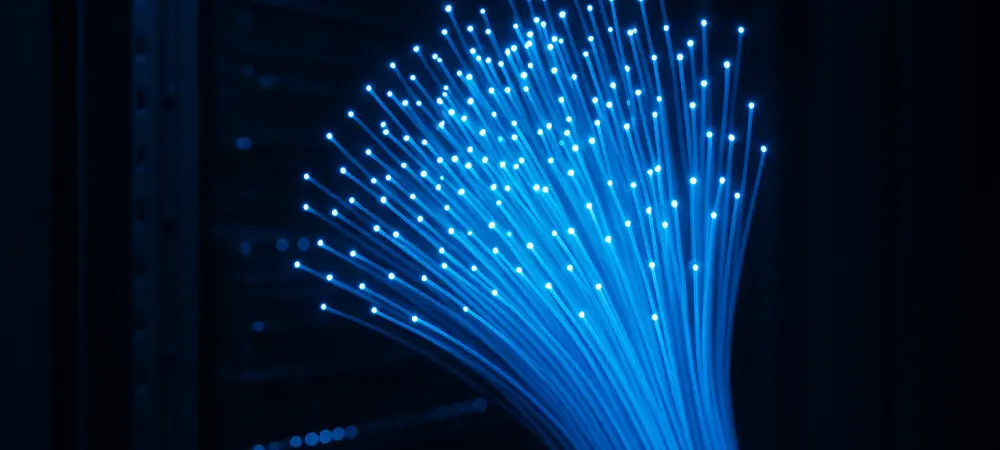
The massive migration toward large-scale generative models has redefined the fundamental baseline of data center performance, elevating optical networking from a peripheral utility to the primary orchestrator of machine intelligence. As hyperscalers expand their compute capabilities, the physical limitations of electrical signaling have forced a radical pivot toward light-based interconnects that can keep pace with GPU evolution. The industry is currently navigating a period where the network is no longer just the plumbing; it is either the bottleneck or the primary enabler of the latest trillion-parameter models.
This technological evolution emerged from the necessity to synchronize thousands of processing units that operate as a single, massive computer. Traditional data center designs, which favored vertical traffic between users and servers, proved insufficient for the intense, horizontal data exchange required for deep learning. Consequently, optical fabrics have become the specialized infrastructure layer that ensures data reaches the processor at the exact moment it is needed, preventing costly idle time in expensive hardware clusters.
Introduction to AI-Driven Optical Networking
The core principle of modern optical networking lies in its ability to translate electrical signals from processors into photonic streams that travel with minimal resistance. This shift was driven by the realization that copper-based connectivity lacks the bandwidth-distance product necessary for large-scale AI clusters. By utilizing light as the primary medium, operators can maintain signal integrity across sprawling data center campuses while reducing the energy overhead associated with signal amplification and cooling.
This technology has transitioned from being a component of the telecommunications sector into the very heart of the modern data center. It encompasses everything from the transceivers plugged into the back of a server to the thousands of miles of fiber-optic cabling buried beneath the facility floors. In the current technological landscape, the efficiency of this optical layer directly dictates the economic viability of AI services, as faster data delivery translates into shorter training times and lower operational costs.
Core Technical Components of AI Optical Fabrics
High-Speed Optical Transceivers and Signal Scaling
High-speed transceivers represent the engine of the optical fabric, with the industry currently moving through a 1.6T deployment cycle from 2026 to 2028. These components are unique because they must balance extreme data density with tight thermal envelopes. Unlike previous iterations that focused primarily on raw speed, modern transceivers utilize advanced digital signal processing and silicon photonics to maximize the data throughput per watt, which is the most critical metric for sustainability in high-density environments.
The performance of these devices is measured by their ability to provide low-latency communication with zero packet loss. When thousands of GPUs are interconnected, even a minor delay in a single transceiver can cause a “straggler” effect that slows down the entire training process. This implementation is unique compared to standard enterprise networking because it prioritizes consistent, predictable performance over the bursty, best-effort delivery that characterized earlier cloud architectures.
High-Density Fiber Architecture and Spatial Expansion
While transceivers provide the speed, high-density fiber architecture provides the capacity through massive spatial expansion within the facility. Modern designs have abandoned low-count cables in favor of high-count ribbon fibers that can pack thousands of strands into a single conduit. This expansion is necessary because increasing the speed of individual optics is no longer enough to satisfy the exponential growth of AI traffic, necessitating more physical lanes for data to travel simultaneously.
The real-world usage of these architectures involves intricate cable management and automated cross-connect systems that allow for rapid reconfiguration of the cluster. This implementation differs from legacy systems by treating the physical fiber plant as a dynamic, scalable asset rather than a static piece of hardware. By deploying dense fiber networks today, operators are essentially future-proofing their facilities for the next several generations of hardware upgrades without needing to reopen trenches or conduits.
Current Trends: The Shift Toward Deterministic and Flatter Networks
The most significant shift in network topology is the move toward flatter, two-tier architectures that minimize the number of hops a data packet must take. By reducing the complexity of the network path, data center operators can achieve the deterministic performance required for synchronized AI workloads. This trend represents a departure from the hierarchical trees of the past, favoring a “leaf-spine” model where every compute node is essentially equidistant from every other node in the cluster.
Moreover, the industry is increasingly adopting specialized protocols like RoCEv2 and InfiniBand that are designed specifically for the requirements of high-performance computing. These protocols allow for direct memory access between servers, bypassing the traditional bottlenecks of the operating system’s software stack. This combination of a flatter physical layout and smarter software protocols ensures that the network behaves predictably, which is a non-negotiable requirement for training the most complex neural networks currently in production.
Real-World Applications and Sector Integration
AI optical networking is finding its most critical application in the deployment of massive GPU clusters for foundation model training. These clusters are being integrated into various sectors, from pharmaceutical companies accelerating drug discovery to financial institutions performing real-time risk assessments. In each case, the optical network acts as the connective tissue that allows these industries to process petabytes of data in timeframes that were previously considered impossible.
Another notable implementation is the rise of “edge AI” data centers that are strategically located near urban centers to support low-latency inference applications. These facilities use high-capacity optical links to connect to the larger training hubs while providing fast responses to end-users. This decentralized approach allows for a more resilient AI ecosystem where processing power is distributed across the landscape, rather than being concentrated in a few remote locations, thereby improving the overall reliability of the service.
Critical Challenges: Power Density and Physical Constraints
Despite the rapid advancements, the technology faces significant hurdles related to power density and thermal management. As optical switches and transceivers become faster, they generate more heat in a smaller footprint, pushing the limits of traditional air-cooling systems. This physical constraint has forced many operators to explore liquid-to-chip cooling and other advanced thermal solutions, which adds significant complexity and cost to the initial data center build-out.
Regulatory and market obstacles also persist, particularly regarding the speed of infrastructure permitting in major metropolitan areas. Laying new fiber paths through established urban environments is a slow and expensive process that can delay the scaling of AI services. Ongoing development efforts are currently focused on creating more compact optical components and higher-capacity fiber types that can squeeze more performance out of existing conduits, mitigating the need for disruptive physical construction in congested areas.
Future Outlook: Photonic Integration and Chip-Level Connectivity
The next frontier for this technology is the integration of optical connectivity directly onto the silicon chip, effectively replacing electrical traces with light at the processor level. This shift toward co-packaged optics aims to eliminate the energy-heavy conversion process that currently happens at the transceiver. By moving the optical interface closer to the GPU, the industry can drastically reduce latency and power consumption, which are the two primary obstacles to scaling intelligence.
Furthermore, initiatives like the Innovative Optical and Wireless Network are laying the groundwork for a completely photonic infrastructure that spans entire regions. This development would allow for a seamless pool of compute resources where physical distance becomes irrelevant to the performance of the AI model. As these light-based logic systems mature, they will likely redefine the very nature of computing, moving away from electron-based architectures toward a more efficient and faster photonic paradigm.
Summary and Strategic Assessment
The assessment of AI optical networking confirmed that the technology was the defining factor in the success of modern data center scaling. The review found that the transition from copper to advanced optical fabrics was not merely an incremental upgrade but a foundational necessity for the intelligence era. It was observed that those who invested early in high-density fiber and deterministic network topologies achieved a significant competitive advantage in training speeds and operational efficiency. The analysis demonstrated that while physical and thermal challenges remained, the rapid innovation in silicon photonics offered a clear path forward for sustainable growth. Looking ahead, stakeholders were urged to prioritize modular infrastructure that could accommodate the upcoming shift toward co-packaged optics and photonic integrated circuits. The evaluation indicated that the separation between the physical facility and the digital network had largely evaporated, requiring a more holistic approach to design and engineering. Strategic focus moved toward minimizing the energy-per-bit through every layer of the stack, ensuring that the infrastructure could scale without overwhelming the power grid. Ultimately, the industry recognized that light-based networking was the only viable roadmap for the future of global compute.