

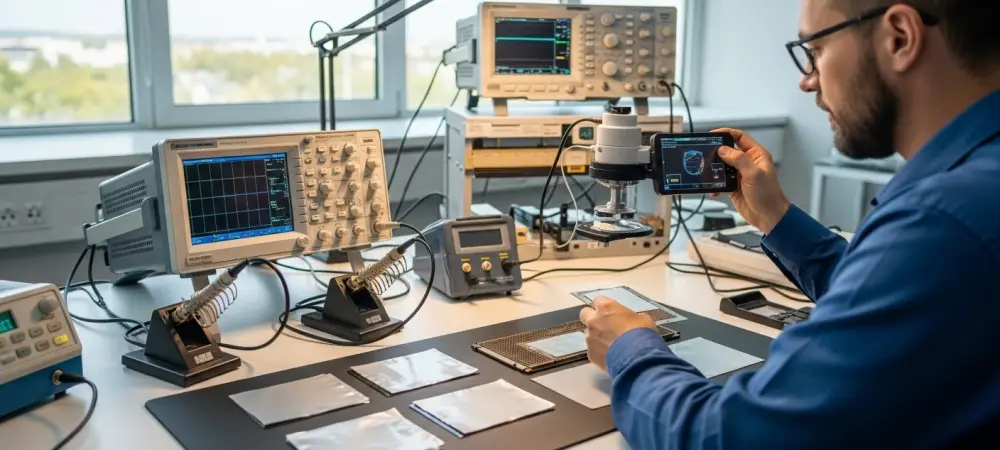
The global scramble for high-performance computing assets has fundamentally repositioned Singaporean technology enterprises as central pillars in the international silicon supply chain. While previous market cycles focused predominantly on software ecosystems, the current landscape is defined by an insatiable hunger for sophisticated semiconductor components and liquid-cooling solutions designed for massive data centers. Local firms like Venture Corporation and AEM Holdings are now seeing record orders as major chipmakers and hyperscalers pivot toward more localized production and testing capabilities within Southeast Asia. This shift represents a transition from being a mere service provider to becoming a critical manufacturing hub that supports the underlying architecture of modern artificial intelligence. As the demand for specialized processing units continues to escalate, these companies are scaling their operations to meet the rigorous specifications required for the next generation of neural network processing and deep learning modules.
Strengthening the Manufacturing Backbone
Industrial precision has become the primary differentiator for Singaporean manufacturers as they integrate advanced robotics into their assembly lines to handle delicate semiconductor packaging processes. Many organizations are moving beyond traditional printed circuit board assembly into the realm of complex optical transceivers and high-bandwidth memory interface components. For instance, the expansion of local fabrication facilities now allows for the rapid prototyping of custom silicon that specifically targets large language model training requirements. This evolution is driven by a necessity to reduce latency in supply chains that were previously stretched across multiple continents. By housing specialized testing equipment and cleanroom environments within the city-state, firms can offer immediate quality assurance for high-value chips before they are deployed into massive server farms globally. The integration of automated optical inspection systems ensures that even the smallest defects are identified during manufacturing. The strategic focus on high-end niche markets has allowed Singaporean tech players to capture significant value in the assembly and testing segment, which was once considered a low-margin business. Today, the complexity of three-dimensional integrated circuits requires a level of engineering expertise that matches the design phase itself. Local companies are investing heavily in proprietary thermal management technologies to address the heat dissipation challenges inherent in modern processing units. These innovations are not merely incremental; they involve the use of advanced materials such as graphene-based thermal pads and sophisticated microfluidic cooling channels embedded directly into the substrate. Such advancements have made Singapore a preferred partner for international tech giants looking to outsource the most difficult aspects of hardware production. Furthermore, the collaboration between private enterprises and local research institutions has accelerated the development of new manufacturing techniques that prioritize both energy efficiency and performance.
Infrastructure and Strategic Evolution
Data center operators in Singapore are undergoing a radical transformation to accommodate the physical density required by modern high-density compute clusters. Traditional air-cooling methods are proving insufficient for the power draws of modern server racks, leading to a surge in demand for localized immersion cooling solutions and rear-door heat exchangers. Companies specializing in power distribution units and uninterruptible power supplies are redesigning their portfolios to support higher voltage requirements while maintaining the strict environmental standards mandated by regional regulators. This push for green infrastructure has created a secondary market for energy management software that uses machine learning to optimize power usage effectiveness in real-time. By implementing these sophisticated systems, local firms are helping global clients maintain their sustainability commitments without sacrificing the computational power necessary for complex workloads. This shift is also attracting venture capital into local startups. Securing a leading position in the global hardware market required a concerted effort to upskill the local workforce and pivot toward high-value research and development. Educational institutions and trade bodies developed specialized curricula focused on photonics, quantum computing hardware, and advanced material science to ensure a steady pipeline of talent. This focus on human capital allowed companies to transition away from labor-intensive assembly toward highly automated, knowledge-driven manufacturing processes. Decision-makers invested in diversifying the sources of critical raw materials and sought to establish more resilient trade agreements that protected the flow of essential technological inputs. Developing a domestic capacity for specialized chemical production and wafer fabrication proved to be a decisive factor in maintaining operational continuity. As requirements shifted, the emphasis moved toward the integration of heterogeneous computing architectures that combine different types of processors to achieve maximum efficiency.