

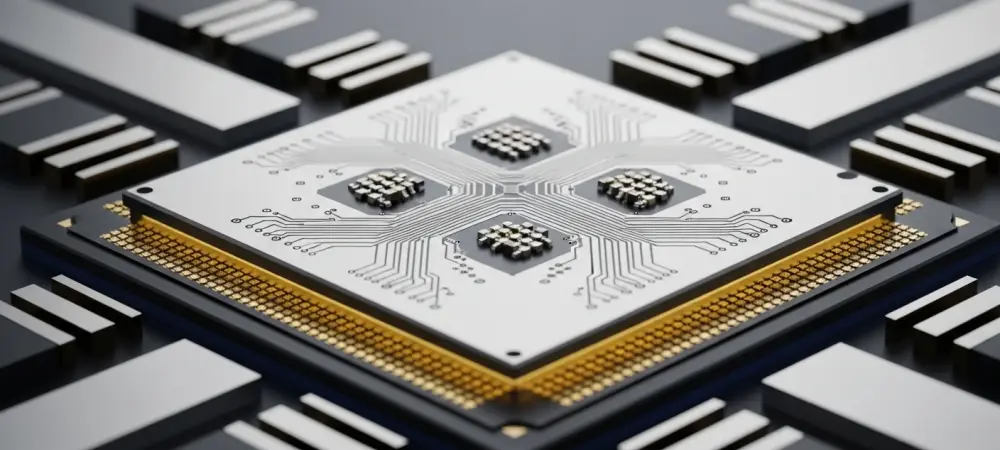
The global scramble for silicon supremacy has reached a fever pitch as manufacturers breach the sub-two-nanometer threshold to power the next generation of artificial intelligence. At the heart of this industrial transformation is a fundamental shift in how the world’s leading chipmakers approach both design and manufacturing. Intel has pivoted toward a foundry-first business model, positioning itself as a critical alternative to established giants. This strategic redirection centers on the 18A-P node, a technology designed to satisfy the relentless appetite for compute power in high-performance environments and mobile ecosystems.
The significance of this advancement extends beyond mere incremental improvements in transistor density. It represents a total reimagining of the electrical and thermal architecture of a chip. As energy-constrained AI workloads become the standard, the 18A-P process emerges as a necessary evolution for the industry. It provides the architectural foundation required for the next wave of server processors and consumer devices, ensuring that the limits of Moore’s Law are pushed further than previously thought possible.
Market Evolution: Technical Adoption and Performance Benchmarks
Performance Milestones: Driving Efficiency and Frequency Uplift
The value proposition of the 18A-P node is rooted in its ability to deliver substantial performance gains without an equivalent increase in energy consumption. Confirmed data indicates a 9% frequency uplift compared to the standard 18A node when operating at the same power level. This refinement is critical for data centers that are currently struggling to manage the heat generated by massive AI models. Moreover, the node offers an 18% reduction in power consumption for chips operating at identical performance levels, providing a significant advantage for mobile device manufacturers aiming for longer battery life.
This progress is a central component of the aggressive “five nodes in four years” strategy that has defined recent semiconductor roadmaps. By validating these metrics through industry-standard ARM core sub-blocks, the process has proven its readiness for a wide array of external designers. This validation demonstrates that the node is not merely an internal experiment but a viable commercial platform capable of hosting the most complex digital architectures. The transition from 18A to 18A-P reflects a maturation of the manufacturing process, where stability and performance have reached a point of foundry-grade reliability.
Real-World Implementation: The Commercial Roadmap for Foundry Services
Intel has selected the Diamond Rapids Xeon server processors as the primary internal vehicle for the 18A-P node, serving as a high-profile demonstration of the technology’s capabilities. This move provides a clear signal to the market that the company is willing to stake its flagship high-performance products on its own manufacturing innovations. The commercial success of these processors is expected to drive broader adoption among third-party customers who require proven, high-yield solutions for their own silicon projects. A critical aspect of the 18A-P strategy is its full design-rule compatibility with the standard 18A node. This ensures that customers can migrate their designs to the more advanced “P” variant without incurring the prohibitive costs of a complete redesign. Such continuity is essential for attracting high-profile foundry interest from industry leaders like Apple, NVIDIA, and SpaceX. These organizations are increasingly seeking supply chain diversification to mitigate risks associated with regional manufacturing monopolies, and the 18A-P node provides a technologically competitive alternative.
Architectural Breakthroughs: Engineering the Dual-Contact Transistor
Engineering Power: The Power Boost Innovation and Backside Delivery
The primary architectural innovation within the 18A-P node is the introduction of Power Boost, which marks the industry’s first implementation of a dual-contact transistor architecture. This design allows for higher drive currents and increased operating frequencies without necessitating a larger physical footprint for the chip. By utilizing both NMOS and PMOS dual-contact configurations, designers can optimize the electrical performance of each individual transistor, a feat that was previously hindered by the spatial constraints of traditional single-contact layouts. This breakthrough is made possible by PowerVia, a proprietary backside power delivery technology that moves power routing to the rear of the silicon wafer. By separating the power delivery network from the signal routing on the front side, the 18A-P node achieves an 11% reduction in total chip area and a significant improvement in through-silicon via resistance. This architectural shift solves the “power crunch” in energy-constrained workloads by allowing for more efficient electricity distribution, which in turn permits higher clock speeds and better thermal characteristics.
Thermal Management: Material Science and Interconnect Optimization
Heat dissipation remains a formidable challenge as transistors shrink to the nanometer scale, yet the 18A-P node addresses this through a 20% to 40% improvement in thermal resistance. This enhancement ensures that densely packed chips can operate at peak performance for longer periods without throttling due to overheating. Material science plays a pivotal role here, with PMOS via strain engineering being utilized to improve hole mobility and reduce the resistance encountered by electrical charges as they move through the circuit.
Furthermore, the introduction of a fifth threshold voltage option provides designers with granular control over the balance between switching speed and leakage current. This flexibility is complemented by the optimization of interconnects using 32nm metal processes, which are intended to be more cost-effective while reducing the total number of manufacturing steps. The shift toward these refined materials and manufacturing techniques allows for better yield and lower production costs, making the 18A-P node a commercially attractive option for high-volume semiconductor production.
Future Projections: Semiconductor Research and 3D Transistor Frontiers
Bridging the Gap: 3D Stacking and CFET Integration
As the industry looks beyond the current generation of FinFET and RibbonFET structures, the transition toward Complementary FET (CFET) technology represents the next major leap in transistor density. Research into vertically stacking NMOS and PMOS transistors is already yielding promising results, with demonstrations showing 45nm gate pitches. This 3D stacking approach effectively doubles the transistor count for a given area, providing a path forward for Moore’s Law in an era where horizontal scaling is reaching its physical limits. The successful implementation of these 3D structures relies on advanced “epi-epi vias” and direct backside contacts to manage the intricate connectivity required for stacked layers. While the manufacturing complexity of such devices is significantly higher than traditional chips, the performance gains are expected to be revolutionary. This research phase is critical for establishing the design rules and manufacturing protocols that will define the sub-1nm era, where vertical integration will be the standard for all high-end semiconductor logic.
Hybrid Systems: The Role of Gallium Nitride in Power Management
The integration of Gallium Nitride (GaN) with traditional silicon on 300mm wafers is another frontier that promises to redefine on-chip power management. Recent breakthroughs have shown that hybrid GaN-silicon control circuits can achieve record-setting efficiency levels, with power-delay products measured in the attojoule range. This level of efficiency is particularly relevant for mobile and edge devices, where every picojoule of energy saved translates directly into improved battery life and reduced thermal output. In addition to GaN integration, the industry is exploring subtractive Ruthenium interconnects and airgap insulation as a means to further reduce capacitance and improve signal speed. These material innovations are essential for overcoming the limitations of traditional copper wiring, which struggles with high resistance at extremely small dimensions. The combination of these technologies suggests a future where chips are not only smaller and faster but also fundamentally more efficient at the atomic level, enabling applications that were once considered computationally impossible.
Conclusion: The Strategic Significance of 18A-P
The 18A-P process node represented a decisive moment in the evolution of semiconductor manufacturing by successfully balancing technical ambition with commercial viability. Intel demonstrated that the implementation of backside power delivery and dual-contact transistors provided the necessary performance headroom to sustain the rapid growth of the artificial intelligence infrastructure. The industry recognized that the transition to this node was not merely an upgrade, but a structural shift in how power and signals were managed within a three-dimensional silicon environment. Foundry customers benefited from the design-rule compatibility, which allowed for a seamless migration of intellectual property while capturing the efficiency gains required for modern high-density computing.
Moving forward, the focus must shift toward the widespread adoption of 3D stacking and the integration of wide-bandgap materials like Gallium Nitride into standard logic flows. Stakeholders should prioritize the development of more robust thermal management solutions as power densities continue to climb in stacked architectures. The success of the 18A-P node underscored the necessity of a diversified global supply chain, prompting companies to reinvest in domestic manufacturing capabilities to ensure long-term stability. As the industry progressed, the lessons learned from this node’s deployment became the blueprint for the next generation of sub-nanometer chips, proving that continuous material innovation was the only way to meet the world’s escalating demand for compute power.